I am grateful

How to Cultivate Awe, Gratitude and Altruism to Boost Nonprofit Fundraising

I’m a huge fan of the Greater Good Science Center at U.C. Berkeley, and often apply their research to nonprofit fundraising and marketing.  A recent article really struck me: How to Find Your Purpose in Life.

Over my 30 years of practice as an in-house development professional, the fundamental thing I learned is this:

You serve your donors every bit as much as they serve your organization’s mission.

Please allow that to sink in.

You have a mission. A purpose. Donors can help you get there.

Your donors are looking for purpose. You can help them find it.

It’s a symbiotic relationship.  And you have a role in fostering that relationship.  What is that role?

Your job is to facilitate your donor’s philanthropic journey. Their journey to discover their purpose.

So what’s this really all about?

mindblowing-176x300.jpg

Your Secret to Mindblowing Fundraising – Improve Donor Retention Just 10%

Imagine what it would mean to your mission if you doubled the lifetime value of all of your current supporters.

Do you know even know what percentage of donors you’re retaining?

According to Jay Love, founder of Bloomerang, less than 45% of fundraising offices know this answer!

So, you’re not alone.  But you can do better.

Because knowing your retention rate enables you to move it to something better.

And I’m going to guess, if you’re like the majority of nonprofits, you probably need to improve your donor retention.

At least if you want to grow.

Or maybe even just survive.

Just a small change in retention, up or down, can mean thousands of dollars.

It’s your choice whether they’re your gain, or your loss.

Why Donor Wooing Requires WOWing

cashier-Pixabay1791106_640The Unfair Exchange Bernadette Jiwa, The Story of Telling.

That will be eight dollars,’ the woman, who is carefully weighing and wrapping two serves of freshly made fettuccine for us to take home, says.

As my husband is about to hand her the cash, she takes another handful of the pasta from behind the glass and adds it to our package.

She doesn’t announce that she’s giving us twenty per cent extra for free.
She doesn’t even invite us to notice the gesture at all.
It’s enough for her that she knows she has added value.

We think of value as a hard metric—the anticipated fair exchange of this for that.

But value can be a surprising, generous, unfair exchange.

Something that is given because we can, not because we must.

Ah… value.

Wow, wow, WOW!

This is what all fundraising, fundamentally, is about.

A value-for-value exchange.

Yet one side of the exchange is a hard metric: The donor’s cold, hard cash.

While the other side of the exchange is something decidedly less tangible: Freely given gratitude from you and your organization.

Or at least that’s how it should work.

The Difference between ‘We Must’ and ‘We Can’ 

What does your donor love and loyalty plan look like?

Do you even have such a plan?

If the only reason you acknowledge donations is because you feel you ‘must,’ it’s likely your donors aren’t walking away from the encounter feeling much more than matter-of-fact. The transactional receipts many organizations send out are registered by the donors as “Ho, hum. Guess I’ll go file this with my tax receipts.”

This kind of exchange is fair, sure.

But it’s not generous.

Interview exchange

How to Apply Job Interview Skills to Fundraising

My daughter-in-law is interviewing for a job. She asked me for some advice. Here is what I found myself telling her:

Don’t focus on your needs. Focus on the employer’s needs.

Why are they hiring?

What problems do they need you to solve?

Which of your skills are they particularly looking for? Can you describe to them how you might use these skills to help them?

Can you give a specific example, perhaps by telling a story, showing exactly how you’ll help them?

Are you clear what their values are?

CAN YOU DESCRIBE HOW YOU AND YOUR WOULD-BE EMPLOYER (DONOR) SHARE THESE VALUES?

I realized this is the exact same advice I give to fundraisers.

Ask not what your donor can do for you, but what you can do for your donor.”

Meet your donors’ needs.

This is the heart of all effective fundraising, and it should be your daily mantra.

Today I will meet my donor’s need by…

Before you engage in any fundraising strategy, ask yourself:

SECRET-300x300.jpg

Do You Want to Stop Failing to Close Major Nonprofit Gifts?

All you need to do to transform failure to success is to adopt my personal #1 SECRET – the one principle that makes the greatest difference to long-term, sustainable fundraising success. 

This is a secret that will transform donor loyalty and increase donor retention by leaps and bounds.

Plus, it’s not rocket science.  It’s pretty much common sense.

Anyone can do it.  Everyone should do it.

I’m going to share that principle here; then I’m going to turn this principle into a word – actually three variations of the same word – that you can use to transform the way you’ve been doing business.

What will happen as a result?

I promise you’ll close more major gifts!

Are you ready?

Treasure Map

Do You Want More Major Donors? Read This!

If you’re like most nonprofits, you probably wish you had more major donors.

Guess what?

You can have them!

Today we’re going to look at a great tool for building those important relationships with top prospects over time.

And we all know that is what will result in the big gift.

You know how important it is to put a plan in place to build relationships, right?

It’s super-de-duper important if you want to secure major gifts.

And there’s a name for the strategic process of building meaningful relationships with potential major gift donors.

I’m talking about “Moves Management.”

Hold these 4 Nonprofit Fundraising Truths to Be Self Evident

DeclarationOfIndepenceI’ve created for you a little “Declaration of Fundraising Independence” to help you become a fruitful philanthropy facilitator from this day forward.

This Declaration incorporates what I consider to be essential fundraising truths — four pre-conditions which must be met before you’ll be able to successfully exercise your fundraising strategies. Within these four pre-conditions are additional hidden truths (don’t worry; I’ll call them out for you).

We hold these truths to be self-evident, that not all charities are created equal, that they are endowed by their constituencies with certain unalienable visions, missions and values, that among these are visions, missions and values that some, but not all, members of the public share. That to secure these visions, missions and values, charities are instituted among the public, deriving their just powers from the support of the public. That whenever any form of charity becomes destructive of these ends, it is the right of the people to fail to support it, and to instead support those institutions as to them shall seem most likely to effect the safety, happiness, goodwill and public benefit of the populace.

Fundraising is not an end in itself. It serves noble ends.

(1) When those ends are ones valued by the people, and

(2) When folks trust you’re doing an effective job meeting needs they believe must be met, then

(3) You earn the privilege of fundraising and, in fact,

(4) You assume the responsibility to fundraise to assure those who rely on you to meet these needs are not left high and dry.

So… this is where you get your Declaration of Fundraising Independence.  You are ‘free to fundraise’ once you’re able to make a case to enough people that you deserve to exist.  For this to be the case:

Conscious compassion

4 Ways to Consciously Keep Donors Connected

Conscious compassionWhen people give to you for the first time, often they know very little about you. Perhaps they found you through a link on social media. Or organic search. Or through a friend who emailed them a link to your appeal.

They were inspired to give, once, based on whatever they saw or read.

What happens next is critical.

Either you’ll inspire donors to stick with you, or you’ll depress their enthusiasm through benign neglect.

I say “benign,” because I’m sure you don’t mean to mistreat your supporters. Nonetheless, I’m willing to bet many of you do.

  • Perhaps donors make a gift online, and are not immediately taken to a thank you landing page that reassures them their gift went through.
  • Perhaps you send donors a deadening thank you email that looks like a receipt.
  • Perhaps your generic thank you doesn’t tie back at all to the reason they gave.
  • Perhaps your thank you talks all about your organization, rather than about how your donor is a hero.
  • Perhaps your thank you focuses on the amount of their gift and its tax deductibility, and fails to mention specifically what it will accomplish.
  • Perhaps your email thank you lacks the personal touch you put into your mailed thank you letters.

Here’s the deal: Donors are looking for meaning. If your thank you and subsequent donor communications don’t give it to them, they’ll dismiss you and go look for meaning elsewhere.

All donors have questions they need you to answer for them. If you fail to answer these questions you fail to lay the groundwork for developing a positive, ongoing relationship.

Leverage Millennial Marketing Strategies to Woo ALL Nonprofit Donors

Marketin to MillenialsDo you ever worry you’re not doing enough to attract the donors of the future?

Does thinking about how to market to Millennials (who already are the largest segment in the workplace, will be 50% of the U.S. workforce in the next two years, and who will be 75% by 2030, according to the U.S. Bureau of Labor Statistics) fill you with anxiety, because it’s just one more thing to add to your overflowing list?

Fear no more!

Today I’m going to tell you how you can have it all – and with very little extra work.

Don’t get me wrong.  I’m not dissing a multi-generational strategy. If you can manage to treat different types of donors differently, you absolutely will get the biggest bang for your buck by so doing.  However…

Are You Rocking Donor Retention 101?

It’s doubtful you are unless you’re making robust use of your donor database for this purpose.

In other words, you must make this a TOP priority.

Retention lives or dies in how effectively, or not, you use your database to support your relationship-building, loyalty-driving efforts.

If you think of your database as a largely undifferentiated mailing list, you’re not going to realize your potential to:

  • Boost renewal rates
  • Increase average gift size
  • Upgrade donors
  • Secure major and legacy gifts
  • Recapture lapsed donors
  • … and more!

Really, I just can’t bear to think of you not maximizing return on your investment. And that won’t happen unless you focus on donor lifetime value.  And lifetime value will be very, very small — unless you retain and upgrade donors over time.

There are 5 Keys to Donor Retention

Clouds and sky

To Be or Not to Be: What Goes in This Year’s Nonprofit Work Plan?

I’m wagering you’re too busy.

That means you’ve little space for adding new projects to your work plan for the coming year.

Never fear. Help is here!

First, let’s clear out some space.  

I’ve participated in many a planning session, and seldom do I recall – if ever – really focusing first on what we could stop doing to make room for new endeavors.  If this sounds familiar, you’re likely also familiar with the unfortunate consequences.

There are some things that really should not be part of your work plan moving forward. Or, at the very least, they should be pared down. Quite. A. Bit.

Here’s how you know you need, as Marie Kondo might say, to tidy up.

  • Do you try to stuff too much into your work plan and end up doing nothing as well as you’d like?
  • Do you allow daily clutter to crowd your inbox so you’re often responding to the little issues rather than the big ones?
  • Do you keep working on things that no longer have the payoff they once had, causing you to miss out on newer and more cost-effective opportunities?
  • Do you allow inertia to divert your focus towards ‘make work’ transactional stuff that satisfies your need to feel ‘busy,’ while you know it’s not really transformational work?
  • Have you allowed your job to become overloaded with tasks you don’t enjoy, to the point where you feel a bit like a lobster in a pot?

What if you were to look at your work plan this year from the KonMari perspective?

Jar of penny coins

ONE Amazingly Simple Smart Fundraising Strategy


Invest more.

That’s it.

It’s simple. And it works.

You see, penny-wise fundraising may seem smart.  You may pat yourself on the back for working “lean and mean.” But, in actuality, lean and mean is the antithesis of how a nonprofit becomes successful.

Penny-wise fundraising ends up being nothing more than mean.

  • Mean to the people to whom you pay pauper’s wages.
  • Mean to the staff you overwork.
  • Mean to the volunteers you burn out.
  • Mean to the clients you can’t afford to help.
  • Mean to the donors to whom you’re unable to offer satisfying philanthropic investment opportunities.
  • Mean to the community you can’t afford to serve.

Penny-wise fundraising takes you down exactly the wrong pathway.

You May Think You’re Being Smart, But You’re Not

Penny-wise fundraising reveals an underlying attitude fundraising is a “necessary evil.’  So… why not invest as little as possible in it?

Sadly, this approach to fundraising is doomed to failure.

Figure on treadmill

You Control Nonprofit Donor Retention

Are you caught in the trap of transactional fundraising?

Donors come in. Donors go out.

One-time gifts are here today, gone tomorrow.

It’s like being on a non-stop treadmill.  Just exhausting!

There’s a way to catch your breath, and even begin to enjoy breathing again.

Instead of continuing on as a transactional fundraiser, become a donor experience transformist!

Receipt of the gift is the beginning, not the end.

Before you can create a transformative donor experience, you must undergo a transformation of how you think about donor acquisition and retention. If your holy grail is simply getting the gift, you’re missing the point.

Parking Lot

Strategies to Leverage Donor Advised Fund Philanthropy

The use of Donor Advised Funds (DAFs) as a means for individuals to make philanthropic gifts continues to rise. So much so, in fact, I felt it imperative to help you understand how they work and how they may be of benefit to your charity.

Why?

  1. You don’t want to leave money on the table.
  2. You want to best serve your donors.

Today we’re going to take a look at:

  • What a DAF is/is not
  • Who DAF donors are/common characteristics
  • How you can best serve DAF donors
  • What you can do to leverage DAF philanthropy

Let’s begin at the beginning.

Two business people meeting

How to Use LinkedIn to Give Donors a Reason to Connect with You

Are you Linking In?

If not, it’s time to take a new look at this social platform to appreciate it for the beneficial research and relationship-building strategy it can be for you.

I find it to be a highly under-utilized tool when it comes to building your nonprofit brand, establishing authority and credibility, researching and recruiting new volunteers, donors and employees, and building stronger relationships with your current constituents.

Today we’re going to talk about how to use LinkedIn to uncover new donor prospects and build donor relationships.

Not too much. Just four no-nonsense strategies. We’ll look at two more in my next article.

Meeting over coffee

BIG Tips to Raise BIG Money for Your BIG Mission

If I had to tell you what you need to do to succeed with major gift fundraising in one sentence it would be this:

Identify major donor prospects… qualify them so you know they want to build a deeper relationship with you… cultivate them… visit with them… listen to them… reflect back to them what you heard… ask them for something specific that resonates with their passions… steward their gift and communicate in an ongoing way to make them feel like the hero they are!

Whew – that was a mouthful!

A shorter way to say this is: Meet with donors. Listen to donors. Ask donors.

See — it’s simple!

It’s definitely not rocket science. It’s just good old hard work. Satisfying and rewarding work. And it’s a type of work anyone can learn to do. [If you want to learn, please sign up for the next Certification Course for Major Gifts Fundraisers e-course . It may be the most important investment you make all year. Just one major gift will more than cover the cost].

Over my 37 years in fundraising, 30 of them working in the trenches as a director of development for organizations with budgets ranging from $1 – $40 million, I have asked for a lot of major gifts.  I know what works, and what doesn’t work. Today I want to give you:

(1) some of my best words of wisdom, and also

(2) answers to some of the questions folks frequently ask me .

I hope these tips will help you tweak your mindset and invigorate your systems so you can be more successful fundraising in the coming year!

3 Nonprofit Secrets to Rock Major Gift Fundraising

There’s a treasure trove of knowledge and research around major gift fundraising. What works well.  What doesn’t work at all.  What’s, at best, half-baked.

It’s not rocket science.  But there’s definitely art, and some science, involved.

The gestalt way of thinking about the three secrets boils down to simply being:

(1) smart,

(2) systematic and

(3) passionate.

But, I’m pretty pragmatic. So I’d like to give you something more practical.

If I had to pick the top three practical secrets to success, they would be the following:

Are you reading your major donors right?

Are You Reading Your Major Donors Correctly?

Some years ago I had the opportunity to present a major gifts master class where Jay Love, Founder and President of Bloomerang (and a board member and major donor himself) offered his thoughts on major gifts development from the donor’s perspective.

SO important!

The more that you know, the less they’ll say “No!”

The more you know:

  • what floats your donor’s boat,,,
  • what other things compete for your donor’s attention (not just causes, but also career and family)…
  • how your donor prefers to communicate…
  • how your donor prefers to be wooed…
  • how your donor prefers to be recognized…

… the more likely you’ll get a “Yes.”

If you can’t show your major donor prospect you really know them, how can they trust you’ll be a good steward of their passionate philanthropic investment?

We all want to be known before we enter into a major engagement.

Which brings us to the crux of successful major donor development. Not surprisingly, it begins and ends with the same thing.

Can you guess what that might be?

Man running with money

#GivingTuesday: It Ain’t Over ‘Til it’s Over

The absolute worst thing you can do the day after #GivingTuesday is nothing.

As tempting as it is to let out a sigh of relief that it’s over, resist that temptation.

It’s not time to relax yet.

Nothing comes of nothing.

And a huge part of your goal with #GivingTuesday should be to strengthen your bonds with donors. That’s the real something you’re after.

It’s not just about the money you raise today.

Your goal with any fundraising strategy is to retain and, ultimately, upgrade these transactional donors. The name of the game in the business of sustainable fundraising is lifetime donor value. [Here’s a great book on the topic: Building Donor Loyalty: The Fundraiser’s Guide to Increasing Lifetime Value.]

Treat #GivingTuesday as a Special Event

Like it or not  #GivingTuesday is a ‘special event.’(And I don’t really like it, which is why I recommend #GratitudeTuesday as an alternative).You likely put a fair amount of planning, resources and time into this event, involving the attention of more than one staffer and/or volunteer. And it sucks time away from almost everything else in the week(s) leading up to it.

It can be a real drain.

Your job is to put a stopper in that drain so all your hard work doesn’t simply swirl down the drain and disappear. That’s like working super hard to create a delicious soup you simmer over the stove for hours, maybe even days, and then you take one little taste before you pour it out and start all over again with a new one. Endless work. And no one really gets to enjoy the meal.

#GivingTuesday or #GratitudeTuesday? Choose!

I’ve long been an advocate of turning the tables on #GivingTuesday and using the “giving” part of the day to give to donors rather than add yet one more ask from them in an already crowded solicitation season.

If you want gifts, you must give them. 

#GivingTuesday is one of those things that sounds good on paper, but in actual implementation it can be less than ideal.

Why?

Because it comes smack dab in the middle of most folks’ annual campaigns. So there’s often little time to do it right. And it can suck your energy and focus away from other critically important year-end fundraising efforts.

I’ve got a better choice for you.

Flip the idea and rather than asking folks to make a symbolic gift to you, why don’t you make a heartfelt gift to them?

Mail-email-300x250.jpg

5 Truths: How Often Can You Mail Appeals to Nonprofit Donors?

Most nonprofits don’t mail often enough.

How often is enough?

Well… if there was one quick answer I wouldn’t have needed to write a whole article. I’d just have given you a headline with a definitive response!

I know you want a definite answer.

And I could give you one. But it wouldn’t be the truth. Because the truth is different for every nonprofit.

And the truth will even be different for your nonprofit at different points in your life cycle.

There are five definitive things I can tell you:

  1. You are not your donors.
  2. Your donors lie.
  3. Opinions don’t matter; tests do.
  4. Out of sight is out of mind.
  5. What, how and who you mail to matters.

Rock star

Are You Really Rocking Major Gift Fundraising as You Should?

Studies show over 88% of all funds raised come from just 12% of donors. 

In fact, the top tier of donors account for the lion’s share of all philanthropy.  Just 3% of donors give 76% of all gifts.

If you’re not focusing your fundraising resources on these donors, this should give you pause.  You’re missing a really big boat.

Plus, chances are good you’re fundraising in a manner that’s not exactly cost-effective.

You’re not alone. I run into this problem all the time. Board members want to do events.  E.D.s want to focus on grants. New staff think the future is all in digital fundraising. Existing staff are wedded to increasingly less productive direct mail fundraising.  There’s nothing wrong with any of these strategies. However, generally they won’t give you the biggest bang for your buck. You get a huge return on investment from an individual major gifts program, which costs you roughly 10 cents on the dollar vs. 50 cents or more on the dollar for special events fundraising and actually losing money on direct mail donor acquisition.

If you know the Pareto 80/20 Rule, you might want to focus just 20% of your resources on the lower-yielding strategies and 80% on major individual and legacy fundraising.

What’s holding you back from doing something so sensible?

Usually I find it’s one of the following reasons:

Treasure Map

Introduction to Strategic Nonprofit Major Gifts Moves Management

Do you want more major donors?

You can have them!

Today we’re going to look at a great tool for building those important relationships with top prospects over time.

And we all know that is what will result in the big gift.

You know how important it is to put a plan in place to build relationships, right?

It’s super-de-duper important if you want to secure major gifts.

I’m talking about “Moves Management.”

Transformation-Autumn-Leaves.jpg

Philanthropy, Not Fundraising – How to Begin the Transformation

You probably know my tagline is “Philanthropy, Not Fundraising.” It’s my overarching philosophy, and I welcome you to read about it here. But make no mistake…

I’m still using the word fundraising.  In fact, I wrote an article entitled To Sell is Human; To Give, Divine – Why We’re All in Fundraising Now.  I understand this may be a bit confusing. In fact, I’ve had some comments to that effect. Some of you hate the word philanthropy; others hate the word fundraising.  So, let’s clairify.

If you want to move from a culture of transactions to one of transformation don’t get bogged down worrying about semantics! You say potato; I say potahto… a rose by any other name… It’s the CONCEPT of “philanthropy, not fundraising” I’m hoping you’ll grasp. The point is to come from a place of love; not need. A place that centers on your donor; not you. A place that is deeply relational; not one-sided. A place that focuses on impact and outcome, not money and process.

Let me share a few comments I received and contribute my thoughts:

Why Creating Donor Engagement Opportunities Boosts Fundraising

I wish I had a dime for every time a nonprofit board or staff member told me “We’re the best kept secret in town; if people knew what we do, they’d give to support us.”

If I had all those dimes, I could make a nice contribution to your cause.  That is, if…

  • You endeavored to learn a little bit about me,
  • You engaged me personally,
  • Then you asked me.

You see, merely “building awareness” will not ipso facto raise more money for your cause.

Just because I care about something, and somehow learn you are involved in doing something about that thing, doesn’t mean I’m going to support you financially.

Why should I?  There are a lot of good causes out there, and making a decision to invest in you is something I need to act on.

I’m busy.  I’m overloaded with information. And inertia is just too powerful a force.

Transactional Nonprofit Work vs. Transformational Donor-Led Progress

Transactional Nonprofit Work vs. Transformational Donor-Led Progress

Greg Warner of Market Smart writes a lot about the difference between “work” and “progress.” I appreciate the distinction, both professionally and personally. I think you can use this notion, so I’m going to recommend some of his articles to you and also suggest a way to extend this idea to your nonprofit fundraising.

Warner notes in Why You Should Never Get a Job and Go to Work: “work” is tedious and negative; “progress” is inspiring and positive.

This is about being intentional about where you’re going.

It’s somewhat about perception and desitnation, but I’d argue it’s largely about the journey.

Your journey. Your donor’s journey.

I am grateful

How to Cultivate Awe, Gratitude and Altruism to Boost Nonprofit Fundraising

I’m a huge fan of the Greater Good Science Center at U.C. Berkeley, and often apply their research to nonprofit fundraising and marketing.  A recent article really struck me: How to Find Your Purpose in Life.

Over my 30 years of practice as an in-house development professional, the fundamental thing I learned is this:

You serve your donors every bit as much as they serve your organization’s mission.

Please allow that to sink in.

You have a mission. A purpose. Donors can help you get there.

Your donors are looking for purpose. You can help them find it.

It’s a symbiotic relationship.  And you have a role in fostering that relationship.  What is that role?

Your job is to facilitate your donor’s philanthropic journey. Their journey to discover their purpose.

So what’s this really all about?

Man reading book to kids

Donor-Centered Storytelling Boosts Fundraising. Period.

Man reading book to kids

Storytelling is something people naturally gravitate to


Donors are always a bit nervous about their investment in your nonprofit.  More than anything, they want to know what their hard-earned money is accomplishing!

Bloomerang found that 8% of donors failed to renew their giving specifically because they weren’t sure what their gifts accomplished.

THIS SHOULD NEVER HAPPEN!
If you want more gifts, you must give them.

And in this article we’ll look at why stories can be the perfect donor gift!

For a lot of nonprofit insiders, this is a paradigm shift. Think about it.  I’m asking you to go from focusing on asking to focusing on giving.

Another way to consider this is to shift from focusing on selling to focusing on helping.

man thinking

3 Content, Online and Social Media Venues for Every Nonprofit

Nonprofit fundraising and marketing is very different today than when I began. Yet not every nonprofit I encounter seems to have received the message.

That’s why I’m writing.  Because the road to success has changed more in the past five years than the preceding 50.

Why?

It’s been called a “digital revolution,” a “disruptive” force and the “end of business as usual.

Outbound marketing” has been proclaimed dead, making way for “inbound marketing.”

The world is networked digitally in a way that was, until recently, unimaginable to most of us.

So… what does this mean for nonprofits? Especially for small to medium-sized nonprofits who don’t have staff with titles like “Online Fundraising Coordinator,” “Digital Communications Associate,” “Social Media Specialist” or “Digital Philanthropy Manager.”

How can you compete to raise awareness and support among your likely constituents?

Girl dips toes in the water

12 Top Tips to Build Community and Broaden Your Nonprofit Donor Base

Philanthropy should not just be about big checks.

Last week I shared some reasons not to eschew small gift fundraising. Today I’m following up with some tips for building and mobilizing your community to find, sustain and grow these gifts.

This is important, because a donor’s first gift is seldom their largest.  It’s a starting point.

The majority of your gifts will be small, but the majority of your income will come from a small group of major donors.

You have to grow this cadre of loyal, passionate philanthropists by building relationships with supporters over time.

The lion’s share of major gifts come from previously small gift donors.

A client I’m working with told me 50% of their major donors began with very small gifts.  How about tracking this for your organization? Sure, some major donors come in at the top. But I’ll bet you a majority start by dipping their toe in the water. How can you get folks more fully immersed?

Small-gifts-210x300.jpg

Don’t Eschew Small Gift Affinity Fundraising

Did I ever tell you about the fortuitous happenstance that taught me about the power of small gift fundraising? A few years ago I went to research something online. Not surprisingly, I ended up viewing the first entry Google gave me – which was on Wikipedia.

As luck would have it, and to my delight, I ran into an awesome fundraising campaign. [This is an occupational hazard with fundraisers. We actually like and admire things like pledge breaks when they’re done well!]

Here’s what I found superimposed at the top of the screen:

DEAR WIKIPEDIA READERS: To protect our independence, we’ll never run ads. We take no government funds. We survive on donations averaging about $15. Now is the time we ask. If everyone reading this right now gave $3, our fundraiser would be done within an hour. We’re a small non-profit with costs of a top 5 website: servers, staff and programs. If Wikipedia is useful to you, take one minute to keep it online and ad-free another year. Please help us forget fundraising and get back to Wikipedia. Thank you.

I was then given the option to make a one-time gift of $3, $5, $30 or $50, or a monthly gift of $10, $20, $100 or other.

It’s not all about major gifts for everyone.

The Wikipedia campaign serves as a great reminder. Even though many nonprofits survive by the grace of 3% of their donors providing 97% of their contributed income (or something closer to the 80/20 rule) there are indeed nonprofits that are exceptions to this rule

How Positive Feedback Boosts Nonprofit Fundraising

Recognition. Appreciation. Acknowledgment. Gratitude.

Psychologists, sociologists, philosophers, economists and historians have often studied and documented this phenomenon. It’s part of our quest for meaning and connection.

  • Darwin talked about “survival of the most loving.” Communities who took care of each other were the “fit” ones.  Similarly, those members most sensitive to group feedback survived. It’s difficult to make it alone.
  • Maslow talked about the need for love, community, esteem and self-actualized identification with a higher purpose.
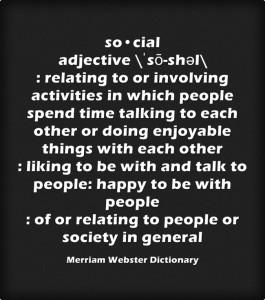
  • Psychologist Matthew Lieberman, in “Social, Why Our Brains Are Wired to Connect,” writes about how MRI scans reflect that our brains are hard-wired to respond to positive recognition from others.

I like the way

Big dog and girl wrestling

Nonprofit Major Donor Fundraising A B C’s

You don’t just roll out of bed one day, randomly go visit a major donor prospect and ask for a random amount. At least not without a boatload of advance preparation. Right?

It’s a lot smarter to begin at the beginning.

And then take it step by step from there.

According to a plan.

A plan to secure BIG gifts for you BIG mission.

Since it’s the beginning of a new year, it’s a great time to review what you can do to get yourself and your solicitors (staff and volunteers) ready to make win/win matches between your organization and your prospective major donor/investors.

3 Nonprofit Secrets to Rock Major Gift Fundraising

There’s a treasure trove of knowledge and research around major gift fundraising. What works well.  What doesn’t work at all.  What’s, at best, half-baked.

It’s not rocket science.  But there’s definitely art, and some science, involved.

The gestalt way of thinking about the three secrets boils down to simply being:

(1) smart,

(2) systematic and

(3) passionate.

But, I’m pretty pragmatic. So I’d like to give you something more practical.

If I had to pick the top three practical secrets to success, they would be the following:

Are you reading your major donors right?

Are You Reading Your Major Donors Correctly?

A year ago I had the opportunity to present a major gifts master class where Jay Love, Founder and President of Bloomerang (and a board member and major donor himself) offered his thoughts on major gifts development from the donor’s perspective.

SO important!

The more that you know, the less they’ll say “No!”

  • The more you know what floats your donor’s boat,,,
  • The more you know what other things compete for your donor’s attention (not just causes, but also career and family)…
  • The more you know how your donor prefers to communicate…
  • The more you know how your donor prefers to be wooed…
  • The more you know how your donor prefers to be recognized…

If you can’t show your major donor prospect you really know them, how can they trust you’ll be a good steward of their passionate philanthropic investment?

We all want to be known before we enter into a major engagement.

Which brings us to the crux of successful major donor development. Not surprisingly, it begins and ends with the same thing.

Can you guess what that might be?

Donate Online

Why Aren’t You Doing More Online Fundraising?

You really must! Because the world in which we fundraise is changing rapidly.

Keeping up is challenging.

Yet that’s not a good reason to pretend that time has stopped. I’m not suggesting you neglect the tried-and-true fundamentals, of course (direct mail, telephone, events, face-to-face).

You need them! And they still work. But you’ve got to leverage them with today’s tools, within the context of today’s marketplace.

This is your time. This is our time. But, these times are different and what comes next is difficult to grasp. How people communicate. How people learn and share. How people make decisions. Everything is different now. Think about this…you’re reading this article because it was sent to you via email. Yet more people spend their online time in social networks than they do in email…Technologies such as social, mobile, virtual, augmented, et al compel us adapt our story and value proposition and extend our reach to be part of communities we don’t realize exist.

The people who will keep you in business or running tomorrow are the very people you’re not reaching today. Before you continue to read on, allow me to clarify my point of view. My inspiration for writing this is to help you augment, not necessarily replace, the programs you’re running today. We must still reach those whom matter to us in the ways they prefer to be engaged. .

Brian Solis, The End of Business as Usual

Dylan Times they are a changing lyrics

Philanthropy; Not Fundraising: How Inbound Marketing Enhances Opportunity for Human Connection

Dylan Times they are a changing lyricsThis is not the first time I’ve channeled Bob Dylan, calling for a change in the way fundraising and marketing is practiced in the social benefit sector. Because the times truly are a changin’…

Your sons and your daughters are beyond your command, your old road is rapidly agin’…

THEN: When I grew up in fundraising I had a shoe box as my database.  I wrote grant proposals on yellow legal pads.  When we got our first FAX machine I complained that now folks expected us to mail and FAX them (so double the work).  When email came on the scene I complained that now folks wanted us to mail and FAX and email (so triple the work). But it was still the same old road of outbound marketing.  At least I understood what it was all about.

NOW: We’re on a new road entirely.  Because folks are coming to us.  They’re telling us what they want.  They’re defining our nonprofit brand.  And they’re doing so in real time via a multitude of online channels and using a multitude of Web-connected devices.

Opportunity is knocking.

Major donor meeting

8 Tips to Ace Your Dynamic Major Donor Solicitation

I could just say (1) prepare, (2) prepare, (3) prepare, (4) prepare, (5) prepare, and (6) prepare.

Did I mention that you really need to prepare?

Essentially, this is the meta-message of Shark Tank’s “Mr. Wonderful,” Kevin O’Leary, to would-be entrepreneurs seeking to get spots – and funding – on the television show.

In “How to Present the Perfect Pitch: From the Shark Tank to the Boardroom” he offers 10 tips to help you ace a fundraising pitch. Whether you’re seeking venture capital or a philanthropic gift, many of the principles are the same. I’ve selected six tips I find perfectly aligned with what it takes to make a successful nonprofit ask. Take them to heart, and you’re sure to make your next in-person fundraising presentation a winner.

Oh, and there’s one more important thing, says O’Leary:

“The number-one rule is to make your pitch incredibly dynamic.”

Let’s do it!

I”m going to offer you 6 guidelines and 8 really practical tips…

Treasure Map

Introduction to Strategic Nonprofit Major Gifts Moves Management

Do you want more major donors?

You can have them!

Today we’re going to look at a great tool for building those important relationships with top prospects over time.

And we all know that is what will result in the big gift.

You know how important it is to put a plan in place to build relationships, right?

It’s super-de-duper important if you want to secure major gifts.

I’m talking about “Moves Management.”

Skyrocketing

10 Strategies to Skyrocket Major Gift Fundraising

Skyrocketing“Begin at the beginning and go on till you come to the end; then stop.” So wrote Lewis Carroll in Alice in Wonderland.

It’s the same with major donor fundraising, except you don’t ever really stop.  You just start up again. You do follow a prescribed path, however.  And here’s what it looks like:

  1. Before
  2. Ground Floor
  3. Explore
  4. Back Door
  5. Adore
  6. Mentor
  7. Ask For
  8. Implore
  9. Rapport
  10. Report

If you do this correctly, it becomes a transformational process for the donor. They want to stay connected and engaged and invested.  Which is why you don’t stop.  You follow up with “Some More.”

But first…

Is Your Nonprofit Floating or Sailing?

A sailboat without a sail might float.

For a long time, in fact.

But without a sail, it can’t go anywhere, can’t fulfill its function.

Floating is insufficient.

– Seth Godin

For you to ask and answer

  1. Is your nonprofit floating, or sailing?
  2. Are your development efforts floating, or sailing?
  3. Are your marketing communications efforts floating, or sailing?

These are serious questions that deserve your serious consideration.

So… take a moment right now to answer these three questions for yourself.

Go ahead.

Put an “F” or an “S” next to each one of these.

Grants and Money

Nonprofit Grantseeking Strategies: What Really Works?

There are some basic strategies that ensure a successful nonprofit grants program.

They’re surprisingly straightforward.

If you follow this formula, you’ll succeed.

But you’ve got to be methodical, detail-oriented and focused.

Grantsmanship is not an “I’ll just wing it” proposition.

Applying for grants is hard work.

You must:

  • Prepare
  • Implement with precision
  • Include data and stories that compel
  • Persevere and follow through

Let’s take these one at a time.

customer experience

6 Ways to Create a Superior Nonprofit Donor Experience

customer experience

Are you aware that one of the hottest things in for-profit management over the past 5 – 10 years or so is “customer experience?” There’s an entire industry that’s grown up around it.

It’s something that goes beyond customer service.

Customer service is to an outbound marketing world what customer experience is to an inbound marketing world. The former you do to your constituents; the latter you do with them.

You may be asking why this is important.

Post digital revolution, nonprofits must adapt to the realities of inbound marketing. The way people find and engage with you in a constantly connected, networked marketplace has changed. Your constituencies crave interaction. And meaning. And, gosh darn it, they want you to make them feel good!

They want a full-bore, positive experience with you.

Fail to deliver?  They’ll go elsewhere.