
10 Secrets to Major Gift Fundraising Success: The Second 5
What if I told you there was ONE strategy on which you could focus — a place you’re probably more or less back burnering right now — that could increase annual giving to your organization by 77%?
You’d probably look at me like I was nuts.
After that, you might start guessing.
After all, I’ve written before about the huge benefits to be reaped from a strategic focus on:
- Increasing donor retention.
- Ramping up monthly giving.
- Promoting appreciated stock gifts.
- Promoting donor advised fund (DAF) gifts.
- Peer to peer giving campaigns.
All of the above should, indeed, be strategic priorities. And if you don’t currently have formal, written plans for donor retention, monthly giving, promotion of stock and DAF gifts, and peer fundraising, you definitely should. All of these strategies have a pretty amazing ROI.
Yet there is another strategy with even more amazing – dare I say miraculous – results.
Why Estate Commitments Dramatically Increase Annual Giving and Donor Loyalty
When people leave a legacy it’s a statement of their values. And their love.
When that legacy is a commitment to make a gift from their estate to your philanthropic organization, it’s a statement they consider you akin to family.
They want to help you.
And they want to help others, through you.
Because… they want to assure the values you enact – the ones they share – live on.
It’s a beautiful statement.
And it gives them a beautiful warm glow feeling.[1]
How This Loyalty Boost Works
If you nurture this warm glow through ongoing expressions of gratitude, the bonds between you and the donor will strengthen over time. And the relationship will blossom.
The donor’s annual giving will blossom as well.
I’ve been working in fundraising 40 years, and this is something I always knew.
I saw it happen at five different organizations where I worked during my 30 years in the trenches. And I’ve seen it happen for clients I’ve had the privilege to be associated with over the past 15 years.
But it wasn’t until Dr. Russell James shared a national longitudinal study on health and retirement that I learned this was verifiably true. Astoundingly so!
Findings
- Annual giving rose by 77% after a first-time estate commitment.
- People making $1,000+ gifts increased substantially.
- People making $10,000+ gifts increased 50%.
- This higher level of giving was sustained 2, 4, 6, and 8 years afterward.
The study collected before-and-after comparison data of 8,891 people (aged 50+) who put a charitable component into their estate plan (when it wasn’t there before).
“Something changes when a person includes a charity in their estate plan.”
— Russell James, J.D., Ph.D., CFP®Russell James, J.D., Ph.D., CFP®
The Other Benefit of Estate Giving
Of course, promoting estate giving is not just a strategy to increase annual giving and donor loyalty. That’s just a happy side effect.
The principal reason to encourage estate commitments is there’s a lot of money in them thar hills!
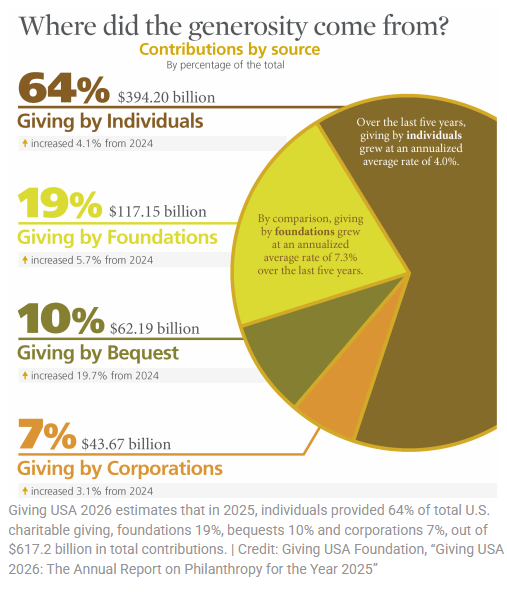
In 2025 over $62 billion was donated to charity via bequests. That amount is up from roughly $46 billion in 2024 – an increase of 16.6% adjusted for inflation.
The fact such gifts have increased 20% or more in current dollars in three of the last four years – making bequests one of the most robust areas of growth for philanthropy — should not be ignored.
Why Prioritizing Bequests NOW Matters
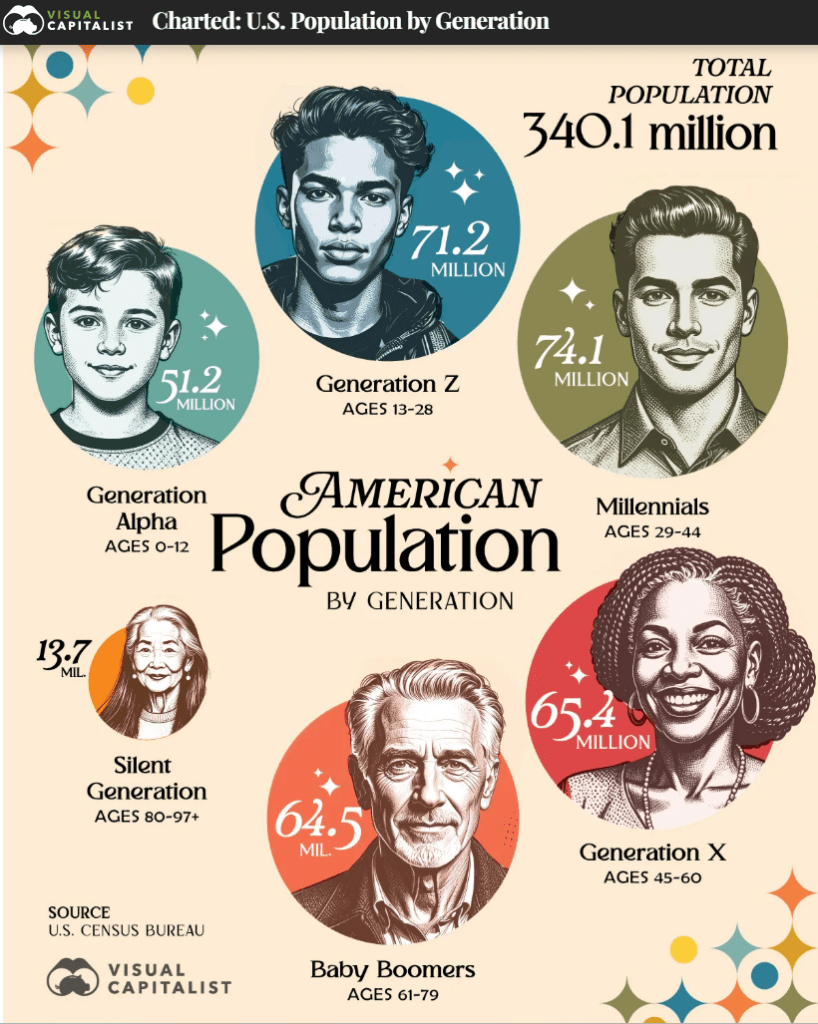
As Baby Boomers begin to enter their prime legacy-giving years, we’re on the cusp of a generational transfer of wealth.
That’s right. I said Boomers.
And there are a LOT of them.
According to Cerulli Associates, an estimated $124 trillion in assets from older generations is projected to change hands through 2048, consisting of approximately $105 trillion to heirs and about $18 trillion to charity. Yet much of this transfer will occur gradually.
So, as much as people may talk about “The Great Wealth Transfer” to Millennials, that’s not who leaves bequests. That’s who receives bequests from their Boomer parents. They’re not yet transferers of wealth. Sure, they may make a commitment in their will. That’s good. But it will be years before that gift comes to fruition – if it ever does – requiring ongoing stewardship of their friendship (something most nonprofits don’t handle all that well).
The reality is half of all charitable bequest dollars come from people passing at age 89 or later.
This Means Working with Older Donors
Maintaining and reinforcing close relationships with supporters in their 80s and 90s has never been more important.
Right now, the bulk of estate money is moving from the oldest old to the merely old. Not to the young.
Per Dr. Russell James, in married couples, the real generational transfer usually does not happen at the first death. It happens when the surviving spouse dies. And 61% of estate dollars from surviving spouses were transferred by decedents in their 90s and 100s. Most of them are women.
The other wrinkle is that the charitable part of an estate plan is often highly unstable in the last 3 to 5 years of life. That is usually when the final charitable beneficiaries are added (and dropped).
So, you can’t lose contact with your oldest friends.
You have to engage with them, continuously, to keep your charity top of mind with them.
Take a look at who has made bequest commitments to you in the past — and understand most wills are updated just a few years before people die.
Take a look at loyal donors age 70+ who may have recently “lapsed” — and understand older donors may stop giving, even to their favorite charity; don’t write them off.
These people need to hear from you today.
When you forget your older donors, they’ll forget you.
[1] For a more thorough examination of how MRI studies assess people’s feelings about giving, see Dr. Russell James’ book, Inside the Mind of the Bequest Donor pp. 74 – 138.
Here are some questions you can use to talk with donors about the legacy they’d like to leave.


