
Food bank donations truck unloads

5 Ways Effective Annual Reporting Drives Donations

Food bank donations truck unloadsFor many nonprofits, the yearly annual report is often just another task on a very long to-do list. Most charities are juggling a lot—development, program maintenance, fundraising, and more—and the annual report can feel like yet another mandatory routine project. One that often gets handled at the last minute without much intentional care and effort.

Even though annual reports are an industry standard, most nonprofits don’t realize how fruitful an effective annual report can be. An annual report that prioritizes storytelling, transparency, interactivity, and more can actually bolster donation solicitation efforts and become a lucrative fundraising tool.

Before we jump into the nitty gritty of strategic annual reporting, let’s cover the basics.

What is an annual report?

Think of an annual report as a “year in review”—like a yearbook of sorts, but for donors, supporters, and partners to look at the highlights of any given year at your organization. Of course, a lot can happen in a year (nonprofits know that best), but with an annual report, you can summarize all the year’s milestones including your impact, accomplishments, new developments, and more.

Annual reports can be created and presented in a variety of ways—both digitally and in print. Depending on the needs, audience, or even constraints of the individual nonprofit, you might choose to create a printed booklet or pamphlet (which could then be mailed to supporters and donors or handed out at events). Or, in line with more frequent developments in the space, you could turn to digital software tools to create an annual report that intrigues readers with more vibrant visual elements like photos, videos, and clickable links.

What does an annual report include?

Every nonprofit’s annual report is different, depending on its mission, values, impact, audience, and more. However, most organizations include a few standard elements:

  • Stated mission and values
  • Accurate financial data
  • Examples of impact
  • Major accomplishments
  • Program and initiative assessments
  • Event highlights and recaps
  • Donor and board member lists
  • Contact information

Though every nonprofit is required to submit a Form 990, most organizations take their reporting a step further and create a yearly review that includes more audience-centric material (like the topics listed above).

Now that we’ve covered the basics, let’s dig into the best part of annual reporting—the ability to create the ultimate fundraising tool.

5 Ways Effective Annual Reporting Drives Donations

Proven Strategies to Climb the Year-End Fundraising Mountain

Mountain climberHave you started working on your annual appeal and year-end fundraising plan?


It’s time!

I worked for 30 years in the trenches, so I know exactly what this time of year feels like.

It feels like you’re at the base of a mountain you’re about to scale.

  • Exciting, but also scary.
  • Exhilarating, yet also daunting.
  • There will be good days, and bad days.

And this particular year, you may feel you’re taking two steps forward and three steps back.

That’s to be expected during times of great uncertainty.

Expected or not, I know you’re still anxious and thinking “What if we don’t reach the top?”

Don’t worry, I’m here to help.

This year you may need the equivalent of a few extra granola bars for energy. And maybe an extra tool or two to help you get a grip.

Right now I want to give you a few specific, timely tips you might not be thinking about.

Here are some strategies I hope will give you a leg up, so to speak.

Ready to Put Your Best Foot Forwards?

Here are 11 tips I’ve learned over the years.

Write something at the typewriter

Brilliant Writing Tips to Boost Your Nonprofit Fundraising Appeal

Write something at the typewriterFundraising copywriter extraordinaire, Lisa Sargent, recently shared a brilliant piece of writing on the Moceanic blog.  Appropriately, the subject matter – “6 Winning Ways to Start Your Next Fundraising Appeal” — was all about brilliant writing. Specifically, fundraising appeal writing. I commend the full article to you, as she fills it with juicy, specific examples.  But if you’re short on time, here are the key take-aways – plus some of my own thoughts and examples — to get your reader well “into” your appeal – right from the get go!


Next time you’re staring at a blank piece of paper, try BEGINNING with:

The first line’s job: Get the reader to the second line. Otherwise, all your carefully crafted prose is for naught. The first line ideas below are tested and true; you can’t go wrong with any of them. Just switch them up so that not every one of your appeals starts the same way. Why? Because (1) not every style is your best bet for every situation, and (2) not all your readers are alike. Some prefer whodunnit mysteries, others prefer coming of age tales, and others historical fiction. Still, everyone will respond to a good story.

Everyone.

An appeal without a story is a true crime. As business and thought leader Jim Collins taught us:

“We are known by the stories we can tell.”

So, before putting pen to paper, think about a story you can tell. Only then should you begin.

PHoto telling a story

Nonprofit Fundraising Truth: Stories are Persuasive, Data is Just Proof

PHoto telling a storyDoes proving your point persuade your nonprofit donor?


It turns out not so much.

At least, not unless your donor is already pretty much won over.

Proof, absent persuasion, won’t get you far.

In my last article, “How to Project Manage Your Nonprofit Story,” I delved into the concept of story vs. data in creating compelling nonprofit marketing and fundraising copy. Stories almost always win out, because human beings are wired for stories. To want to enter into them. To want to become a part of them. To want to see ourselves, in some way, expressively reflected in the characters, plot and struggle.

In this way we are emotionally moved. We shed a tear… get a lump in our throats… find ourselves chuckling, smiling or even beaming with a flicker, or a flame, of recognition, appreciation or gratitude. We are taken out of our everyday lives, and moved someplace else where we’re offered a new perspective. From this perspective, we can choose to act. To become part of the story, in a positive way. To make a difference. To bring joy to sadness… hope to despair… healing to hurt. To bring the happy ending we wish to see.

Today I want to delve a bit deeper into why stories beat data because, when I review nonprofit appeals, the lion’s share do a poor job of making the story the star. Sure, you may be raising money with your appeal. But I’ll bet dollars to donuts you could raise a lot more by channeling the persuasive power of a compelling narrative.

Stories are persuasive, having the power to change audience beliefs and actions.

If you’re familiar with Robert Cialdini, you’ll know about the six key principles of influence and persuasion that help people to act in the face of uncertainty. And we’re all in that state of uncertainty when we receive a fundraising appeal, right? If you look closely, you’ll see these principles are story-based:

"Story Quilt" by Faith Ringold

How to Project Manage Your Nonprofit Story

"Story Quilt" by Faith RingoldYour nonprofit’s story is the whole ball of wax.

Without it, you’ve got nothing.

So let’s really talk about this for a minute.

A story is not “Give us money because we’re good guys and do good work.”

Nor are “Sustain humanitarian aid,” “Support the arts,” or “Save our rivers” stories.

Sure, there may be some implicit narratives hiding within these phrases, but they’re really tag lines or calls to action. Useful, sure. But not until you’ve laid the groundwork of telling a compelling story.

You never start a story with “And they lived happily ever after.”

Similarly, you should never start a fundraising appeal with “We saved the whales.” Where’s the emotion and drama here?

You know donors are moved to give through emotion, right?

The best way to get inside a donor’s head and heart is by telling a dramatic, emotional story. Something that taps into their core and arouses their curiosity, or some deeper feeling like sadness, fear or anger.

You see, human brains are wired for story.

What Monkeys Can Teach Your Nonprofit

Monkey looking at youBabies can teach you the same thing.

If one baby does something, the others will want to ape them.

“Monkey see, monkey do.”

This is actually a psychological principle of influence and persuasion known as “social proof.”

It’s best explored in the 1984 groundbreaking book, Influence: The Psychology of Persuasion, by Robert Cialdini. He outlines six principles of influence affecting human behaviors. They’re all well documented, and can be incredibly useful to fundraisers.

One of the most useful principles is the one we also know today as the “Yelp effect.” It’s a type of positive (or negative) word of mouth that can make or break your business. I know how often I’ve abandoned my cart after reading a negative review. You?

Word of mouth is perhaps the most powerful form of social media you can find, so it pays to leverage it to your advantage.

Even someone inclined to support your cause may not give unless you push the right buttons. Of all the ways to do that, social proof is among the easiest and most successful.

Broken Heart

Important News about Relationship Fundraising: Stop Losing Donors

Broken Heart
Do you know how you may be breaking your donor’s heart? Keep it up, and they’ll break yours.

This is important.

It’s about a report that may change how you do fundraising.

It should.

Let me explain.

Unless you’ve been asleep at the wheel, by now you should know most nonprofits have been hemorrhaging donors for over a decade.

By tending to focus more on expensive, staff-intensive acquisition strategies like direct mail and special events, charities are bringing in one-time donors who never give to them again. It’s why I focus so much on donor retention strategies and exhort you to make them your priority strategy.

Why? Because otherwise all your acquisition efforts are wasted. The latest Fundraising Effectiveness Project Report  revealed an astounding 81% of first-time donors lapse. [BTW: This isn’t the report that’s going to change your modus operandi; it’s merely the rationale for the release of the report that will. Keep reading.] Of repeat donors, 39% lapse. This means, on average, charities retain only 45% of all donors. For every 100 new donors acquired, on average nonprofits lost 96 existing donors. That means you’re engaging in a whole lot of work, for a pretty miserable return on investment.

“Over 70% of people that we recruit into organizations never come back and make another gift, so we’re caught on this treadmill where we have to spend lots of money on acquisition which most nonprofits lose money on anyway, just to stand still.”

– Professor Adrian Sargeant,
Director of the Centre for Sustainable Philanthropy at Plymouth University

This is the proverbial three steps forward, two steps back – only worse!

This burn and churn strategy is killing nonprofits — and burning out the folks who work in them.

Why is it that for profits manage to retain 94% of customers, yet there’s such a huge disparity when it comes to nonprofits?

Ukraine in the palm of a hand

Don’t Be Out of Tune on Ukraine

Ukraine in the palm of a hand

The fate of the world is in all of our hands


It’s out of tune when you fail to even acknowledge that which is top of mind for you constituents.

At any point in time.

For the last couple of years it was Covid. All the time.

At various points it was also a range of issues related to diversity, equity and inclusion, justice, law and order, or the lack thereof, individual rights and freedoms and, of course climate, including hurricanes, tornadoes, fires and droughts.

Right now it’s helping Ukraine and its people.

Whenever people are suffering, for whatever reason, it has a huge impact on the human psyche.

And when it’s in the news, that suffering and impact is hugely amplified.

People want to stop the pain.

If you can help people do that, they will be grateful to you.

How Can You Help People Now?

Major donor meeting

6 Strategies to Make a Powerfully Winning Major Donor Pitch that Gets Top Results

I could just say (1) prepare, (2) prepare, (3) prepare, (4) prepare, (5) prepare, and (6) prepare.

Did I mention that you really need to prepare?

Preparation is the meta-message of Shark Tank’s “Mr. Wonderful,” Kevin O’Leary, to would-be entrepreneurs seeking to get spots – and funding – on the television show.

In “How to Present the Perfect Pitch: From the Shark Tank to the Boardroom” he offers 10 strategies to help you ace a fundraising pitch. Whether you’re seeking venture capital or a philanthropic gift, many of the principles are the same.

I’ve selected six strategies I find perfectly aligned with what it takes to make a successful nonprofit ask. I’ve also suggested some action tips. Take them to heart, and you’re sure to make your next in-person fundraising presentation a winner.

Oh, and there’s one more important thing, says O’Leary:

“The number-one rule is to make your pitch incredibly dynamic.”

Let’s do it!

Two paths converge

Ask Not What Your Donor Can Do For You…

I’ve recently been enrolled in some coaching courses, and it got me thinking…

What if you were to think of yourself as the coach and the donor as your client?

As a coach (aka “philanthropy facilitator”), your goal would be to help that client.

This is a very different stance than approaching them as someone who will help you. It completely shifts the equation of your interactions.

I’ve been working with donors, and organizations working with donors, for forty years now. Along the way, one of the things I’ve learned is your approach to your work matters. It’s why I talk a lot about reframing.

Today I’d like to discuss another type of reframing. It has to do with using your ears and mouth in the proportion in which they were given to you.

How to reframe the borders of donor meetings.

Proven Strategies to Climb the Year-End Fundraising Mountain

Mountain climberHave you started working on your annual appeal and year-end fundraising plan?

It’s time!

I worked for 30 years in the trenches, so I know exactly what this time of year feels like.

It feels like you’re at the base of a mountain you’re about to scale.

  • Exciting, but also scary.
  • Exhilarating, yet also daunting.
  • There will be good days, and bad days.

And this particular year, you may feel you’re taking two steps forward and three steps back.

That’s to be expected during times of great uncertainty.

Expected or not, I know you’re still anxious and thinking “What if we don’t reach the top?”

Don’t worry, I’m here to help.

This year you may need the equivalent of a few extra granola bars for energy. And maybe an extra tool or two to help you get a grip.

Right now I want to give you a few specific, timely tips you might not be thinking about.

Here are some strategies I hope will give you a leg up, so to speak.

Ready to Put Your Best Foot Forwards?

Here are 11 tips I’ve learned over the years.

passion-300x300.jpg

What “Chopped” can Teach Fundraisers about Productivity and Passion

passionOne of my secret pleasures is watching the show “Chopped” on the Food Network. Today I watched an episode that just had me bawling at the end. It was the most heartwarming show I’ve ever seen. And it reminded me of why all of you do the work you do in the social benefit sector.

So please allow me to share.

I don’t know if I can adequately convey the pathos I felt, but if you haven’t had a chance to see this episode I would strongly recommend it. It will make you feel very good. At the same time, it will make you understand — even more than ever — how much work there is to be done.

And why YOU, toiling in the vineyards of the social benefit sector, are just the person to do it!

How to Rock Donor Thank You Calls

7 Keys to Rock Thank You Calls and Retain More Donors

You’ve got to make donor retention more of a priority to survive and thrive in today’s competitive nonprofit marketplace.

Research shows the average nonprofit in the U.S. loses 81% of donors after the first gift!!!!!

In and out a revolving door is too expensive to be sustainable.

To make matters worse, the probability a donor will make five consecutive gifts is only 10-15%. These numbers are just not sustainable for most organizations. By the time you’ve added a new donor most of your previous new donors are out the door.

And, by the way, did you know donor acquisition costs you money?  Yup. On average, it will cost you $1.00 – $1.25 to bring in a new donor dollar. So… the value of a new donor to your organization is wrapped up in the concept of donor lifetime value. Once you have a new donor, the cost to renew them is much less expensive than the cost to acquire them. Just like in for profit marketing, keeping a current customer is easier than finding a new one.  But… you have to actively engage in customer cultivation and renewal strategies.

If you don’t energetically renew and upgrade donors over time, you may as well never have recruited them.

Allow that to sink in a moment.

Might you effectively be wasting a lot of time, energy and money on acquisition? Could some of your resources be more effectively deployed to donor retention?

I’m going to go out on a limb and wager the answer is a resounding YES.

Do you know what your donor retention rate is? If you do, there’s hope for you to improve it. Read on.

If you don’t, you don’t even know there’s something that needs fixing! Read on.

Top Strategies to Overcome Fear of Nonprofit Fundraising

How often have you heard someone say “I hate fundraising; I’ll do anything else,” or something along those lines?


Every time I hear this, my response is to get curious. “What makes you say this? How does fundraising make you feel?” Generally I’ll get a range of responses; mostly they boil down to some variation on the theme of FEAR.

Board members aren’t lazy because they’re afraid of asking for money. Your staff aren’t slackers because they fear fundraising.  They’re just scared, and need help overcoming their fears and anxieties. That’s your job if you’re the fundraiser!

Today we’re going to look at how to get around these fears, so you can turn reluctant fundraisers into ready ones. Honestly, it’s not rocket science; it’s just not something most of us are taught. Very few people are “natural fundraisers,” so falling back on “some people are good at this; others are not” is neither true nor helpful.  Everyone can become good at facilitating philanthropy – once their fears are addressed.

How to Overcome Fear-Based Barriers to Fundraising

It’s the job of a nonprofit’s leadership to work with insiders and stakeholders (staff and volunteers) to help them feel both passionate about the cause and confident in the fundraising process. Below you’ll find some top strategies to address challenges within your own organization so you can transform folks from fearful and reluctant to joyful and ready fundraisers.

Top 10 Questions to Answer before Asking for a Nonprofit Major Gift

You can’t just call someone up out of the blue and ask them for a major gift to your campaign. Period. Full stop.

This won’t work any better than building a house before you’ve found the right location, created a blueprint, laid a foundation and brought in just the right crew to build according to your specifications.

In both cases, first you must lay the groundwork. I like to think of this as making sure all the pre-conditions to a successful ask are in place before I make someone an offer I know they won’t be able to refuse.  And I’ll know I’m ready to pop the question because first I’ll have answered “Yes!” to all of the ten questions that follow.

10 Critical, Powerful Questions to Lay the Groundwork for Successful Asks

1.  Is this the right prospect? 

language of love alphabet

How to Supercharge Nonprofit Major Giving Using the Language of Love

language of love alphabetWhat motivates someone to make a major philanthropic gift?


Generally it takes one or more meaningful conversations with a donor who (you hope!) may contemplate a gift to your organization. At some point you’ll be ready to make them an offer you hope they won’t be able to refuse. But how do you develop their interest and passion to the point where they’re willing and ready to enact them?  Today I’m suggesting it’s actually pretty simple, as long as you truly understand the process of what the nonprofit sector has come to call “development.”

To get folks to “YES” you simply need to learn the language of gift planning!

It’s not just about HOW people give, but WHY.

Planning is the operative word. Alas, when many folks talk about ‘planned giving’ it’s a term that’s come to mean giving vehicles. Often it’s just about deferred giving vehicles. Most donors don’t think this way. Rather, they consider how they want to help. They concern themselves with the best ways to enact their values. This may mean an outright gift today or a deferred gift tomorrow. Or both. Form follows function. So thinking in terms of gift vehicles is a decidedly non-donor-centric way of framing things.

People making bequests or gifts in trust often visit legal and financial advisors. So we think of this more as “planning” mode. And we ask “planned gift officers” to work with these folks. This isn’t wrong, but it’s not as right as it could be if you approached the donor’s giving decision more expansively.

In othe words, major gift officers are also planned giving officers.

Anyone who contemplates a major, or stretch, outright gift plans ahead.

No one gets up one morning and decides spontaneously to give away $100,000.

Or let’s just stipulate it’s relatively rare.

Rather, would-be philanthropists consider how making a particular gift at a particular point in time may match their values and help them accomplish their objectives, personal and philanthropic.

It’s seldom a spur of the moment action.

For purposes of this gift planning article, let’s consider your audience to be prospective major (outright) and legacy (deferred) gift donors.

Let’s try an experiment.

boy doing head stand

How to Get Donors to Ask You, Not Vice-Versa

There’s a simple six-step process to assure you secure a philanthropic gift.

The heart of this process — your key to success — is to flip the philanthropic asking equation on its head and get your donor to ask you, not vice-versa. 

That’s right.

Just get your donors to pop this one little question, and you’re home free.

Of course, you have to set them up to pop this question. But it’s easy, once you know the formula.

And I’m going to share that formula with you today.

Guess what else is really great about this?

It’s not scary!

If fear has been holding you back, today is your hallelujah moment.  Because I’m here to tell you exactly how to get your donors to ask you for a gift, rather than the other way around.

10 Common Nonprofit Major Gift Asking Mistakes to Avoid

When you’re not aware you’re making a mistake, it’s hard to avoid it.

So let’s get curious. I’m going to ask you to close your eyes for a minute to imagine a donor you’ve been wanting to ask for a major gift. I’m going to ask you to visualize a space where you’re meeting. Put them in your office, their home, a café or even a Zoom screen. Choose what’s comfortable, and where you think you’d be most likely to meet with this donor within the next month or so.

Okay… do you have your donor and your meeting space in mind? Excellent!

Now, before closing your eyes, commit to visualizing these four things:

  1. You’re in the room together.
  2. You smile. They smile back.
  3. Someone else is in the room with both of you. . Imagine you brought them with you. Who are they, and how does it feel having them there to support you?
  4. Bolstered by the smiles and good company, what do you say to open the conversation?

SELF-EXERCISE: Okay, are you ready to close your eyes? Even if this feels a little weird, why not give it a try? (1) Pick your donor… (2) your meeting space… (3) your additional person supporting you in the room… and (4) open the conversation. What are you saying to them? What are they saying back? Play this scenario out just a bit, until you get to a place of comfort or discomfort. Then open your eyes.

What did that feel like?

What felt comfortable to you? Uncomfortable? Did it feel more comfortable and pleasant than you may have imagined?  Smiling people, committed to the same cause, hanging out in a comfortable space together…. from such a space can come many good things.  What did you say to open the conversation? How did that feel?

If it felt good, why?  If it didn’t feel good, why?

Take a few minutes to journal some answers to those questions. I guarantee this will help you shift the energy for the next time you move into this space – in real time – with a donor.

A Mistake is Just a Misjudgment

It’s not fatal; you can correct it. But first you have to recognize it happened!

Man jumping over mountain

How to Transform Reluctant Fundraisers into Ready Philanthropy Facilitators

How do you help people afraid of fundraising become comfortable in what should be a mission-aligned role for everyone associated with your nonprofit organization?

After all, everyone benefits from increased philanthropy.  Not just development staff.

Increasingly, successful nonprofits are adopting cultures of philanthropy where everyone involved – administrative staff, program staff, board members, committee members, direct service volunteers and even beneficiaries – comes together as ambassadors, advocates and askers on behalf of furthering the organization’s mission, enacting its values and fulfilling its vision.

Facilitating philanthropy is not rocket science, yet folks unaccustomed to the relationship cultivation and solicitation required to land major donations are fearful because they don’t know how to do it. Actually, they do. They just need some guidance, hand holding and support along the way. Reluctant fundraisers tend to think fundraising is just about money. It’s a lot more than that.

It’s the job of a nonprofit’s leadership to work with insiders (staff and volunteers) to help everyone feel both passionate about the cause and confident in the fundraising process.

There are barriers to be overcome; first and foremost is fundraising fear.  This fear takes many forms, and is perhaps best expressed in some of the questions I frequently receive.  So I’m endeavoring to answer a few of these questions below.  Hopefully this will help you address these challenges within your own organization so you, too, can transform folks from fearful and reluctant “fundraisers” to joyful and ready “philanthropy facilitators.”

Philanthropy is a Team Sport

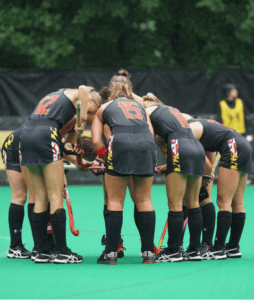
Team huddleNo one can do it alone, sitting in their own little corner.


Not the E.D. Not the development director. Not the development committee of the board. Not the fundraising consultant.

One-person shows don’t work in fundraising.

This isn’t tennis, figure skating or golf. You’re not one person trying to be the best you can be, with all the glory accruing to you. You’re part of a team, all pulling together in the same direction, with the glory accruing not just to your team but also to your fans and your community.

Siloes don’t work in fundraising.

You aren’t saving up grain for the winter. Besides, simply hoarding won’t help enough. Development operations must figure out how to grow and harvest as much grain as possible so you can feed more and more people in need. Hoarding in siloes is a scarcity, not an abundance, mindset. A status quo, not a growth mindset.

If you have vision and big goals you need a team to see you through.

How Do You Build Your Development Team?

Begin with recruitment of stakeholders.

Look around you. Who do you see? You see internal and external stakeholders. People who care about your organization winning.

Generally, you’ll see:

Truth: newspaper headline

Fundamental Fundraising Truths: Yesterday, Today, Tomorrow

Truth: newspaper headlineThe Lilly Family School of Philanthropy projects total giving will grow by an estimated 4.1% in 2021. So you can’t use the pandemic as an excuse for raising less money in the year ahead.



Nor should you ever adopt a sky-is-falling stance of “we can’t compete in this environment, so let’s lower expectations and cut back.”

Did your organization cut back on development expenses last year?  Did you lay off fundraising and marketing staff? Did you send fewer appeals?

If you did, chances are you didn’t tell, and sell, your case for support.

At least not as effectively as possible.

That’s a sure-fire recipe for raising less money than you could or should.

Here are three evergreen, fundamental fundraising truths:

1. It Costs Money to Make Money

12 cups coffee

12 Quick Strategies to Boost Year-End Fundraising

The biggest fundraising time of the year for most nonprofits inexorably approaches.

It can be stressful.

Don’t succumb to the stress. You’ve got this!

Perhaps you can’t do everything you’d like to do this year, but you can do some things.

Here are 12 strategies that will pack a big punch.

  • Some you can do on your own.
  • Some will require support from technical and/or marketing staff.

Don’t become discouraged thinking you don’t have the time. Sometimes you don’t have time not to do these things.

None of these suggestions are big time consumers standing alone. They’re each little tweaks. Because often it’s the little things that count. That pack a surprising wallop.

So don’t save all your energy for writing your appeal. Help your appeal along by putting some of the dozen suggestions that follow into effect.

Even just one or two will make a difference.

Let’s get started…

6 Strategies to Convey Your Most Emotional Fundraising Appeal Story

2020-10-11 14.40.58People are wired for stories.

We use them to understand our world.

But do the same stories work in any time? For any person? No.

You need to understand your SMIT story – ‘Single Most Important Thing’ – at this moment in time.

And that SMIT will change, depending on the environment in which you’re operating.

You need to know your audience. Today. The story you told last year may not work as well this year.

  • The story must be relevant to the donor – which will depend on what is top of mind for them.
  • And the need to give the story a happy ending must feel urgent.

Relevancy and urgency are the key to emotional appeals.

Collage of nopnprofit heart logos

Survival of the Most Loving – and Loved (aka, Why do so many charities have ♥♥♥ in their logos?)

Collage of nopnprofit heart logosWhy do people – with plenty of worries and expenses — give hard-earned money that could otherwise be spent on their own families, taxes and bills to complete strangers via philanthropy?


It’s not a rational thing to do.

This is a question that puzzled Charles Darwin.

While known for the theory of “survival of the fittest” (which actually was coined by the philospher, Herber Spencer), Darwin posited the notion of “survival of the kindest,” finding sympathy to be the strongest human instinct. You see, survival doesn’t necessarily mean the strongest or most aggressive. It depends, as much if not more, on cooperation and empathy.

Which would mean people give to be helpful because they’re biologically wired that way.

It simply pays off to come from the heart and be generous.

Humans are wired to be selfless.

Recent research in psychology agrees with Darwin,

Message painted on stairs - We are in this together

Nonprofit Social Media in Time of Coronavirus – and Any Other Time

Message painted on stairs - We are in this togetherThis is one place you don’t have to social distance.

In fact, this is perhaps the most opportune time ever to do exactly the opposite.

But, not to worry.

Getting up close and personal… getting connected to your supporters and potential supporters in an authentic way… this is among the safest things you can do to give people warm, virtual hugs. At a time when folks are missing human contact the most.

And guess what?

It will make people feel good!

And when you make people feel good, they’ll associate that good feeling with you.

This sets the stage for them to be receptive to your call to action when you’re ready to make it.

Social Media is Not a Stand-Alone Strategy.

Yet it can significantly increase the depth and breadth of your marketing reach.

You might think of social media as the new nonprofit advertising.

Per fundraising expert Tina Cincotti, donors are more likely to give, and stick with you, if you connect to them through multiple points of contact. In fact, they give at least 20% more than those connected through only one channel.

You don’t have to be everywhere, do everything, all the time.

When you think this way, you’ll never start.

Begin at the beginning.

Paper heart tacked to tree, with motto

Are You Unclear on the Concept of Why to Send a Nonprofit Fundraising Appeal?

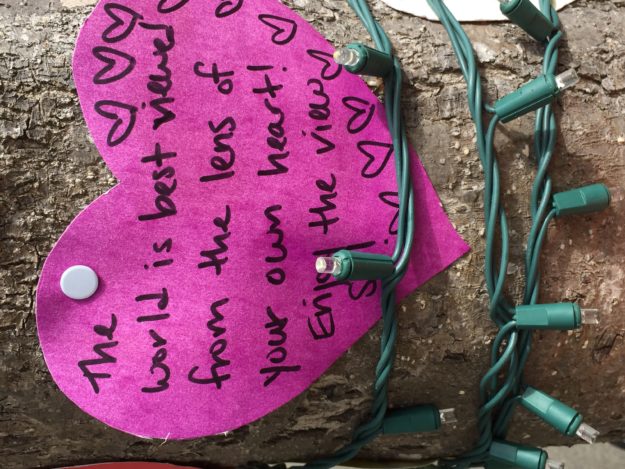
Paper heart tacked to tree, with mottoWhat’s the point of a fundraising appeal letter?


That’s obvious, right? To raise money!

But, wait a minute.

Dig deeper.

I always ask the question “why?” until I finally get to the end – where no more ‘why’ questions need to be asked — and uncover the true purpose behind anything I’m doing.

So… why are you endeavoring to raise money?

Because your organization needs contributed income.

Why does your organization need contributed income?

Because you don’t generate enough earned income to enact your mission.

Why don’t you generate enough earned income?

Because you make your services available for free or low cost to those who otherwise couldn’t afford them.

Why can’t folks afford what you offer without subsidy?

Because they’re … elderly on fixed incomes… vulnerable children… newly arrived immigrants… low-income single parents… families living below poverty level… veterans… unemployed… homeless… devastated by a natural emergency or illness… saddled by debt… or otherwise at-risk, marginalized, overlooked or being in need of a break.

Why else do you need community support?

Because the upfront cost is greater than the market will bear, but worth it for the ultimate community good of… a cure for a terminal disease… relief from devastating pain… ending injustice… saving the environment… preventing violence, abuse, addiction, suicide… restoring faith and inspiration to those whose lives would otherwise lack meaning, fulfillment and hope.

Aha! Now that you’ve answered all these important “why” questions you know the point of your fundraising appeal letter or email. Right?

It’s to get people to understand the benefit of their gift; what will happen absent their generosity.

It’s more than ridding themselves of the dollar they had burning in their pocket.

But wait another minute.

Can you dig still deeper?

Why do you want people to understand the outcome they can create?

Because… 

Reading on Laptop - How to Improve Your Nonprofit Newsletter

How to Improve Your Nonprofit E-Newsletter

Does your nonprofit have an email newsletter?

I’d rather see you rock a blog, but let’s talk a bit about your newsletter. Since you already have one, you may as well make it better.

Otherwise, what’s the point?

[BTW: If you don’t have an e-newsletter, go read the article above about creating and rocking a blog. Also read this. A blog can serve the purpose of an e-newsletter, and do so in a more donor-centric, user-friendly fashion. IMHO.]

Okay. Back to improving your newsletter. You can always evolve it into a blog (and doing so will make sense after you read the rest of this article).

Guess what most donors simply won’t tell you about your newsletter?

It’s boring them to tears!

Or at least most of it is.

Actually, let me rephrase. Not to tears. That would mean they’re feeling an emotional connection. Sadly, they’re not.

Why?

Most Donor Newsletters Are Boring To the Point Of Numbness

Moonrise-large.jpg

Philanthropy, Not Fundraising: I Have a Dream 2020

Today would have been Dr. Martin Luther King’s 91st birthday. During his lifetime he challenged us to recognize the privilege of being part of the struggle for goodness to prevail. He did not live to get to the promised land, yet he saw it from the mountain top. And in his famous speech he mused on the question of what he would say were he to be given the extraordinary opportunity to live in any moment in history. His answer to the Almighty was, “If you allow me to live just a few years in the second half of the twentieth century, I will be happy.”

Today we are here, and our challenge is whether we can approach our world with the same degree of gratitude and moral resolve. Our times are challenging.  Political division, escalating, senseless violence across the planet, threats to free speech, the spread of fake news, a deepening divide between classes, the existential threat of climate change, and a creeping sense of dread as events begin to seem out of our control.  The world can seem a cruel and barbaric place. Philanthropy – love of humankind — can seem elusive. Yet it’s right here. In each of us.

King challenges us to recognize that even in dark times, there is light to be found: “I know that it’s only when it is dark enough that one can see the stars.” As we toil in the vineyards of the social benefit sector, it is our privilege — and responsibility — to carry Dr. King’s torch and let shine the light. To muster all our spiritual, moral, individual, and communal resources to drive out the darkness. Today, with my annual “I Have a Dream” post, I invite you to consider what you can do to adapt, stay positive and make a beneficial impact on the world within and around you — yourself, your family, your friends, your neighbors and strangers.

“The time is always right to do what is right.” ~ Martin Luther King Jr.

I have a dream for 2020 – and beyond. I have a dream this is the year your organization will move beyond defining yourself by what you’re not (nonprofit) and will begin to define yourself by what you are (social benefit). I have a dream this is the year your people will move from an attitude of taking and hitting people up (aka “fundraising”) to a mindset of giving and lifting people up (aka “philanthropy”). I have a dream this is the year your staff and volunteers will move from enacting transactions to enabling transformation.

I have a dream you will push yourself and your organization this year. You will take the bull by the horns, adapt to the digital revolution and open yourself to the possibilities change brings. You will give up on the static donor pyramid, ladder and funnel theory of engagement and put your donor at the center of a new, active engagement model that reflects the myriad ways people connect with organizations and causes today. You will find donors where they are.

I have a dream you will learn who your best influencers and advocates are and you will embrace them.  You will recognize you are no longer your best messenger. You will understand many forces beyond you influence your donor’s decision to invest with you, and you will expand your thinking and operations from a one-dimensional to a multi-dimensional model.  You will allow your constituents to engage with you at multiple points of entry, and to move freely between these points during the life cycle of their engagement.

I have a dream you will think big, because thinking small will not get you where you need to go. 

mindblowing-176x300.jpg

Your Secret to Mindblowing Fundraising – Improve Donor Retention Just 10%

Imagine what it would mean to your mission if you doubled the lifetime value of all of your current supporters.

Do you know even know what percentage of donors you’re retaining?

According to Jay Love, founder of Bloomerang, less than 45% of fundraising offices know this answer!

So, you’re not alone.  But you can do better.

Because knowing your retention rate enables you to move it to something better.

And I’m going to guess, if you’re like the majority of nonprofits, you probably need to improve your donor retention.

At least if you want to grow.

Or maybe even just survive.

Just a small change in retention, up or down, can mean thousands of dollars.

It’s your choice whether they’re your gain, or your loss.

Walkathon participants

8 Secrets to Keeping New ‘Third Party’ Donors

By now you undoubtedly know you’re losing too many first-time donors.

In fact, the most recent Fundraising Effectiveness Project report shows you’re losing an average of 68% of these folks!

Today I want to talk about a subset of new donors who don’t renew.  They’re called “third party donors,” and they come to you through a variety of portals:

  1. Guests of event ticket buyers
  2. Online auction purchasers
  3. Donors who give to friends’ P2P fundraising pages
  4. Donors who give to crowdfunding campaigns sent to them via a friend
  5. Donors who make tribute gifts in honor or memory of a friend or loved one

The good folks at Classy know most nonprofits are not doing a good job cultivating donors who come to them through third parties, so they’ve prepared The Guide to Courting Third Party Donors. You can download it for free (40 pages), but let me give you the highlights – along with some of my own thoughts.

boy doing head stand

If You Get Nonprofit Donors to Ask this Question, You’re Home Free

There’s a simple six-step process to assure you secure a philanthropic gift.

The heart of this process — your key to success — is to flip the philanthropic asking equation on its head and get your donor to ask you, not vice-versa. 

That’s right.

Just get your donors to pop this one little question, and you’re home free.

Of course, you have to set them up to pop this question. But it’s easy, once you know the formula.

And I’m going to share that formula with you today.

Guess what else is really great about this?

It’s not scary!

If fear has been holding you back, today is your hallelujah moment.  Because I’m here to tell you exactly how to get your donors to ask you for a gift, rather than the other way around.

language of love alphabet

Nonprofit Gift Planning: Do You Use the Language of Love?

language of love alphabetI recently listened in on a thoughtful webinar by Scot Lumpkin for The Stelter Company. It’s all about meaningful conversations with donors who (you hope!) may contemplate a gift to your organization.

To get folks to “YES” you just need to learn the language of gift planning!

It’s not just about HOW people give, but WHY.

Scott was speaking of what is often called ‘planned giving.’ It’s a term that’s unfortunately come to mean giving vehicles, which is a decidedly non-donor-centric way of framing things.

Anyone who contemplates a major, or stretch, outright gift plans ahead.

No one just gets up one morning and decides to give away $10,000.

Or let’s just stipulate it’s relatively rare.

Rather, would-be philanthropists consider how making a particular gift at a particular point in time may match their values and helps them accomplish their objectives, personal and philanthropic.

It’s seldom a spur of the moment action.

For purposes of this gift planning article, let’s consider your audience to be prospective major (outright) and legacy (deferred) gift donors.

Let’s try an experiment.

How Leaning Into Fear Can Change the World

A very accomplished friend of mine wrote a provocative, and beautiful, article over three years ago.

It’s called On Political Fear, and was written by Tara Mohr, author of Playing Big (named a ‘best book of the year’ by Apple iBooks) and an expert on women’s leadership and well-being. Tara writes a lot about creating a more sane and compassionate world — through leadership, courage and creativity.

That’s the raison d’etre of the social benefit sector, which is why the article resonated with me on many levels, not the least of which spoke to me wearing my hat as a philanthropy facilitator and nonprofit coach.

I shared her article then. I want to share it again.

Tara, in speaking up, described herself as “proudly afraid.”

Are you “proudly afraid?”

4 Keys to Raise Money in Today’s Social Nonprofit Fundraising Environment

keys 4 Pixabay-791641_640Wondering where fundraising is heading in our highly networked, overly saturated, noisy-as-all-get-out post-digital revolution world?

It’s a bit of a jungle out there, with so much competition for attention — for-profits, other nonprofits, political campaigns, friends, family.

It’s a wonderful time to seize the opportunity to put in place a system that values multiple voices.

Truly, if you’re able to really show people how much you value them, you’re going to rise to the top of the heap.

Of course, sometimes it’s easier said than done.

Today we’ll explore 4 keys to raising money in our socially-revolutionized zeitgeist.

Bad News/Good News:

cheerleader

3 Ways to Remove Psychological Barriers to Philanthropic Giving

If you can remember this acronym, you’ll be able to persuade more donors to join you and stick with you. This is deceptively simple stuff.

And it really, truly works!

Give me a ‘D’ for DOUBTS!

Give me a ‘U’ for UNIQUENESS!

Give me an ‘E’ for EXPECTATIONS!

What’s that spell?

That spells what you must overcome to win over donors!

What’s that spell?

That spells what you owe your donors!

What’s that spell?

That spells what you must meet to show you’re worthy!

Ready to ‘D.U.E.’ it?

Let’s get started!

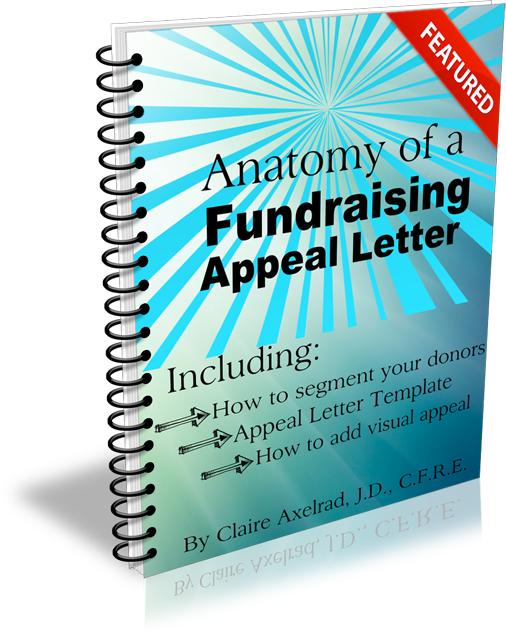
Book cover - Anatomy of a Fundraising Appeal Letter

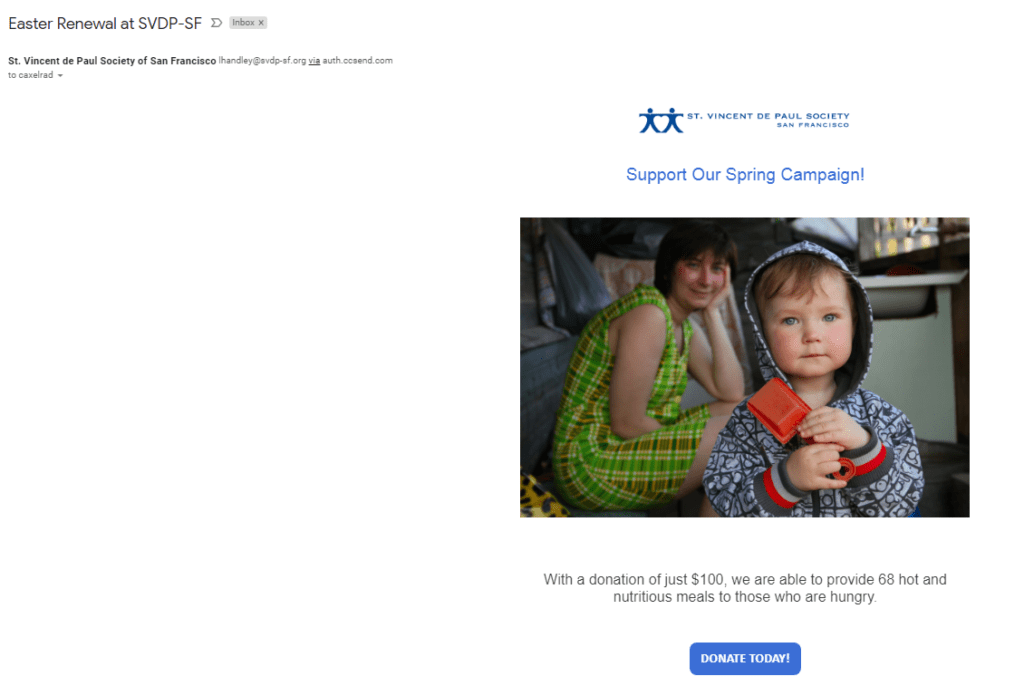
NEW Feature: Fundraising Do’s and Don’ts — Spring Email Appeal

I’m offering a new feature of “Do’s vs. Don’ts.” I’ll run it occasionally, as ‘teaching opportunities’ arise. Please let me know if you find it useful!

Okay, let’s begin with today’s timely spring email example.  Do you think it’s a “Do” or a “Don’t?”

What’s wrong/right with this picture? **

EmailNO_StVincentDePaulSF

I’ll tell you my own thoughts in a moment.  But first…

Think it through yourself because you’ll likely get more out of this if you do.

Seriously, I mean it.  We learn best by doing.

Take five minutes and jot down your answers to the following questions on a piece of paper or your screen.

Museum painting of woman perhaps not living to her potential?

Are You Failing to Achieve Your Nonprofit Fundraising Potential?

Too often, fundraising is relegated to an administrative function rather than a mission-central function.  It’s viewed as a ‘necessary evil.’ As a result, either no one embraces it as central to their job description, or someone is hired and shunted off to a corner to do the ‘dirty work.’

Others don’t necessarily feel a need to cooperate or support the fundraising effort. It’s ancillary, not primary.

In fact, I’ll often hear executive directors or board members tell me, with some pride and a soupçon of defensiveness: “We can’t spend money on development staff right now; anything extra we have must go into the mission!”

As if fundraising doesn’t support the mission?  Seriously, that’s the entire purpose of what nonprofits call ‘development’ (aka fundraising and marketing). It derives its purpose from ends served. It’s never an end in itself.

What this so-called ‘mission first’ logic fails to acknowledge is that everyone associated with your nonprofit is guided by a ‘mission first’ philosophy and has a collective stake in your nonprofit’s survival.

And for most nonprofits, survival – or at least some level of mutually desired success – depends on philanthropy.

When fundraising is treated as an afterthought, relegated to the development committee, or delegated to the development director, it disenfranchises a huge segment of folks who care about sustaining the cause. This means you’ll leave money on the table and fail to realize your mission potential.

It takes a dedicated village to generate sustainable, meaningful philanthropy.

I’ve found four ways nonprofits don’t wholeheartedly commit to fundraising. They all have to do with typical priorities that aren’t standing them in good stead.

Figure on treadmill

You Control Nonprofit Donor Retention

Are you caught in the trap of transactional fundraising?

Donors come in. Donors go out.

One-time gifts are here today, gone tomorrow.

It’s like being on a non-stop treadmill.  Just exhausting!

There’s a way to catch your breath, and even begin to enjoy breathing again.

Instead of continuing on as a transactional fundraiser, become a donor experience transformist!

Receipt of the gift is the beginning, not the end.

Before you can create a transformative donor experience, you must undergo a transformation of how you think about donor acquisition and retention. If your holy grail is simply getting the gift, you’re missing the point.

Moonrise-large.jpg

Philanthropy, Not Fundraising: I Have a Dream 2019

Dr. Martin Luther King, Jr. spoke of standing up for what’s right, even when it isn’t convenient. There is so much happening in the world around us today, and at such an unprecedented, rapid pace, it’s sometimes challenging to make sense of it all.  And, in particular, our place in it all. How will we face the world of 2019 and beyond? What challenges will we take on, and how? What can we do as individuals, as groups, as organizations, and as a community to adapt, stay positive and make a beneficial impact on the world within and around us — ourselves, our families, our friends, our neighbors and strangers. What can we do, especially, to protect and defend and care for the most vulnerable among us? What can we do that is not just transactional, but transformational?

“The time is always right to do what is right.” ~ Martin Luther King Jr.

I have a dream for 2019 – and beyond. I have a dream this is the year your organization will move beyond defining yourself by what you’re not (nonprofit) and will begin to define yourself by what you are (social benefit). I have a dream this is the year your people will move from an attitude of taking and hitting people up (aka “fundraising”) to a mindset of giving and lifting people up (aka “philanthropy”). I have a dream this is the year your staff and volunteers will move from enacting transactions to enabling transformation.

I have a dream you will push yourself and your organization this year. You will take the bull by the horns, adapt to the digital revolution and open yourself to the possibilities change brings. You will give up on the static donor pyramid, ladder and funnel theory of engagement and put your donor at the center of a new, active engagement model that reflects the myriad ways people connect with organizations and causes today. You will find donors where they are.

I have a dream you will learn who your best influencers and advocates are and you will embrace them.  You will recognize you are no longer your best messenger. You will understand many forces beyond you influence your donor’s decision to invest with you, and you will expand your thinking and operations from a one-dimensional to a multi-dimensional model.  You will allow your constituents to engage with you at multiple points of entry, and to move freely between these points during the life cycle of their engagement.

I have a dream you will think big, because thinking small will not get you where you need to go. 

Stuffed animal with heart of light

Shared Cure-Alls: Philanthropy and Placebo Effect

Stuffed animal with heart of lightCan the act of philanthropy make people feel better?


I say “Yes. Absolutely.” Much has been written about the warm glow that comes from giving.

So why not think about fundraising as a caring act, and fundraisers (aka ‘philanthropy facilitators’) as trusted helpers and healers?

Reframing fundraising in this way can be your key to:

(1) committing to major individual donor fundraising (helping people to be the people they’d like to see in the mirror), and

(2) engaging more staff, volunteers and board members in this noble endeavor (so they experience not just the joy of giving, but the joy of helping others give).

It helps to understand the similarities in findings from functional MRI research on both the placebo and philanthropy effects.

Boy and Little Red Wagon

Do One of These 12 Strategies Before Year’s End to Raise More Money

The biggest fundraising time of the year for most nonprofits inexorably approaches.

It can be stressful.

Don’t succumb to the stress. You’ve got this!

Perhaps you can’t do everything you’d like to do this year, but you can do some things.

Here are 12 strategies for you to consider. Each will pack a big punch.

Some you can do on your own. Some will require support from technical and/or marketing staff.

Here’s the thing:  Often it’s the little things that count. That pack a surprising wallop.

So don’t save all your energy for writing your appeal. Help your appeal along by putting some of the dozen suggestions that follow into effect.  Even just one or two will make a difference.

Let’s get started…

TWO Strategies to Tell a Compelling Nonprofit Story

I always tell nonprofits writing appeal letters to tell a story. One compelling, exceptional story.

Actually, you need TWO compelling stories.  We’ll get to that in a minute.

First…

Forget the data.

Forget the history of your organization.

Forget the explanatory prose about your processes.

Forget the list of all your programs.

Forget the superlatives about your longevity, awards, and so forth.

That stuff is compelling only to you. Donors don’t care. It’s just not relevant to them. At least not right away. Donors don’t have time to enter into all your self-indulgence.

Really, most folks don’t have time for you at all.

But…

10 baby toes

10-Step Annual Appeal from Start to Finish

The end of the calendar year is prime fundraising season. For most nonprofits, September through December will make or break your annual campaign. So… I want you to do the following:

  1. If you’re just sitting down to write your appeal letter, use this as your step-by-step guide to crafting a winning fundraising offer.
  1. If you’ve already written your appeal letter, use this as your step-by-step checklist to assure your fundraising offer is truly one a prospective donor won’t be able to refuse.
  1. Vow next year to have at least your appeal letter draft written and approved by September 1st. Put this date in your calendar, and work backward to create a timeline of all the steps necessary to meet this deadline. This will give you plenty of time to tweak your appeal language for different mailing segments, prepare your email and social media campaign using messaging and images from your mail appeal, get the letter to the printer and mail house, and prepare your carrier envelope, remit piece, donation landing page, thank you letter and overall acknowledgment plan.

brain and mind

Fundraising Appeal Q & A: 6 Concrete Tips to Overcome Common Challenges

I recently had the opportunity to present a webinar for the Fired Up Fundraising Community on the topic of creating a compelling fundraising offer your donor can’t refuse. We covered a lot of territory, so at the end there was limited time for questions.  Many were left unanswered.  So…

I decided to answer in writing the ones that seemed to be repeated by more than one person.  These challenges, it appeared, were common enough they required some solutions. Or, at the very least, some clairification!

I sent the Q & A to all the webinar participants and thought, gee whiz, why don’t I share it with all of you too?

Here we go…!!!

Man jumping over mountain

How to Transform Reluctant Fundraisers into Ready Fundraisers

How do you help those who are afraid of fundraising to become comfortable in what should be a mission-aligned role for everyone associated with your nonprofit organization?

After all, everyone benefits from increased philanthropy.  Not just development staff.

Increasingly, successful nonprofits are adopting cultures of philanthropy where everyone involved – administrative staff, program staff, board members, committee members, direct service volunteers and even beneficiaries – comes together as ambassadors, advocates and askers on behalf of furthering the organization’s mission, enacting its values and fulfilling its vision.

Facilitating philanthropy is not rocket science, yet folks unaccustomed to the relationship cultivation and solicitation required to land major donations are fearful because they don’t know how to do it. It’s the job of a nonprofit’s leadership to work with your insiders (staff and volunteers) to help them feel both passionate about the cause and confident in the fundraising process.

Still, there are barriers to be overcome; first and foremost is fundraising fear.  This fear takes many forms, and is perhaps best expressed in some of the questions I frequently receive.  So I’m endeavoring to answer a few of these questions below.  Hopefully this will help you address these challenges within your own organization so you, too, can transform folks from fearful and reluctant to joyful and ready fundraisers.