Frankenstein drawing

Are These Fundraising Appeal Best Practices Holding You Back?

Frankenstein drawingFull confession: I’ve used the franken “best practice” appeal structure for years. And honestly? It works — especially if you borrow generously from the best of the best appeal writers. I’ve even taught these practices at conferences, on webinars, and through consulting engagements.

You probably know the formula:

  • Lead with the beginnings of a story illustrating your mission.

  • Introduce a compelling need or problem.

  • Offer a specific, credible solution.

  • Ask.

  • Provide more context about the need.

  • Share more details about the solution.

  • Ask again.

  • Suggest a hopeful conclusion — one the donor can help create.

This structure isn’t wrong.

It’s a well-intentioned attempt to do all the right things.

But over time, something gets lost. It becomes less of a cohesive narrative and more of a checklist — a stitched-together collection of tactics. And like any Frankenstein’s monster, it can start to look and feel… unnatural.

You Can Do Better Than Franken-Fundraising

Here’s the truth: I know better now.

Woman showing "help" written on hand

Do You Assume Donors Don’t Want to Be Asked?

Woman showing "help" written on handAssuming people don’t want to be asked to make a philanthropic gift is one of the biggest misconceptions of what constitutes being donor-centered.

Or even kind, thoughtful and respectful.

Alas, when you spend all your time on cultivation, assuming folks don’t need a direct ask and will simply give spontaneously as a result of being passively asked, or even outright wooed, everyone loses.

  • You short-change your organization.
  • You short-change your beneficiaries.
  • You, especially, short-change your would-be donors.

Why?

FIRST: Donors want to be asked because they’re starved for the love that comes from voluntary giving and receiving.

Donors have love to give, but don’t always have an object towards which to direct their affection.

SECOND: Donors need to be asked because when they’re not, they don’t know how much you need their help.

Consequently, giving feels a bit like a crap shoot.  Empty, not meaningful. Donors want you to honestly tell them when and how and how much to give, so investing their money fills them with confidence it will be appreciated and do the most good.

Don’t make donors guess whether you truly find them worthy of loving you.

Donors are Love-Starved

One of my favorite songs is from the Jefferson Airplane:

When the truth is found to be lies
And all the joy within you dies
Don’t you want somebody to love
Don’t you need somebody to love
Wouldn’t you love somebody to love
You better find somebody to love

What are you, and all these people, doing with the gift of life?

Sure, everyone is busy, busy, busy.

But is all that busy-ness making folks happy?

Are people stopping to really think about what makes their lives meaningful?

Sometimes, yes.

Often, not so much.

You can help would-be donors stop and smell (and enjoy) the roses, so to speak.

Philanthropy is Love

Blocks spelling YES

The Psychology of Yes: What Every Fundraiser Needs to Master

In 1984 Robert Cialdini wrote a groundbreaking bo, Influence: The Psychology of Persuasion, outlining principles of influence that affect human behaviors. Today these principles have been well documented. Trail-blazing research added by behavioral scientists like Daniel Kahneman and Amos Tversky supports and expands on Cialdini’s principles. No matter how much technology advances, the triggers behind human behavior and…

Rocks, balancing.

Balancing Trick: You. Donor. Nonprofit.

Rocks, balancing.When the world feels wildly out of whack, it’s time to figure out how to bring things back into some semblance of balance.

Today I share a proven 1-2-3 formula for nonprofit fundraising success — even when the ground underneath feels shaky.

This is a time when keeping one’s balance is quite a challenge. But, if you use this formula, you can steady yourself, right your organizational ship, and bring meaning, purpose and joy to others in your community who share your values.

What I’m about to share is obvious. I know you know it. But… do you do it?

Just in case you need a little reminder.

  1. The first step is essential for success in anything.
  2. The second step is essential for success in any consumer-facing business.
  3. The third step is essential for success in reaching any fundraising goal.

Begin with Centering Actions: For Yourself, Others and Your Mission.

I’m talking about balancing self-love with donor-love with mission-love.

You’re no doubt familiar with the adage “You can’t help others unless you first take care of yourself.”

This is a truism you should carry with you throughout your life, and not just when the oxygen masks come down on an airplane. It’s never been truer than in the times in which we’re currently living, when there are new things about which to worry seemingly daily.

How do you lead the way forward, helping yourself and others navigate through the tough times?

I’d like to suggest you heed this 3-Step Formula to nonprofit fundraising success.

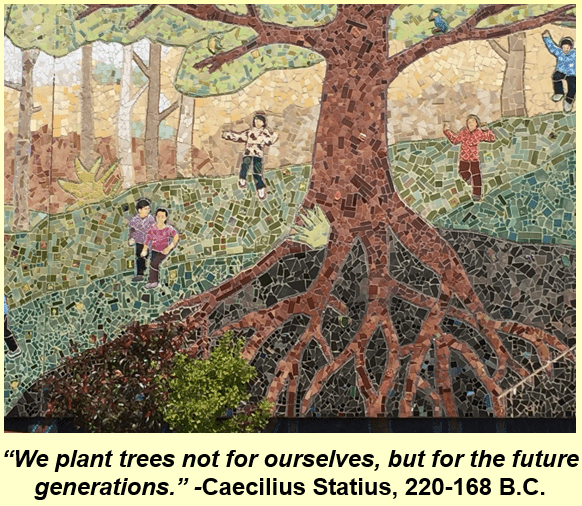
We plant trees not for ourselves mural

How 13 Nonprofit Donors Yields a $1 Million Philanthropic Legacy

We plant trees not for ourselves mural13 happens to be my lucky number. I want it to be lucky for you too.

Today, I’m going to reveal to you how you can make this happen.

A survey of wills reported on by the Chronicle of Philanthropy revealed the average bequest by everyday donors is $78,630. The survey is a few years old, but as a working average this will suffice. Some people will leave less; some people will leave more.

The point revealed by this survey is you only need about 13 donors (give or take a few) making a provision for your organization in their will to reap $1+ million.

If a major gift for your organization is $1000 (or even 5000 or 10,000), I imagine this sounds off the charts to you. Guess what?

Legacy giving is off the charts!

In fact, bequest marketing produces the highest ROI (return on investment) of any fundraising activity. And a highlight of the 2023 Giving USA Report is that charitable bequests, at $43 billion, were up 4.8% over the previous year and are the only source that exceeded the rate of inflation. Bequests make up a sizeable piece of the contributed income pie, representing around 8-10% of total giving over the last 40 years.

The first step to making this happen for your organization is to encourage bequests.

Actively.

Promote Charitable Bequests, or Else

If you don’t actively encourage charitable bequests, people are unlikely to make them.

Why? There are three primary reasons:

puzzle pieces

Because They Care—Invite Donor Feedback to Deepen Your Relationship

puzzle pieces

You’ve got your work cut out for you.

How will you connect with donors in a manner that deepens their connection with you? How will you match their passions and values to the passions and values you enact?

You can’t — unless you explicitly ask donors for their feedback.

You do this with friends, family, co-workers, and neighbors, don’t you? “What do you think?” “Which color looks better?” “Paper or plastic?” “Italian or Thai?

Guessing about what floats your donor’s boat is as bad as guessing whether your family prefers Italian or Thai food for dinner. It’s a recipe for disaster. Or at least for satisfying exactly no one.

There’s a better way.

Show Donors They Matter: Use Surveys to Listen, Learn, and Deepen Connection

I get lots of questions about what to include in donor surveys.  But that’s the wrong place to begin.

First you must have clarity on why you’re sending the survey.

You can’t bring top value to your donor survey unless you’re specific about what value you want to receive and deliver. The great thing about donor surveys is they’re a genuine “twofer.”

  1. One is for you –useful information you will act on.
  2. One is for your donora way to usefully participate, other than giving money, and feel a part of a community of like-minded folks.

Donor surveys are an opportunity for a value-for-value exchange.

This is, after all, at the heart of all successful fundraising and marketing. The donor gives something of value (usually time and/or money) and you return something of value (usually an intangible “feel good;” a sense of meaning, purpose and connection). Donors are focused on value; you need to focus there too. But it’s tricky to do this unles you endeavor to get inside your donor’s head and find out how their values match those your organization enacts.

Never do something merely to check the task off your ‘to-do’ list.

If you’ve had “do a survey” on your back burner for a while, now’s the time to move it to the forefront and give it a closer and more purposeful look. Ask the “Why are we doing this?” question. What pieces of your particular donor puzzle are you looking to uncover? Begin with asking: How will I know this survey was successful?

Heartbreaking Missed Opportunities: Is Your Nonprofit Falling Short of Its True Fundraising Power?


Survival Depends on Collective Commitment and Deep Support

Too often, fundraising is relegated to an administrative function rather than a mission-central function. 

It’s viewed as a ‘necessary evil.’ As a result, either no one embraces it as central to their job description, or someone is hired and shunted off to a corner to do the ‘dirty work.’

Others don’t necessarily feel a need to cooperate or support the fundraising effort.

It’s ancillary, not primary. A cost center, not a revenue center. In fact, I’ll often hear executive directors or board members tell me, with some pride and a soupçon of defensiveness: “We can’t spend money on development staff right now; anything extra we have must go into the mission!”

As if fundraising doesn’t support the mission? 

Seriously, that’s the entire purpose of what nonprofits call ‘development’ (aka fundraising and marketing). It derives its purpose from ends served. It’s never an end in itself. What this so-called ‘mission first’ logic fails to acknowledge is everyone associated with your nonprofit is guided by a ‘mission first’ philosophy and has a collective stake in your nonprofit’s survival. And for most nonprofits, survival – or at least some level of mutually desired success – depends on philanthropy.

It takes a dedicated village to generate sustainable, meaningful philanthropy.

When fundraising is treated as an afterthought, relegated to the development committee, or delegated to a single staff member, it disenfranchises a huge segment of folks who care about sustaining the cause. This means you’ll leave money on the table and fail to realize your mission potential.

I’ve found four ways nonprofits don’t wholeheartedly commit to fundraising. They all have to do with typical priorities that aren’t standing them in good stead.

scrabble tiles: fake news

Totally FAKE Nonprofit News: 6 Fundraising Untruths

scrabble tiles: fake newsThere’s a lot about fundraising folks take for granted. And not in a good way. Because… much of it is untrue!

In fact, if you, your executive director, your board members or anyone else where you work subscribes to these fictions you’ll be in for a lot of pain and suffering. You won’t raise near the money you could otherwise raise. And you won’t enjoy your work.

But there’s a fix!

In the past I’ve written about certain self-evident fundraising truths. Truths you want to hold close to become a fruitful philanthropy facilitator.  The problem? These tenets I call truths are too often not apparent at all.

Why?

A disinformation campaign is unconsciously being waged by leaders who:

  • Don’t understand how fundraising works.
  • Don’t understand pre-conditions must be in place in order for fundraising to flourish.
  • Don’t want to understand because then they’d have to step up to the plate and do things that make them feel uncomfortable.

Oh, dear. Guess what?

Like anything else worth doing, fundraising must be done well to succeed.

You get out of it what you put into it. That’s the unvarnished truth —  the truth that shall set you free!

Sadly, if you believe any of the following untruths, your fundraising program is in jeopardy. And so is your mission. Let’s break these down.

Small pink pills forming a question mark.

Dramatic Shared Cure-Alls: Philanthropy and Placebo Effects

Small pink pills forming a question mark.Can the act of philanthropy make people feel better?

I say “Yes. Absolutely.” Much has been written about the warm glow that comes from giving.

So why not think about fundraising as a caring act, and fundraisers (aka ‘philanthropy facilitators’) as trusted helpers and healers?

Reframing fundraising in this way can be your key to:

(1) committing to major individual donor fundraising (helping people to be the people they’d like to see in the mirror), and

(2) engaging more staff, volunteers and board members in this noble endeavor (so they experience not just the joy of giving, but the joy of helping others give).

It helps to understand the similarities in findings from functional MRI research on both the placebo and philanthropy effects.

fruit in basket

Who Makes A Good Nonprofit Legacy Donor Prospect?

fruit in basketLegacy gifts don’t fall from the sky.

Legacy donors aren’t delivered by storks.

You won’t find them hiding behind cabbage leaves.

You’ll mostly find them living in your donor database, volunteer roster, alumni mailing list, membership roll, client files, service purchasers, and anyplace else folks connect with you and have a positive affiliation. An affiliation with you.

You see, the mere fact someone is wealthy does not make them a legacy giving prospect. And the fact they’re wealthy and philanthropically inclined does not make them a legacy giving prospect for your charity.

The biggest indicator someone is a good legacy giving prospect for your organization is their affinity and loyalty. Generally this is demonstrated through affiliation (how they are connected to you) and behavior (what they do with you).

Of course, someone who simply shares the values your organization enacts can also be a viable legacy giving prospect. But they’re not likely to make a bequest or other type of legacy gift unless you first develop their affinity and loyalty — to your charity.  So, let’s begin with the fruit already picked and in your donor basket.  We can look at the low-hanging fruit later. I do not recommend investing a lot of resources going after the fruit you’re hoping will just fall from the sky (though a little couldn’t hurt).

Sign StaySafeBeKind

Nonprofit Crisis Response Tip-a-Day-DO-Dah!

Sign StaySafeBeKindNo matter your politics, this is crisis time for many nonprofits who rely on federal grants and loans (about 30% of all charities).

It’s also crisis time for the beneficiaries of many nonprofits, who are scared, stressed, depressed and otherwise at loose ends due to the rapidly changing environment. Many of the resources on which folks once relied have disappeared or are at risk. For some of your constituents, it feels as if the rug has been pulled out. Or the other shoe is about to drop.

During times like these, people want to come together and help. It’s your job, as a philanthropy facilitator, to help them in this communal endeavor. Stay calm, carry on, and communicate your particular needs.

Resist the temptation to throw your hands up in the air, assume people feel too uncertain to give now, and simply leave folks (donors and clients) to their own devices. We know from past experience this won’t end well.

During the 2008-09 worldwide recession, many charities cut back on fundraising and marketing. Some of them still haven’t recovered. Something similar happened in response to the Covid-19 pandemic. People thought (assumed) it was unseemly to ask for contributions.

Be careful what you assume.

If you don’t ask, you don’t get.

Research collected from donors in response to the coronavirus pandemic showed:

  • Giving, and fundraising, was increasingly seen as good. Even donors who had been hit economically remained remarkably generous.
  • Charities with little relevance to tackling coronavirus still received support from donors that valued them – as long as they asked for help (otherwise they were perceived as not in need of funds).

“Many of the donors we spoke to report that they just don’t know what they should be doing or who they can trust. This led to a rise in levels of insecurity… Of course, they understand that things are changing and that plans will always need to adapt. But knowing that a strategy is in place will provide the security that they need. They also want to know what their role – as supporters – will be. And, most importantly, they are ready for a frank conversation about what is required of them.

2020 Report, Bluefrog Fundraising

Donors want to help – and will help – but they need leadership.

This means telling people what you do that addresses the problems that worry them. For people feeling helpless, this can give them a sense of control. Show them how they can join you, and become a part of a community of like-minded people who share their concerns and values.

It all boils down to a need to put together both short and long-term plans to connect meaningfully with your supporters right now, using the correct approach and tone. Towards that end, I’ve put together five ‘to-do’s – one for each day of the work week.  I suggest you put aside a little bit of time this coming week to consider how you might actualize each of these suggestions, if not in whole at least in part.

Ready for your five timely tips?

woman holding man's hand for safety

4 Nonprofit Strategies to Build Donor Trust & Lasting Relationships

woman holding man's hand for safety

Trust is Built By What You Do


In my last article, I wrote about why establishing and building trust should be part of your nonprofit and personal mission.

Because trust is the foundation of all lasting relationships.

If you don’t build trust, or if you somehow manage to destroy it, you’re going to lose your donor.

It’s an uphill battle, requiring a proactive approach.

Sadly, most nonprofits do a profoundly poor job of this.  By now you’re likely familiar with the stats on donor retention from the Fundraising Effectiveness Project.  The most recent report revealed only 13.8% of first-time donors renewed. Only half of all donors renew, which is still an appallingly low rate — but certainly speaks to the importance of securing a second gift..

If you want to improve on these retention rates (and you definitely can!), I’m going to suggest you develop a plan to build trust.

Trust is built not simply by what you say, but by what you do.  Not just once, but consistently over time.

symbolic rainmaking god

How to Build a Major Donor Program from the Ground Up

symbolic rainmaking god

Learn to become an “inside” major donor rainmaker

If you’ve got donors, you’ve got the raw material for a major donor program – and it’s easier than you think.

Begin with your own database.

Most organizations have plenty of donor prospects, without having to go outside and look for prospects who aren’t connected to you.

You know who I mean. The people board members tend to suggest. They may be rich, and may even be philanthropic elsewhere, but don’t have any interest in what you do. And no one knows them or can make an introduction to them.

Don’t start with the most out-of-reach prospects.

You can be a major donor prospect rainmaker without having to go outside or reach too far.

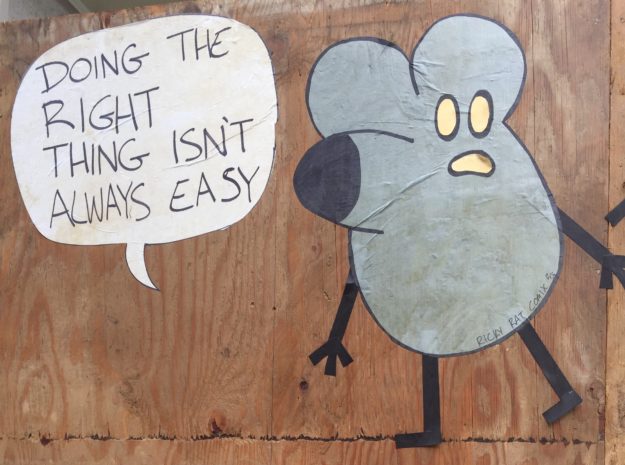
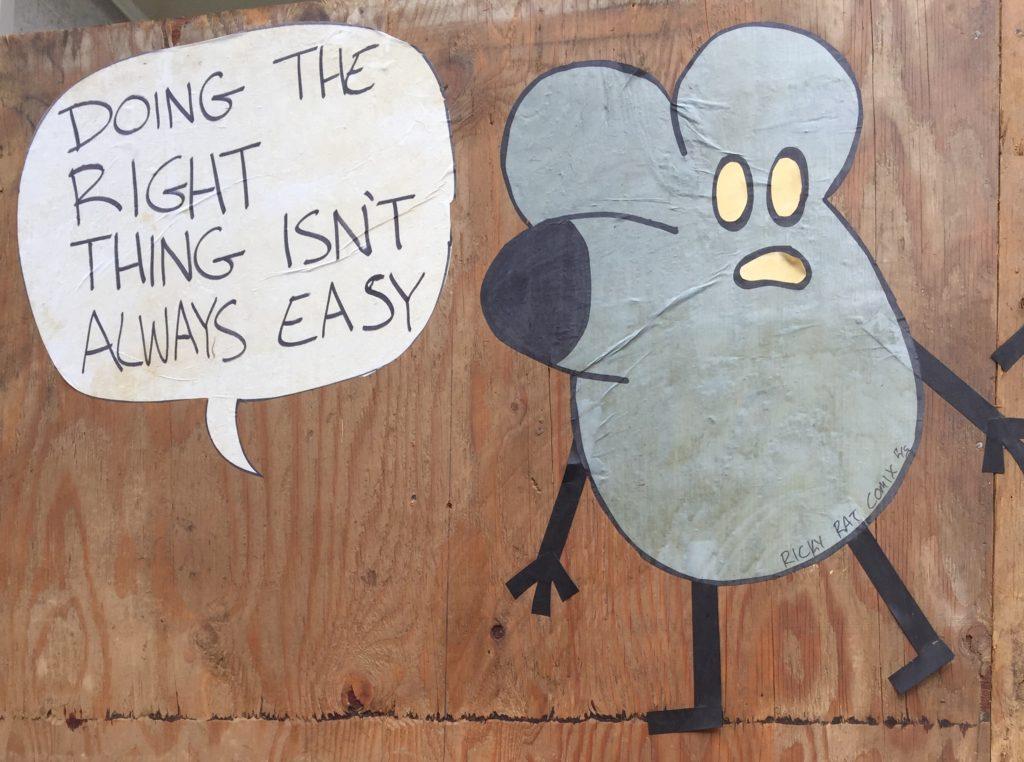
"Doing the right thing isn't always easy" storefront art

How Humanity and Trust Supercharge Nonprofit Fundraising

"Doing the right thing isn't always easy" storefront artEveryone’s been saying this, just about daily, for some time.

“These aren’t ordinary times.”

If the anthem for the Boomer generation was Bob Dylan’s “The TImes They Are A’Changin’,” what’s the anthem for today? History doesn’t repeat itself, but it rhymes. We’re living in the face of a firehose of breaking news, and much of it is difficult to digest. Let alone know how to face, handle and get through it with safety and sanity intact.

We can retreat, live in limbo or figure out a way to navigate through this reality and find opportunities to do our work in new and better ways.

It’s a difficult assignment, because it’s not easy to know where to begin.

As social benefit organizations, we want to come from a human-centered, community-centered place, but… what exactly might that be in this extraordinary time?

What the World Most Needs Right Now.

I think it’s humanity and trust.

Usually we have to guess at what will feel relevant to our supporters. Today, we pretty much know. Because we hear it all the time. On the news. On social media. When we zoom with colleagues. When we talk to our friends.

  • People want to know who they can trust.
  • People want their fellow humans to act the part.
  • People want to consciously engage — with humans they can trust — in a meaningful manner.

Social benefit organizations have a secret advantage.

Survival in the civil sector is based on the philanthropic exchange, and ‘philanthropy’ means ‘love of humanity’. Yet sometimes it seems all we see and hear is hatred of humanity. Us/Them.  Left/Right. Red/Blue. Young/Old. Good/Evil. Insiders/Outsiders. I could go on…

There’s a better way. When you infuse your nonprofit work with humanity, you’ll reach trust.

four people raise hands in support of your cause

Psychology of Securing Lasting Nonprofit Donor Commitments

four people raise hands in support of your cause

The more publicly people commit, the more resistant they are to changing their minds

This relates to one of Robert Cialdini’s principles of influence and persuasion: “commitment and consistency.”

The main point is this:

Once we make a decision, and strongly attach ourselves to an idea by agreeing orally or in writing, it’s more likely we’ll stick with that decision than change our minds.

Because we are wired to want to be consistent.

That to which we commit, especially publicly, becomes congruent with our self image.

What does this mean for you as a fundraiser?

12 cups coffee

12 Quick Strategies to Boost Year-End Fundraising

12 cups coffee

Percolate on these ideas; choose 1 – 2 to wake up your year-end campaign!

The biggest fundraising time of the year for most nonprofits inexorably approaches.

It can be stressful.

Don’t succumb to the stress. You’ve got this!

Perhaps you can’t do everything you’d like to do this year, but you can do some things.

Some you can do on your own.

Some will require support from technical and/or marketing staff.

Don’t become discouraged thinking you don’t have the time. Sometimes you don’t have time not to do these things.

None of these suggestions are big time consumers standing alone. They’re each little tweaks. Because often it’s the little things that count. That pack a surprising wallop.

So don’t save all your energy for writing your appeal. Help your appeal along by putting some of the dozen suggestions that follow into effect.

Here are 12 strategies that will pack a big punch.

Even just one or two will make a difference.

Let’s get started…

I am grateful

How to Cultivate Awe, Gratitude, Altruism and Meaning to Significantly Boost Nonprofit Fundraising

I am grateful

Philanthropy is about reciprocal awe, gratitude, altruism and purpose.

I’m a huge fan of the Greater Good Science Center at U.C. Berkeley, and often apply their research to nonprofit fundraising and marketing.  This particular article really strikes me today, because it talks about times when we feel isolated from others: How to Find Your Purpose in Life.

Over my 30 years of practice as an in-house development professional, I’ve encountered a lot of people feeling isolated. It’s one of the reasons they reach out to social benefit organizations, because they crave community and purpose. Depending on what’s going on in the broader world around us, this feeling can be more or less at the forefront of people’s experience. When this feeling creeps in, this is a time for you to rededicate yourself to your fundamental role as a philanthropy facilitator. Or, as my mentor (and who some call the “father of fundraising)” Hank Rosso said: your role in “the gentle art of teaching the joy of giving.”

Here’s what it boils down to:

You serve your donors every bit as much as they serve your organization’s mission.

Please allow that to sink in.

You have a mission and purpose. Donors can help you get there.

Your donors are looking for purpose. You can help them find it.

It’s a symbiotic relationship.  And you have a role in fostering that relationship.  What is that role?

Your job is to facilitate your donor’s philanthropic journey. Their journey to discover their purpose.

So what’s this really all about?

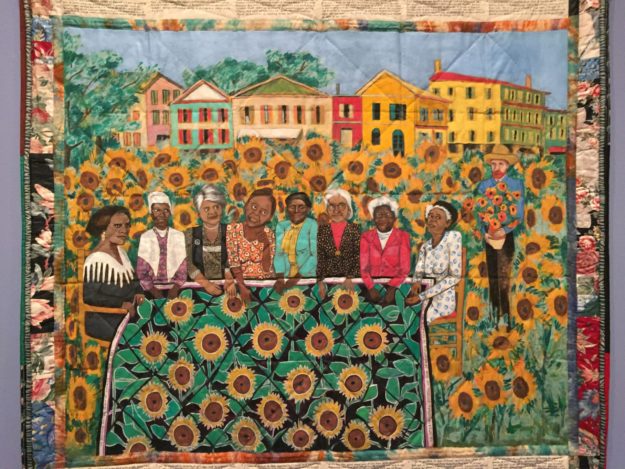
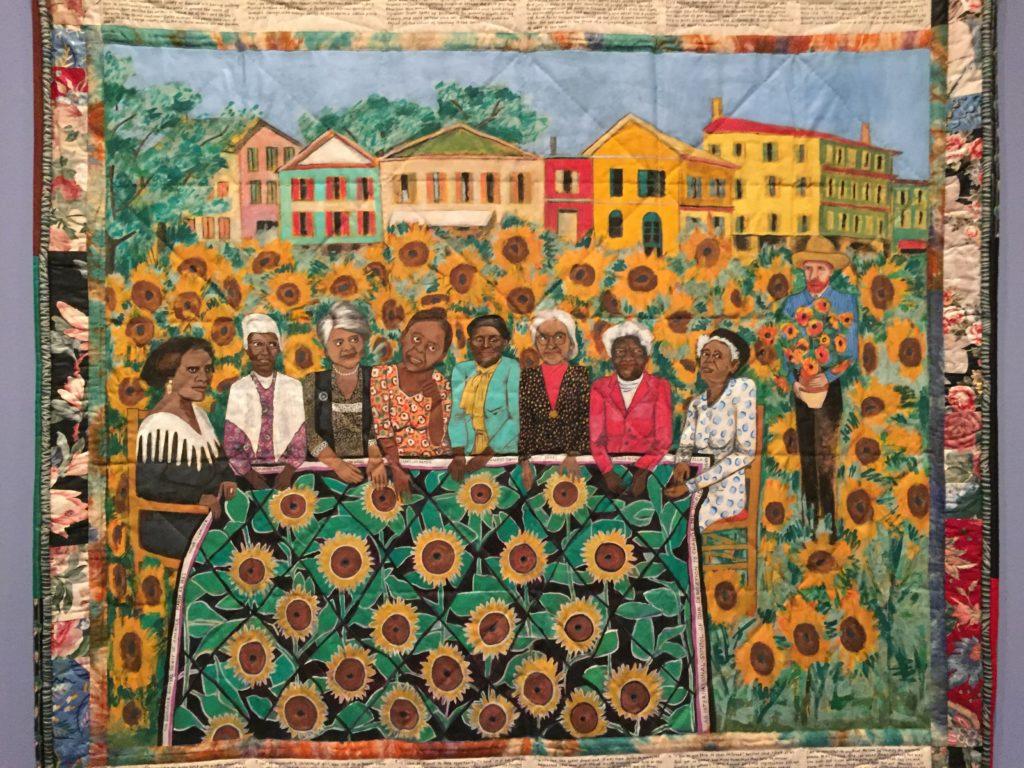
"Story Quilt" by Faith Ringold

How to Project Manage Your Nonprofit Story

"Story Quilt" by Faith RingoldYour nonprofit’s story is the whole ball of wax.

Without it, you’ve got nothing.

So let’s really talk about this for a minute.

A story is not “Give us money because we’re good guys and do good work.”

Nor are “Sustain humanitarian aid,” “Support the arts,” or “Save our rivers” stories.

Sure, there may be some implicit narratives hiding within these phrases, but they’re really tag lines or calls to action. Useful, sure. But not until you’ve laid the groundwork of telling a compelling story.

You never start a story with “And they lived happily ever after.”

Similarly, you should never start a fundraising appeal with “We saved the whales.” Where’s the emotion and drama here?

You know donors are moved to give through emotion, right?

The best way to get inside a donor’s head and heart is by telling a dramatic, emotional story. Something that taps into their core and arouses their curiosity, or some deeper feeling like sadness, fear or anger.

You see, human brains are wired for story.

Man jumping over mountain

Top 10 Strategies to Transform Reluctant Fundraisers into Ready Philanthropy Facilitators

What’s holding you back? Culture? Fear?

How do you help people afraid of fundraising become comfortable in what should be a mission-aligned role for everyone associated with your nonprofit organization?

After all, everyone benefits from increased philanthropy.  Not just development staff.

Increasingly, successful nonprofits are adopting cultures of philanthropy where everyone involved – administrative staff, program staff, board members, committee members, direct service volunteers and even beneficiaries – comes together as ambassadors, advocates and askers on behalf of furthering the organization’s mission, enacting its values and fulfilling its vision.

Facilitating philanthropy is not rocket science, yet folks unaccustomed to the relationship cultivation and solicitation required to land major donations are fearful because they don’t know how to do it. Actually, they do. They just need some guidance, hand holding and support along the way. Reluctant fundraisers tend to think fundraising is just about money. It’s a lot more than that.

It’s the job of a nonprofit’s leadership to work with insiders (staff and volunteers) to help everyone feel both passionate about the cause and confident in the fundraising process.

There are barriers to be overcome; first and foremost is fundraising fear.  This fear takes many forms, and is perhaps best expressed in some of the questions I frequently receive.  So I’m endeavoring to answer these questions below.  Hopefully this will help you address these challenges within your own organization so you, too, can transform folks from fearful and reluctant “fundraisers” to joyful and ready “philanthropy facilitators.”

6 Strategies to Convey Your Most Emotional Fundraising Appeal Story

2020-10-11 14.40.58People are wired for stories.

We use them to understand our world.

But do the same stories work in any time? For any person? No.

You need to understand your SMIT story – ‘Single Most Important Thing’ – at this moment in time.

And that SMIT will change, depending on the environment in which you’re operating.

You need to know your audience. Today. The story you told last year may not work as well this year. And here is why:

(1). The story must be relevant to the donor – which will depend on what is top of mind for them (hint: pay attention to the news).

(2). The need to give the story a happy ending must feel urgent (hint: pay attention to the news).

Whatever your mission, relevancy and urgency are the key to emotional appeals.

Happy donors

5 Strategies to Get and Keep More Donors for Your Nonprofit

Happy donorsPeople are unpredictable sometimes. They’re also predictable.

If you see someone yawn, you’re likely to yawn too.

If I tell you seats are limited, you’re likely to purchase a ticket now rather than later.

What if you knew getting people to donate to your nonprofit could be a predictable consequence of something you did?

It turns out you can encourage people to act in desirable ways, simply by applying a few lessons learned from neuroscience, psychology and behavioral economics. The truth is scientists have learned quite a lot over the past few decades. It’s up to us to put that learning to good use!

Alas, as Daniel Pink, author of To Sell Is Human, has noted: “There’s a gap between what science knows and what business does.” This applies to social sector businesses too!

That’s right. Pink explains the most successful for-profit businesses use what science knows to “convert leads to customers.”  The secret to more sales is knowing what the customer wants. Your non-profit might convert prospects into donors, and donors into repeat donors, using the very same principle.

The secret to closing more gifts is knowing what the donor wants.

Today I’d like to consider five specific strategies that will help you ethically take advantage of some of the psychology underlying human behavior. Once you understand these principles, you can begin to strategically apply them to your integrated development (marketing and fundraising) strategy. If you’re nervous about this, you can test what you did before against a new strategy informed by science. Break your mailing list randomly in half, send an “A” and a “B” version of your appeal, and see which performs best.

Ready for 5 science-informed strategies?

Colored pencils

What to Say When Your Donor Asks: How Much do you Spend on Overhead?

Colored pencils

I’ve been asked this question many times.

And not just by donors, but also by board members.

One of the ways I’ve answered is with my own questions:

  • If you could invest 20 cents to get a dollar, would you?
  • If you could invest 50 cents to get a dollar, would you?
  • If the dollar you got was old, wrinkly and ripped, would that matter to you?
  • If the dollar you got was mint, would it be worth it to you to pay a bit more?

Maybe the return on your invesment doesn’t matter to you. But maybe it does.  In the case of the wrinkly vs. mint dollar bill, it would matter a lot only if you’re a collector.  Change that to 50 cents to buy a bag of fresh, nutritious produce that will last a full week vs. 20 cents to buy a bag of old, rotten vegetables, and you begin to understand.

All things are not created equal.

That’s true, BIG TIME, for what folks consider ‘appropriate’ overhead.

There’s a time and a place for the red pencil, but most of the time another color will do a more effective job of generating the revenues you need to survive and thrive.

7 Breakthrough Annual Fundraising Appeal Strategies


Three San Francisco Hearts. Launch. Heartstrings. Rise. Benefit for S.F. General Hospital Foundation.It’s back-to-school and prime fundraising season.

In fact, the end of the year will be here before you know it!

Working on your fall campaign and year-end appeal?

Wish you had a way to prioritize the stuff that really matters?

Around this time of year, it’s common for me to hear one or more of the following — not just from newbies to the profession, but also from seasoned pros:

ducks in a row, swimming

5 More Top Strategies to Prepare for Fall Fundraising

ducks in a row, swimmingIn Part 1 of this two-part series of “Top 10 Strategies to Prepare for Fall Fundraising” we covered.

  1. Clean up Data
  2. Purge Mailing Lists
  3. Review Staff, Vendors and Freelancers
  4. Set Priority Objectives Based on Last Year’s Results
  5. Solidify a Multi-Channel Marketing Campaign

Today we’ll look at:

  1. Send Impact Reports to Set the Stage
  2. Stock Up on Compelling, Relevant Stories and Photos
  3. Connect with Major and Mid-Level Donors
  4. Prioritize Contacts with Mid-Level and Other Promising Supporters
  5. Plan Ahead to Welcome Donors to The Flock

Ready to get all your ducks in a row?

Ducks in a row

Top 5 Strategies to Prepare for Fall Fundraising NOW

Ducks in a rowYou’ve got one month before fall fundraising season begins in earnest.

What will you do with it?

I’VE GOT 10 TOP STRATEGIES TO HELP YOU GET ALL YOUR DUCKS IN A ROW!

We’ll start with the first five today.

  1. Clean up Data
  2. Purge Mailing Lists
  3. Review Staff, Vendors and Freelancers
  4. Set Priority Objectives Based on Last Year’s Results
  5. Solidify a Multi-Channel Marketing Campaign

Next week we’ll look at:

  1. Send Impact Reports to Set the Stage
  2. Stock Up on Compelling, Relevant Stories and Photos
  3. Connect with Major and Mid-Level Donors
  4. Prioritize Contacts with Mid-Level and Other Promising Supporters
  5. Plan Ahead to Welcome Donors to The Flock

Ready?

4th-of-july-dog-overloaded-257x300.jpg

Declare Your Independence Day – Information Overload Be Gone!

4th of july patriotic dog

Feeling a bit overloaded?

It’s the new plague. And a highly contagious epidemic, from which no one is immune.

Are you showing any symptoms?

I feel like:

  • I’m working all the time, but not getting that much accomplished.
  • I’m working on 10 projects at once, but none get finished.
  • My ‘to-do’ list never gets completed.
  • I’m in meetings all day and don’t have time to work.
  • I bring my laptop to meetings and pretend to take notes while surfing the web.
  • I’m answering email all day and don’t have time to work.
  • I answer email during conference calls and in meetings.
  • I have less and less time to plan, not to mention free time.
  • I have less and less time to learn, not to mention creative time.
  • I can never get to things quickly enough.
  • I sit down at my computer and end up doing something different than I planned.
  • I am eating lunch at my desk, mired in my virtual inbox.
  • I make calls while driving, and even send the occasional text, even though I know I shouldn’t.

Informationoverloaditis.

If you checked off three or more, you’ve got the disease. 8 or more and we need to rush you to an unplugged vacation. All of the above and you need a sabbatical!

Whiteboard planning session

Nonprofit Strategy: Three Things to Cleverly Finagle

Whiteboard planning sessionOnce upon a time I let folks know I’d “finagled” a discount for them. After one reader told me the word “finagle” means “to obtain something by devious or dishonest means,” I sent an apologetic “Ruh Roh” email. I received a lot of forgiving (thank you!) feedback. Many kindly supported my initial use of the word “finagle.”

Apparently, there is more than one definition of finagle.

Susan sent me this:

finagle (third-person singular simple present finaglespresent participle finaglingsimple past and past participle finagled)

    1. (transitive) To obtain, arrange, or achieve by indirect, complicated and/or intensive efforts.

finagle a day off work

    1. (transitive) To obtain, arrange, or achieve by deceitful methods, by trickery.

finagled his way out of a ticket by pretending to be on the way to a funeral, distraught

I think the word has come to mean “using super-human negotiating skill to obtain a superior result

Terry sent me this:

I thought you meant “obtain (something) by indirect or involved means.” I always felt it was sort of clever or creative negotiations to get something done when it seemed like it couldn’t be done

Sam sent me this:

I always thought it was someone who could manipulate circumstances to achieve a goal. No adverse implications. No criminal intent. Just clever in being able to make something work that really shouldn’t have worked.

And there were more. I thank you all.

You made me think.

And not just about negotiation (which is a subject unto itself), but about being clever.

And thoughtful.

And about what it takes to obtain superior results.

All good outcomes require a little positive finagling to get there.

Lots of things can be good and bad at the same time.

For example,

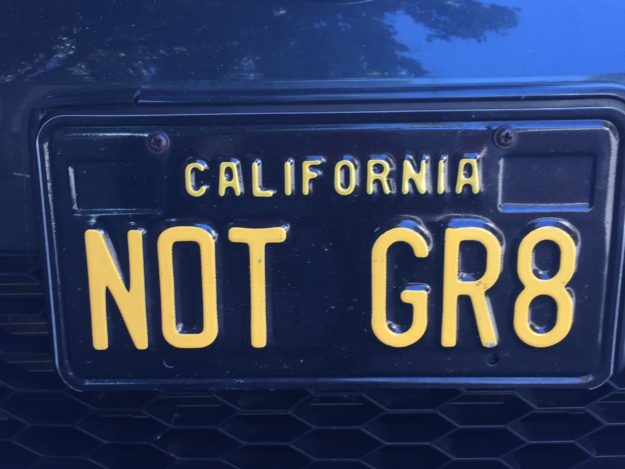
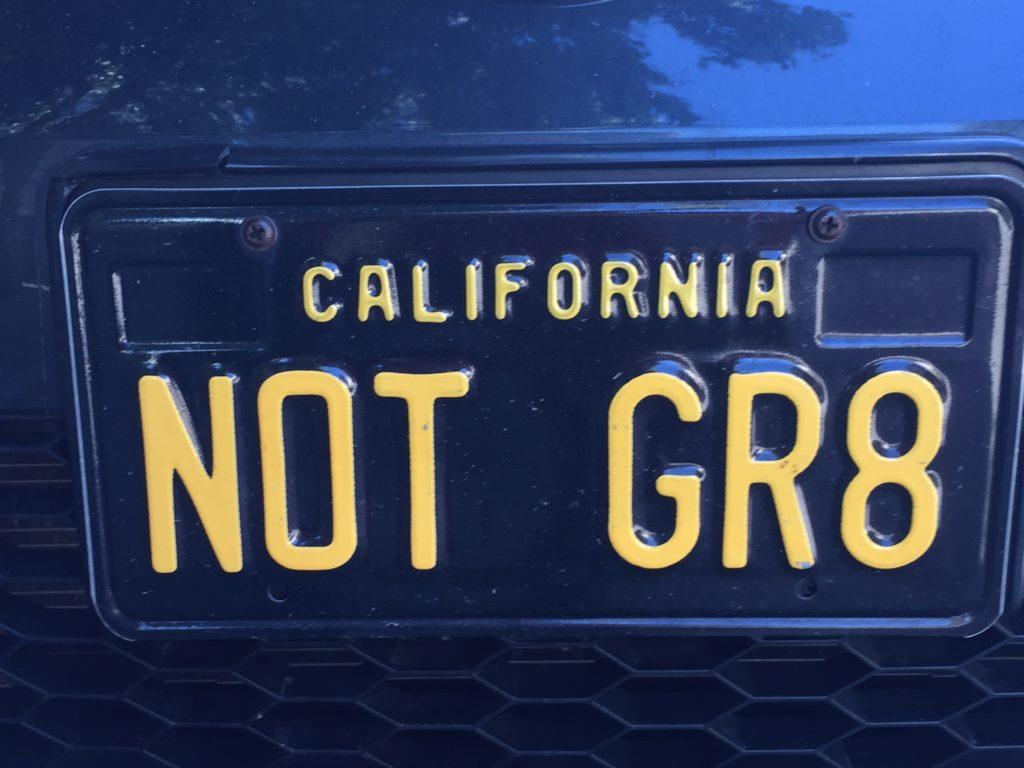
License Plate: NOT GR8

5 Cardinal Sins for Nonprofit Fundraising Renewal Appeals

License Plate: NOT GR8

In my last article I talked about the importance of making a good first impression with potential donors.

It’s extremely important to have a strategy in place, just as if you were going on a first date. Those who plan ahead do well. Those who don’t? Not so much.

Both dating, and donor wooing, are a delicate dance.

But, let’s say you did a good job. Your donor prospect made a gift!

Now what?

If you like them (of course you do!), and want a second date (of course!), you’ve got to make a good second impression. And third, fourth and fifth impression. The value of a first-time donor (which often costs as much as $1.25 to generate $1.00) is not realized in that initial gift. Sustainable fundraising is all about donor lifetime value.

So, after the first gift, you definitely want a plan in place to thank and cultivate this donor throughout the year. Some communications will have an ask included, but most will be designed to build your donor’s interest, engagement and loyalty. Once the relationship is sufficiently built, it’s time to seek that second gift.

Let’s talk about the renewal appeal, and why so many of them are just gosh-darn awful.

Why Do Fundraisers Who Should Know Better Keep Committing These Sins?

Maybe it’s because of the “monkey see, monkey do” nature of human beings. We see someone else do something and assume it’s good practice. Especially when they’re a household name, just bigger than us, or someone we, another staff member or board representative hold in high regard.

Girls sharing secrets

5 Secret Nonprofit Donor Retention Action Strategies

Girls sharing secretsGiving is an emotional experience. It deserves an emotional response.

Be human.

Ever notice how sometimes when we put on our work hats we cease to be human? How we somehow morph into little robotic “professionals” and become enamored of jargon?

“Lybnts.” “Sybnts.” “Recaptures.”

Not that those things aren’t important. You need goals and objectives.

And given the dreadful state of donor retention in the U.S. today (and in the U.K and Canada as well), it’s vital you be able to measure how you’re doing. Because growth in giving is a factor not just of how many new donors and dollars you acquire, but also of how many donors and dollars you lose.

If you lose as many current donors as you gain new ones, you’re getting nowhere. Fast.

Treadmills Are Only Good in the Gym

Slow down.

Think about what you’re doing and why. You may need to change your frame of mind.

When you acquire a new donor, is it for that one-time transaction? If so, that’s not a very thoughtful strategy, because it costs more money than you make to acquire new donors. In fact, you likely won’t make back your investment for 18 months or so. You won’t make it back at all if you don’t renew that donor.

Nonprofits, sadly, have been on a non-stop treadmill. Donors in. Donors out. Donors in. Donors out. So… something about just measuring this stuff isn’t really working.

Gala event reception

Common Sense Nonprofit Event Planning Advice

Gala event reception

Let’s begin with the Big Kahuna piece of advice: Ask yourself WHY you want to do this event.

Were you to bring your event proposal to a wise shaman or mentor, this is the question they would ask you first – well before asking what theme or format you have in mind or what color scheme you want to use!

And yet this is the one question I find nonprofits failing to ask.  Does anyone in leadership on your staff or board think either of these things?

  • Events are an inevitable part of the diversified fundraising mix.
  • Events are the primary way to generate awareness and funds.

Events are neither inevitable nor primary.

Events are merely a means to an end.

And since they are extremely resource-intensive, one thing is critical — and too many nonprofits skip right over this step. Please, don’t let that be you!

Think long and hard before embarking on a strategy that could potentially derail other more lucrative and cost-effective approaches.

Events have their place, to be sure; it’s up to you to put them in their place. You must take charge, lest your event(s) take charge of you!

What is Your End Goal?

You don’t buy a drill because you need a drill. More likely, you need to create a hole. And there’s something particular you want to fill that hole with, right? Maybe the drill will give you that perfect hole or, perhaps, there’s another more effective tool. It depends on the size and purpose of your desired hole. The same is true with nonprofit special events.

You don’t create an event for the sake of having one.

No matter what one or more board members or other leaders think would be swell. No, you hold an event for a specific purpose. For example, to:

Muir Woods California pathway fork

The Meaning of Philanthropy, Not Fundraising – Part 2


Muir Woods California pathway fork

Get on the Pathway to Passionate Philanthropy, Not Forgettable Fundraising

In Part 1 I laid out why philanthropy inspires, and fundraising tires.

Fundraising must be done, of course, but there’s something about how it’s too often practiced that turns too many people off.

It’s the “fund” part of the word. This makes people think it’s all about money, when really it’s all about valued outcomes.

These valued outcomes are shared by many who care about the cause.

  • Donors and non-donors.
  • Employees and volunteers.
  • Users and providers of services.
  • Development departments and program departments.

All these folks have a collective stake in the love and mission-focused organization’s survival.

Because all of them are dedicated to making the world, or some small corner of it, a better place.

How Philanthropic Stakeholders Get Disenfranchised

When fundraising is delegated to the development committee, or the development director, it disenfranchises a huge segment of folks who care about sustaining the cause — both internally and externally.

Similarly, when donors are competed over, donors are disenfranchised. This may take the form of non-cooperation or even outright war between those who should be facilitating philanthropy.

Jar of Coins

Do you wish you had a dime for…

Jar of Coins

Awareness alone is passive.


Do you wish you had a dime for every time a nonprofit board or staff member told you “We’re the best kept secret in town; if people knew what we do, they’d give to support us.”

Nonprofits tell me this all the time! If I had all those dimes, I could make a nice contribution to your cause.  And I would, if…

  • You endeavored to learn a little bit about me,
  • You engaged me personally,
  • You discovered my values match yours,
  • You offered me opportunities to connect with your mission and supporters that involved something other than money,
  • You showed me you knew what most engaged my passions, and…
  • Then you gave me the opportunity to enact my passions by asking me for a gift!

You see, merely “building awareness” will not ipso facto raise more money for your cause.

Just because I care about something, and somehow learn you are involved in doing something about that thing, doesn’t mean I’m going to support you financially.

Why should I?  There are a lot of good causes out there, and making a decision to invest in you is something I need to feel emotionally and then act on.

I’m busy.  I’m overloaded with information. And inertia is just too powerful a force.

You’ve got to do better than just hope I’ll stumble upon your website, see your social media post, hear about you on the news, or even open your direct email if you want me to really sit up, pay attention, and actively engage.

Especially if you want me to engage as a philanthropist.

Donor-centered focus: Heart and Gratitude over WealthI find a widespread misunderstanding about the notion of what constitutes being donor-centered. It derives from two misconceptions:


  1. Assuming people don’t want to be asked.
  2. Spending all your time on cultivation, assuming folks don’t need an ask and will simply give spontaneously as a result of being wooed.

Both of these rationales short-change your would-be donors.

Why?

FIRST: Donors want to be asked because they’re starved for the love that comes from voluntary giving and receiving. Donors have love to give, but don’t always have an object towards which to direct their affection.

SECOND: Donors need to be asked because when they’re not, they don’t know how much you need their help.  Consequently, giving feels a bit empty. Almost a bit like a crap shoot.  Donors want to invest their money where they feel confident it will be most appreciated and will do the most good.

Let’s delve into both of these misconceptions more deeply, putting them into a donor-centered context.

In other words, what are your would-be donors feeling?

Donors are Love-Starved

(more…)

Three San Francisco Heart: The Way to My Heart. Soft Light First Flight. North Beach Millefiori. Artist-created to benefit San Francisco General Hospital Foundation.

Loyalty is the New Nonprofit Donor Currency: Part 1

That’s right. Loyalty. Not wealth. Not money. Not even attention. Because merely grabbing the attention of someone with either capacity or inclination to give is no guarantee philanthropy will follow. Today I’d like to illuminate: Truths about what drives philanthropy, Challenges nonprofits have developing and implementing strategies that take these truths into account, and Suggestions…