four people raise hands in support of your cause

Psychology of Securing Lasting Nonprofit Donor Commitments

I recently happened on an article by Otis Fulton and Katrina VanHuss of Turnkey, Trump Buyer’s Remorse? Not Likely…. It relates to one of Robert Cialdini’s principles of influence and persuasion: “commitment and consistency.”

The main point is this:

Once we make a decision, and strongly attach ourselves to an idea by agreeing orally or in writing, it’s more likely we’ll stick with that decision than change our minds.

Because we are wired to want to be consistent.

That to which we commit becomes congruent with our self image.

What does this mean for you as a fundraiser?

I am grateful

How to Cultivate Awe, Gratitude and Altruism to Boost Nonprofit Fundraising

I’m a huge fan of the Greater Good Science Center at U.C. Berkeley, and often apply their research to nonprofit fundraising and marketing.  A recent article really struck me: How to Find Your Purpose in Life.

Over my 30 years of practice as an in-house development professional, the fundamental thing I learned is this:

You serve your donors every bit as much as they serve your organization’s mission.

Please allow that to sink in.

You have a mission. A purpose. Donors can help you get there.

Your donors are looking for purpose. You can help them find it.

It’s a symbiotic relationship.  And you have a role in fostering that relationship.  What is that role?

Your job is to facilitate your donor’s philanthropic journey. Their journey to discover their purpose.

So what’s this really all about?

8 Tools to Be a More Effective Nonprofit Writer

Nonprofit writing is particular, because you’re always endeavoring to persuade.

So it’s not expository writing, like a term paper. It’s more narrative. As in telling a story. A compelling, emotional story.

Even the best writers, nonprofit or otherwise, can use a little help now and then.

And today we’re fortunate to have a number of online tools to help us write with greater clarity and polish.

When I say polish, I don’t mean big words and complex sentences.  I mean polish in the sense of shiny.  You want your words to gleam! To jump off the page and grab your readers’ attention.

And, guess what often gets in your way?

user tester

Create 5 Donor Experiences to Boost Online Fundraising

How do you create loyal donors? By creating satisfying engagement and amazing experiences.

At. Every. Step. Of…

The. Donor. Journey.

This is the trek you facilitate.  You’re a bit of a Donor Sherpa.  The way you lead will impact whether, and how long, donors will follow. Every step of the journey is important.

How carefully are you thinking through each step?

No matter what you do, the steps exist.  Your donor has to step through them. Forwards or backwards. Upwards or downwards.

Ascertain what these steps look like for your organization’s donors. Are they leading folks onward and upward? Or are they forbidding, dangerous and inherently unenticing? Honestly assess whether the journey is one that is donor-centered. Or one that is all about you, your convenience and your needs.

Before we get started with the creation of five donor experiences to boost online fundraising, I’d like you to being with one “to do.”

Girl dips toes in the water

12 Top Tips to Build Community and Broaden Your Nonprofit Donor Base

Philanthropy should not just be about big checks.

Last week I shared some reasons not to eschew small gift fundraising. Today I’m following up with some tips for building and mobilizing your community to find, sustain and grow these gifts.

This is important, because a donor’s first gift is seldom their largest.  It’s a starting point.

The majority of your gifts will be small, but the majority of your income will come from a small group of major donors.

You have to grow this cadre of loyal, passionate philanthropists by building relationships with supporters over time.

The lion’s share of major gifts come from previously small gift donors.

A client I’m working with told me 50% of their major donors began with very small gifts.  How about tracking this for your organization? Sure, some major donors come in at the top. But I’ll bet you a majority start by dipping their toe in the water. How can you get folks more fully immersed?

Small-gifts-210x300.jpg

Don’t Eschew Small Gift Affinity Fundraising

Did I ever tell you about the fortuitous happenstance that taught me about the power of small gift fundraising? A few years ago I went to research something online. Not surprisingly, I ended up viewing the first entry Google gave me – which was on Wikipedia.

As luck would have it, and to my delight, I ran into an awesome fundraising campaign. [This is an occupational hazard with fundraisers. We actually like and admire things like pledge breaks when they’re done well!]

Here’s what I found superimposed at the top of the screen:

DEAR WIKIPEDIA READERS: To protect our independence, we’ll never run ads. We take no government funds. We survive on donations averaging about $15. Now is the time we ask. If everyone reading this right now gave $3, our fundraiser would be done within an hour. We’re a small non-profit with costs of a top 5 website: servers, staff and programs. If Wikipedia is useful to you, take one minute to keep it online and ad-free another year. Please help us forget fundraising and get back to Wikipedia. Thank you.

I was then given the option to make a one-time gift of $3, $5, $30 or $50, or a monthly gift of $10, $20, $100 or other.

It’s not all about major gifts for everyone.

The Wikipedia campaign serves as a great reminder. Even though many nonprofits survive by the grace of 3% of their donors providing 97% of their contributed income (or something closer to the 80/20 rule) there are indeed nonprofits that are exceptions to this rule


Mail-email-300x250.jpg

How Often Should You Mail to Your Nonprofit Donors?

I decided to write this post due to the number of times nonprofits ask me “How often should we mail to our donors?” The corollary question is “How often can we ask people to give?”

The answer?

Well… if there was one quick answer I wouldn’t have needed to write a whole article. I’d just have given you a headline with a definitive response!

I know you want a definite answer.

And I could give you one. But it wouldn’t be the truth. Because the truth is different for every nonprofit. And the truth will even be different for your nonprofit at different points in your life cycle.

There are two definitive things I can tell you:

Magician performing

4 More Magic Words that Increase Charitable Donations

In a recent article I gave you the “Holy Trinity” of fundraising success:

You, Because and Thanks.

Those are essential ingredients for any fundraising appeal.

Today I’m going to give you four more magic words:

Small, Immediate, Expert and Support.

Each of these packs a bigger punch than you might imagine, and tends to persuade folks on the fence to jump right off and land in your court.

Let’s take a closer look at how this works.

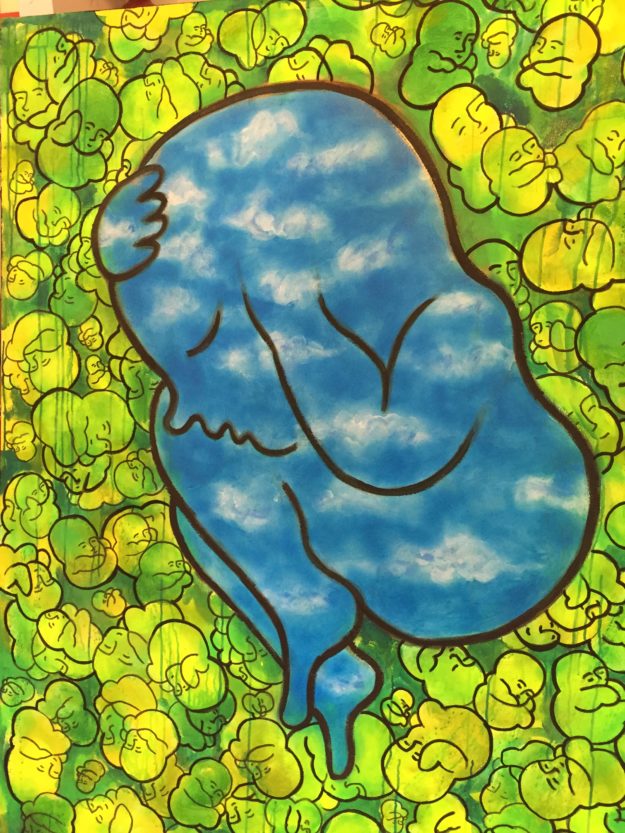
Painting of baby in fetal position

Last-Minute Strategies to Boost Year-End Fundraising

Do you have that year-end feeling? You know, the one many fundraisers get around this time of year?

Kind of frenetic? Anxious? Stressed?

You’re not alone.

The average nonprofit receives 30% of all donations in December. And 12% arrive in the last three days of the year!  So, yeah, it’s really busy.  And a lot is on the line.

I was talking with one of my clients, who apologized for acting so frantic and rushed.  She said:

“Do you remember having that feeling? Did you get it when you used to work in the trenches? That worry that maybe you won’t hit your numbers? That people won’t give as much as they gave last year? That some of your major donors won’t renew. That maybe you’re not sending enough emails? That you’ll wake up on January 1st and be in BIG trouble?”

Oh, yeah. That feeling…

Of course I’ve felt it!  But over the years I’ve learned a few tricks to help overcome that feeling.

Boy and Little Red Wagon

Little Things You Can Do Before Year’s End to Raise More Money

The biggest fundraising time of the year for most nonprofits inexorably approaches.

It can be stressful.

Don’t succumb to the stress. You’ve got this!

Perhaps you can’t do everything you’d like to do this year, but you can do some things.

Here are 12 things you can do that will pack a big punch.

Some you can do on your own. Some will require support from technical and/or marketing staff.

Here’s the thing:  Often it’s the little things that count. That pack a surprising wallop.

So don’t save all your energy for writing your appeal. Help your appeal along by putting some of the dozen suggestions that follow into effect.  Even just one or two will make a difference.

Let’s get started…

Email taking flight

How Important is Email to Nonprofit Fundraising? Very!

Here come 15 steps to successful email fundraising.

I’m going to tell you (1) why you should care about this, and (2) what you should do.

Not long ago, I posed the question: Why Aren’t You Doing More Online Fundraising?  I hope it caused you to think and ponder a bit.

Now, as you’re no doubt planning ahead for the most giving time of the year, is a good time to turn those thoughts into action. How big a role is email going to play in your year-end fundraising strategy?

If you’re making your email campaign an afterthought, don’t.

Email is a critically important tool — especially at the end of the year when most of the money is raised,

Don’t worry that your donors will be annoyed. If you do it the right way, they won’t be.  In fact, they’ll thank you for giving them the opportunity to do something that makes them feel good — and for making it easy for them to do so!.

Let’s begin with the “why”.

Key Issues in Effective Nonprofit Board Decision-Making

Many nonprofits are stuck.

They’re tethered to their early decisions.  Often made by others who came before them.

But times change. Organizations evolve.

Or they don’t.

The organizations that don’t adapt to changing times are often those that fail to make new decisions. They’re the ones who say “that’s not how we do things here.” Or they poo-poo decisions made by new folks who come on the scene, saying “they don’t understand our culture.”

These are the organizations that tend to shrink over time.  They lose their energy. Their once-vital raison d’etre becomes less urgent. And their appeal to donors diminishes.

When organizations fail to make fresh decisions, they become less relevant.

I recently listened to Jerry Panas, one of the most revered fundraisers in our country, talk about what he called the “deficit of mission.” He made it very clear that boards have two critical roles:

Not all Holiday Fundraising is Created Equal

Who doesn’t love a holiday?

The very word conjures up notions of celebration, warmth and love.

If you’re a donor-centered fundraising practitioner, you’d be a fool not to take advantage. Why not tap into pre-existing positive vibes to increase the chances your appeal will be warmly received?

After all, if you can channel something positive that’s more or less universally felt, this gives you a leg up. It puts your donors in a giving mood using familiar symbols and traditions.

Except when it doesn’t.

woman holding man's hand for safety

4 Nonprofit Strategies to Build Donor Trust & Lasting Relationships

Trust is the foundation of all lasting relationships.

If you don’t build trust, or if somehow you manage to destroy it, you’re going to lose your donor.

Sadly, this happens more often than not.  By now you’re likely familiar with the stats on donor retention from the Fundraising Effectiveness Project.  Only 23% of first-time donors renew. Only 46% of all donors, new plus ongoing, renew.

If you want to improve on these retention rates (and you definitely can!), I’m going to suggest you develop a plan to build trust.

Trust is built not simply by what you say, but by what you do.  Not just once, but consistently over time.

Donate Online

Why Aren’t You Doing More Online Fundraising?

You really must! Because the world in which we fundraise is changing rapidly.

Keeping up is challenging.

Yet that’s not a good reason to pretend that time has stopped. I’m not suggesting you neglect the tried-and-true fundamentals, of course (direct mail, telephone, events, face-to-face).

You need them! And they still work. But you’ve got to leverage them with today’s tools, within the context of today’s marketplace.

This is your time. This is our time. But, these times are different and what comes next is difficult to grasp. How people communicate. How people learn and share. How people make decisions. Everything is different now. Think about this…you’re reading this article because it was sent to you via email. Yet more people spend their online time in social networks than they do in email…Technologies such as social, mobile, virtual, augmented, et al compel us adapt our story and value proposition and extend our reach to be part of communities we don’t realize exist.

The people who will keep you in business or running tomorrow are the very people you’re not reaching today. Before you continue to read on, allow me to clarify my point of view. My inspiration for writing this is to help you augment, not necessarily replace, the programs you’re running today. We must still reach those whom matter to us in the ways they prefer to be engaged. .

— Brian Solis, The End of Business as Usual

Apps on iPhone

An APPealing Strategy to Raise More Money for Your Nonprofit

Today we’re going to think outside the box.

I’m going to suggest your nonprofit consider creating an app.

Yes, one of those things people buy at the app store.

Lest you think I’m crazy, this is an idea I’ve been noodling around for some time now.

And I think its time may finally have come!

Okay, maybe not 100%.

But there’s something to be said for the mobile, app-based experience.

Not just for retail giants, but for social benefit causes too.

Personal APPocalypse

The idea began to glimmer for me

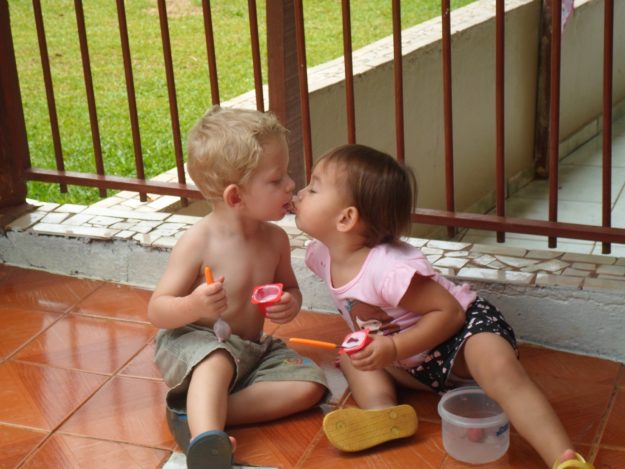
Just as there's a first kiss, there's a first time for everything for your nonprofit.

How to Persuade New Donors to Join Your Nonprofit Mission

What makes us think a perfect stranger, who’s never given to our organization before, will choose to do so?  It’s highly counter intuitive.

People are more likely to continue doing what they’ve done before.
Commitment and consistency is one of Robert Cialdini’s six principles of influence, and it’s useful in nonprofit marketing and fundraising. But only if you’ve got existing donors.
We talk a lot in fundraising professional circles about the folly of concentrating too many resources on donor acquisition and too little on donor retention. And for good reason. It’s significantly easier and more cost-effective to keep a current donor than to recruit a new one. Why?
It’s appreciably more difficult to get people to reach a new decision than to repeat an old one.
Whenever I coach volunteers to do fundraising, I always suggest they remind current donors how many years they’ve already been giving to the organization.  This acts as a decision-making shortcut for these folks. Aha! They already decided this was a good idea.  No need to sweat it out again.  Done!
But… what if you’re a start-up organization that doesn’t have many donors?

Chalkboard Menu

What to Put on Your Nonprofit Fundraising Plan Menu

A good fundraising strategic plan, like a menu, should be broken into component parts so it’s easy to wrap your brain around.

With a menu, it might be appetizers, meat entrees, seafood entrees, vegetarian entrees, sides and desserts.

With a fundraising plan, it tends to break down into strategies. It might be annual giving, major gifts, legacy gifts, grants, events and so forth.

Before you can get to determining your priority strategies, however, you need to do a mini fundraising audit.

When I begin working with a new nonprofit client, I always ask the same three questions.

Is Your Nonprofit Floating or Sailing?

A sailboat without a sail might float.

For a long time, in fact.

But without a sail, it can’t go anywhere, can’t fulfill its function.

Floating is insufficient.

– Seth Godin

For you to ask and answer

  1. Is your nonprofit floating, or sailing?
  2. Are your development efforts floating, or sailing?
  3. Are your marketing communications efforts floating, or sailing?

These are serious questions that deserve your serious consideration.

So… take a moment right now to answer these three questions for yourself.

Go ahead.

Put an “F” or an “S” next to each one of these.

customer experience

6 Ways to Create a Superior Nonprofit Donor Experience

customer experience

Are you aware that one of the hottest things in for-profit management over the past 5 – 10 years or so is “customer experience?” There’s an entire industry that’s grown up around it.

It’s something that goes beyond customer service.

Customer service is to an outbound marketing world what customer experience is to an inbound marketing world. The former you do to your constituents; the latter you do with them.

You may be asking why this is important.

Post digital revolution, nonprofits must adapt to the realities of inbound marketing. The way people find and engage with you in a constantly connected, networked marketplace has changed. Your constituencies crave interaction. And meaning. And, gosh darn it, they want you to make them feel good!

They want a full-bore, positive experience with you.

Fail to deliver?  They’ll go elsewhere. 

Walkathon participants

8 Secrets to Keeping New ‘Third Party’ Donors

By now you undoubtedly know you’re losing too many first-time donors.

In fact, the Fundraising Effectiveness Project report shows you’re losing an average of 77% of these folks!

Today I want to talk about a subset of new donors who don’t renew.  They’re called “third party donors,” and they come to you through a variety of portals:

  1. Guests of event ticket buyers
  2. Online auction purchasers
  3. Donors who give to friends’ P2P fundraising pages
  4. Donors who give to crowdfunding campaigns sent to them via a friend
  5. Donors who make tribute gifts in honor or memory of a friend or loved one

woman giving a gift

How to Become a Donor Experience Transformist

If you don’t build donor loyalty over time, you’re really missing out on the long-term value of every donor you bring in. And, guess what else?

You’re working too hard.

Donors come in. Donors go out. Donors come in. Donors go out.

One-time gifts are here today, gone tomorrow.

It’s like being on a non-stop treadmill.  Just exhausting!

But there’s an easy way to catch your breath, and even begin to enjoy breathing again.

Instead of continuing on as a transactional fundraiser, become a donor experience transformist!

Charity Auctions: Providing a Better Donor Experience

Event_auction_phone_biddingCharity auctions are an oft-held fundraising event, but even the most seasoned nonprofits often don’t host them well.



Since auctions are multifaceted events that are relatively complicated to organize, many organizations focus too much on getting the logistics in order and not enough on how they can provide an amazing experience for their donors.

Instead of considering how they can leverage their auction to build deeper supporter relationships, they bolt straight to the fundraising finish line: increasing event proceeds. It’s no wonder that event retention is so low!

In this article you’ll receive great advice from Adam Weinger, President of Double the Donation, as to how you can make your auction a more positive experience for your donors, focusing specifically on how auction software can help.

Woman holding film slate

5 Simple Ways to Use Video for Peer-to-Peer Fundraising

Video marketing is taking over the world, and for good reason. Compelling videos are the best way to connect with your audience no matter where they are or what device they’re on.

For nonprofit organizations, video provides the opportunity to strengthen donor engagement and outreach across channels, especially through social networks where the medium continues to grow in popularity.

So how does video relate to peer-to-peer fundraising?

It’s all about getting people involved!

In order to get people passionate about raising money from their personal networks on behalf of your cause you have to show them why they should care.

Video is the perfect platform to help you do just that—in fact, 60% of people prefer watching a video to reading text. And it doesn’t have to be complicated.

Here are 5 simple video ideas your organization can use to encourage more participation and donations for your next peer-to-peer fundraising campaign.

Argentinosaurus Juvenile dinosaur

Blogs vs. E-Newsletters: What’s Best for Nonprofit Communication?

E-newsletters are dinosaurs.

There, I’ve said it. There are many reasons I favor blogs over e-newsletters for nonprofits. They simply try to accomplish too much at once. As a result, they tend to accomplish very little.

Blogs are best if:

  • You want more control over what your constituents read.
  • You want to spend less time creating content.
  • You want to increase readership of your content
  • You want to increase sharing of your content.

Today I’m going to tell you about just two of the reasons blogs out-perform e-newsletters, but they’re doozies.

And they accomplish all of the points I’ve just bulleted.

calendar

9 Things Your Nonprofit Needs to Know About Monthly Donations

It’s the time of year when nonprofits are evaluating their recent fundraising results and making new year’s resolutions to bring in more contributions in the coming year. But… how?

What will move the needle for you this year?

No doubt there are a number of things you can do more effectively. I’ll be talking about many of them in the weeks and months ahead. Today, however, I want to discuss one thing you may or may not be giving serious thought to.

MONTHLY GIVING.

Chances are you already have some sort of monthly sustainer program.  But… is it the best it can be?  Could it do more heavy lifting for you?

Today I’ve asked an expert, Bill Sayre, President of Merkle RMG, to give me his thoughts on what you can do right now to begin and/or better manage a monthly giving program.

symbolic rainmaking god

How to Build a Major Donor Program from the Ground Up

If you’ve got donors, then you have the raw material for a major donor program – and it’s easier than you think.

Begin with your own database.

Most organizations have plenty of donor prospects, without having to go outside and look for prospects who aren’t connected to you.

You know who I mean. The people your board members tend to suggest to you. Folks who may be rich, and may even be philanthropic elsewhere, but don’t have any interest in what you do. And no one knows them or can make an introduction to them.

Don’t start with the most out-of-reach prospects. You can be a major donor prospect rainmaker without having to go outside or reach too far.

Use the 'Seven is Heaven' priorities on your pathway to passionate philanthropy in 2017 - and beyond!

7 Powerful Nonprofit Opportunities: Your Path to Success in 2017 (Pt.1)

Last year if you followed me, I gave you 5 priorities for success in 2016. I called them “Dive the Five.”  This year, I’ve expanded my thinking a bit. ‘SEVEN IS HEAVEN.’ Create Compelling Annual Giving Offers Master Integrated On Social Fundraising Master Major & Legacy Giving Master Donor Retention Master Donor-Centered Content Marketing Embrace…

Lemonade Stand Rockwell

Warning: Have You Caught Deadly Nonprofit Lemonade Standitis?

Lemonade Standitis is a bit like Zika virus.

Silent, but deadly.

It infects you, but you may not realize it.

The symptoms can be easily misdiagnosed, only showing up later down the line in a different form.

By then, it’s too late.

If you’ve got it, you’re no doubt leaving money on the table, working harder than you need to, and putting the long-term sustainability of your nonprofit business at risk.

Want to avoid this dreaded sustainability killer?

How Important is Email to Nonprofit Fundraising? Very!

Here come 14 steps to successful email fundraising.

You’re no doubt planning your year-end fundraising strategy now. How big a role is email going to play?

If you’re making your email campaign an afterthought, don’t. That holds for this year, and the foreseeable future. It holds before, during and after  your pitch.

If you get good at email marketing and fundraising, you won’t be wasting your efforts.

Not today. Not tomorrow.

Since the end of the year is when most of the money is raised, there’s no time like the present to begin.

Image of brain

How to Use Psychology to Pre-Suade Donors to Give


Image of brain

What can you do now to prime the pump so your donors are pre-disposed to give to you when they receive your next appeal?

In Part 1 of this two-part series I described research from Robert Cialdini, author of the seminal Influence: The Psychology of Persuasion, and his newer book, Pre-Suasion: A Revolutionary Way to Influence and Persuade, and discussed how you might apply this research to your fundraising strategies. We learned the importance of leading with a “gift” or “favor” that would incline your donor favorably in your direction.

Today we’ll look at how to cement the likelihood your favor is returned, as well as explore some types of favors that are likely to be perceived as valuable.

How Leaning Into Fear Can Change the World

A very accomplished friend of mine recently wrote a beautiful and provocative article I want to share. It resonated with me on many levels, not the least of which spoke to me wearing my hat as a philanthropy facilitator and nonprofit coach.

Thank you Tara Mohr for having the courage to share On Political Fear. Tara writes:

 I don’t do othering. I don’t think one party or place on the political spectrum has a monopoly on truth. I think we all need to be speaking up right now.

Tara, in speaking up, describes herself as “proudly afraid.”

Are you “proudly afraid?”

How to Humanize Your Nonprofit Work by Building Empathy

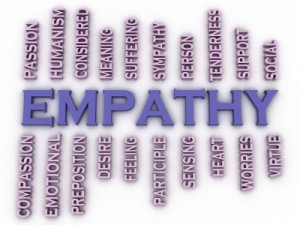
empathy word cloudI am so inspired!

I recently learned about Van Jones’ virtual reality experiment, Day of Empathy via this video (thank you, thank you, thank you to Nancy Schwartz for writing about this on her Getting Attention nonprofit marketing blog: OMG Experiment to Connect & Activate (Dream Corps Case Study). The idea is to use virtual reality to build empathy (i.e., to help people walk in the shoes of others) in order to motivate action.

The idea of using virtual reality to build empathy on a communal scale is brilliant!

And it ties back to Darwin’s theory of survival.

10 Ways to Build Donor Trust and Overcome Negative Views about Charities

trustWhat prompted me to write this article was a recent post by Matthew Sherrington on the 101 Fundraising Blog about the dangers to the public benefit sector posed by erosion of trust.  We’ve known for some time that whenever there’s a charity scandal, the bad behavior of one player can become detrimental to all.  But over the past year in the U.K. the problem has become even more challenging. Could it happen here?  Matthew says “yes.”  And I concur.  Trust is a fragile thing.

In the U.K what happened was a perfect storm of perceived over-solicitation and insufficient outcomes, exacerbated by a barrage of media that sounded an alarm about nefarious practices.  Trust plummeted. A wake-up call, for sure.

But what does it mean?

Important News about Relationship Fundraising: Stop Losing Donors

Do you know how you may be breaking your donor's heart? Keep it up, and they'll break yours.

Do you know how you may be breaking your donor’s heart? Keep it up, and they’ll break yours.


This is important.

It’s about a new report that may change how you do fundraising.

It should.

Let me explain.

Unless you’ve been asleep at the wheel, by now you should know that most nonprofits have been hemorrhaging donors.

By tending to focus more on expensive, staff-intensive acquisition strategies like direct mail and special events, charities are bringing in one-time donors who never give to them again.

Making the Most of Matching Gifts: 6 Easy Steps

Imagine you’re baking a cake. You put in the flour, eggs, milk, and sugar, whip it all together, and put it in the oven for an hour. But, when the timer dings and you open the oven door, you find that instead of one perfect cake, you have two!

This situation is physically impossible (unless you’re a wizard or a magician), but it’s a good illustration for how matching gift programs can benefit your nonprofit.

When donors take advantage of their employers’ matching gift programs, they essentially double the amount of money that they give to your organization. Two cakes (I mean, donations!) for the price of one!