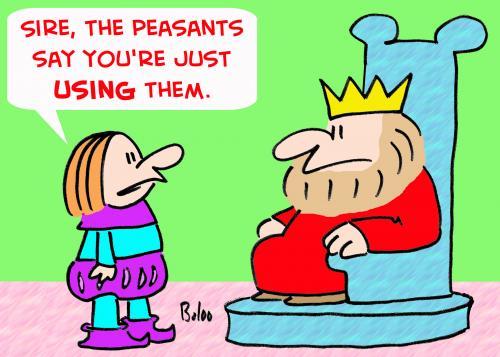
Helping hand

Nonprofit Content Marketing Should Help, Not Sell

Helping handWhen I think about nonprofit content marketing, one of my favorite marketing strategists is Jay Baer, author of Youtility: Why Smart Marketing is About Help, not Hype.

He says the difference between “helping” and “selling’ is only two letters. But what a difference those two letters makes!

If you substitute ‘h’ and ‘p’ ( in ‘helping’) for ‘s’ and ‘l’ (in ‘selling’) in building your nonprofit content marketing strategy you’ll convince more of your nonprofit social media fans and followers to convert to subscribers or members, and more of your subscribers and members to convert to donors.

Think of it this way. If you’ve traditionally focused on selling vs. helping, you’ve emphasized ‘s’ and ‘l’ [stupidity (your customers) and laziness (you)]. You’ve acted like your customers don’t know very much, so they need you to show them the way. Yet at the same time you’ve been too lazy to gently teach them what they need to know.

Now imagine you focus on helping vs. selling. You emphasize ‘h’ and ‘p’ [humanity (your customers) and peer (you and your customer)]. You treat your constituents like individuals with specific values, needs and desires. You endeavor to learn more about them so you can meet their needs. You engage them as partners, showing you’re all in this together. You create a community of like-minded folks, welcome folks to your community, and take care of your members. Not as infants, but as peers. No one likes to be infantalized.

Sell something and you create a customer today. Help someone and you create a customer for life.

It’s human nature to fall into a ‘sales’ model when you feel so proud of what you do you assume everyone else will want to jump on your bandwagon. Yet just “doing good” is not enough. Anymore than having a good product is good enough for the soap manufacturer. You need to tell people how you can be helpful to them, their loved ones and their community. And don’t expect them to just take your word for it. Show them by offering up useful content and sharing powerful emotional stories and facts that demonstrate your outcomes. Otherwise, you keep people dependent on you to tell them what to do because “you know best.” When you keep people in the dark about the details, they feel both stupid and disempowered. Since these are not good feelings, how to you think this “sales vs. help” model makes your constituents feel?

man thinking

3 Content, Online and Social Media Venues for Every Nonprofit

Nonprofit fundraising and marketing is very different today than when I began. Yet not every nonprofit I encounter seems to have received the message.

That’s why I’m writing.  Because the road to success has changed more in the past five years than the preceding 50.

Why?

It’s been called a “digital revolution,” a “disruptive” force and the “end of business as usual.”

“Outbound marketing” has been proclaimed dead, making way for “inbound marketing.”

The world is networked digitally in a way that was, until recently, unimaginable to most of us.

So… what does this mean for nonprofits? Especially for small to medium-sized nonprofits who don’t have staff with titles like “Online Fundraising Coordinator,” “Digital Communications Associate,” “Social Media Specialist” or “Digital Philanthropy Manager.”

How can you compete to raise awareness and support among your likely constituents?

Clairity Click-it: Databases; Content; Leadership; Free Stuff; Learning Opportunity


Mouse with computer mousee
Click it!

I’ve got some really cool links for this first week of September. I try to find stuff I think you may not be seeing through your regular channels because it’s fun to get new perspectives. I especially love to find folks who come from other disciplines and see how nonprofits might apply some of their thoughts — art and science — to fundraising, marketing, management and leadership.  Plus you’ll find some free resources and a new learning opportunity (scroll to the bottom). Let’s begin…

Clairity Click-it: Looking Forward to 2015 Edition w/Board, E.D. and Staff Roles, Social Media; Content Marketing; Donor Databases

Today I’ve got my looking forward into 2015 edition with some ideas as you’re continuing to make your plans (aka New Year’s resolutions) to get you off on the right foot and assure you blast through your 2015 goals and objectives (I know, it usually comes on Friday, but I was playing hooky last week). I’ve also got some of the best posts from around the web that you may have overlooked last year.

Plus don’t miss the announcement of 40+ FREE nonprofit webinars at the end!

Before we begin, please accept my personal best wishes for a year ahead that brings many blessings, both to you and your nonprofit. May you wish upon a star… and have anything your heart desires come true for you.

Labor Day Week-end Clairity Click-it: Planning/Calendaring, Development Director Mistakes, Time Management, Writing, Psychology, Gratitude

First, some words:

  1. Time to say thank you for your labors.  And thank you for reading Clairification. Your work inspires me and truly creates a more caring community and better, more humane world. Your readership makes my days, months and year. Truly, I appreciate you. Please… rest, reflect and recharge this week-end. You deserve it!
  2.  Last chance to get your highest ROI fundraising management tool (see below). Yes, I’m charging a bit. But not too much (especially given the fact my prodigal son has returned and is eating me out of house and  home!), and way less than what you’ll get out of it. I promise. Guaranteed.

Now… on to this week’s great links…

Apps.jpg

What App Developers Can Teach Content Marketers: 5 Tips to Energize Your Brand

Find a need and fill it. That’s Marketing 101.   Well, today some of the folks most clued in to what people want are the apps developers. Why not piggyback on their insight and research to enrich your content marketing strategy?  The key is to tie it to your brand promise (i.e., why you’re on this planet and what folks perceive your value to be to them). Find an angle that makes the trend relevant to your business.

End your constituents’ pain.  This is simply another way to think of taking the consumer-oriented approach that means the difference between failure and success. What’s bothering your community?  What keeps them up at night? How can you help? This is how app developers – and inventors, and successful business start-ups – think. 

Kick-Ass-Content-300x179.jpg

6 Ways to a Kick-Ass Content Plan for Your Nonprofit Blog: Part II of the C.P.A. series


C.P.A.? Yup. In my last post I introduced you to the ‘accountant’ theory of an effective blog content strategy.  C for constituent-centered. P for plan. A for accessible. You can review the ‘C’ post here.  Today we’re going to talk about the ‘P.’

For starters, you’ve done your market research and you know what your constituents care about (if you haven’t done this, look at the 6 actionable tips in the previous post). Now, take all the great topics you’ve researched and brainstormed – all the questions you’ve been collecting from your constituents – and build an editorial calendar for your blog. I’m going to give you some tips and tools that will make this really simple. Promise.

finished-daisies-02.png

R.I.P: Top 3 Things Required for Content to be King – And 17 Questions We Should Ask Before Embarking on a Content Marketing Strategy

Is your content pushing up daisies?  It should be.  That’s the way to grow and blossom.   I call it  the R.I.P. Content Marketing Strategy:  (1) Relevance; (2) Ideas; (3) Plan. [Coincidentally, adhering to these principles should bring peace of mind so that you can rest easy in the knowledge you’re doing the right things (relevance;…

R.I.P: Top 3 Things Required for Content to be King + 17 Questions You Should Ask Before Building a Content Marketing Strategy


Is your content pushing up daisies?  It should be.  That’s the way to grow and blossom.   I call it  the R.I.P. Content Marketing Strategy:  (1) Relevance; (2) Ideas; (3) Plan. [Coincidentally, adhering to these principles should bring peace of mind so that you can rest easy in the knowledge you’re doing the right things (relevance; ideas) in the right ways (plan).]  So, to mimic Do,Re,Mi from the Sound of Music:

Sign StaySafeBeKind

Nonprofit Crisis Response Tip-a-Day-DO-Dah!

Sign StaySafeBeKindNo matter your politics, this is crisis time for many nonprofits who rely on federal grants and loans (about 30% of all charities).

It’s also crisis time for the beneficiaries of many nonprofits, who are scared, stressed, depressed and otherwise at loose ends due to the rapidly changing environment. Many of the resources on which folks once relied have disappeared or are at risk. For some of your constituents, it feels as if the rug has been pulled out. Or the other shoe is about to drop.

During times like these, people want to come together and help. It’s your job, as a philanthropy facilitator, to help them in this communal endeavor. Stay calm, carry on, and communicate your particular needs.

Resist the temptation to throw your hands up in the air, assume people feel too uncertain to give now, and simply leave folks (donors and clients) to their own devices. We know from past experience this won’t end well.

During the 2008-09 worldwide recession, many charities cut back on fundraising and marketing. Some of them still haven’t recovered. Something similar happened in response to the Covid-19 pandemic. People thought (assumed) it was unseemly to ask for contributions.

Be careful what you assume.

If you don’t ask, you don’t get.

Research collected from donors in response to the coronavirus pandemic showed:

  • Giving, and fundraising, was increasingly seen as good. Even donors who had been hit economically remained remarkably generous.
  • Charities with little relevance to tackling coronavirus still received support from donors that valued them – as long as they asked for help (otherwise they were perceived as not in need of funds).

“Many of the donors we spoke to report that they just don’t know what they should be doing or who they can trust. This led to a rise in levels of insecurity… Of course, they understand that things are changing and that plans will always need to adapt. But knowing that a strategy is in place will provide the security that they need. They also want to know what their role – as supporters – will be. And, most importantly, they are ready for a frank conversation about what is required of them.“

— 2020 Report, Bluefrog Fundraising

Donors want to help – and will help – but they need leadership.

This means telling people what you do that addresses the problems that worry them. For people feeling helpless, this can give them a sense of control. Show them how they can join you, and become a part of a community of like-minded people who share their concerns and values.

It all boils down to a need to put together both short and long-term plans to connect meaningfully with your supporters right now, using the correct approach and tone. Towards that end, I’ve put together five ‘to-do’s – one for each day of the work week.  I suggest you put aside a little bit of time this coming week to consider how you might actualize each of these suggestions, if not in whole at least in part.

Ready for your five timely tips?

Sign StaySafeBeKind

Nonprofit Crisis Response Tip-a-Day-DO-Dah!

Sign StaySafeBeKindResist the temptation to throw your hands up in the air because you’re hearing people are giving less now. While it may be true(ish), it doesn’t apply to everyone. And it doesn’t need to apply to your nonprofit.

Also, the fact folks aren’t giving may not be for the reasons you assume. In fact, one of the biggest reasons this is true is because nonprofits are asking less.

If you don’t ask, you don’t get.

Recent research shows:

  • Giving is increasingly seen as good – as is fundraising. Even donors who have been hit economically are remaining remarkably generous.
  • Charities with little relevance to tackling Coronavirus will still receive support from donors that value them – as long as they ask for help (otherwise they’ll be perceived as not in need of funds).

It all boils down to a need to put together both short and long-term plans to connect meaningfully with your supporters right now, using the correct approach and tone. Towards that end, I’ve put together five ‘to-do’s – one for each day of the work week.  I suggest you put aside a little bit of time this coming week to consider how you might actualize each of these suggestions, if not in whole at least in part.

Ready for your five timely tips?
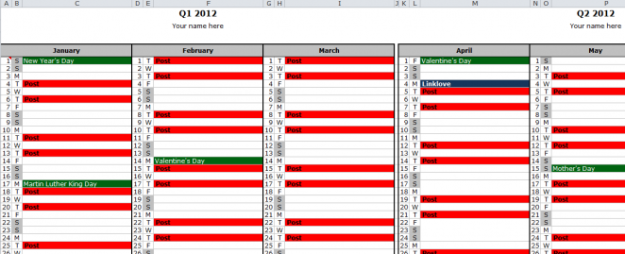
5 Winning "Today" Strategies to Raise Money Smarter

If you could only do five things between now and the end of the year to make a noticeable difference in your nonprofit’s fundraising results, what would you do?

I’ve been writing recently about five subject areas – key priorities for success this year, and beyond.  Today I’d like to offer one BIG “to do” in each area to help you hone in on some actionable steps that will move the needle and have a transformative impact on your results.

#ClairityClick-it: Major Gifts, Donor Retention, Online Social Fundraising + Free Resources

Mixed #nonprofit links and free resourcesHope you enjoy these links, free resources and training opportunities. Usually I publish this on Friday, but it’s Spring Break and holiday week for many, so I’m on a wacky schedule. Again, I’ve organized according to three of the top 5 areas I’m hoping you’re working on improving this year.  This week it’s

  1. Major Gifts
  2. Donor Retention
  3. Online Social Fundraising

Pyramids-at-Giza.jpg

Why We Stopped Building Pyramids: What Nonprofits Can Learn


Philanthropy, Not Fundraising

The pyramids were built in Egypt. On the backs of slaves.  It took a very, very long time. The cost, in human terms, was untenable and unsustainable.

That’s why you don’t see many pyramids being built these days.

Except in nonprofits.

Where building the donor pyramid is still the holy grail.  Get ‘em in. Move ‘em up. Acquire through direct mail. Convert to monthly donor or sustainer. Acquire through events. Convert to mail. Up, up, up…. to the pinnacle of major and planned gifts!

Except for one tiny thing.

calendar blocks, 2026

It’s Not Too Early to Prepare for Prime Fundraising Season!

Fall fundraising season may feel far away, but the organizations that thrive at year-end are usually planning long before September arrives. That’s because strong fundraising results rarely happen by accident. They come from: Clarity about priorities, Discipd use of time, and Realistic understanding of resources needed to grow contributed income. Too many nonprofit professionals operate…

5 Strategies to Improve Nonprofit Use of Donor Data

I cannot tell you how many times I begin a consultation with a small nonprofit, only to discover they have no real donor database (to collect and store data) or CRM (to effectively manage donor relationships).

They’re still using Excel or Filemaker or something that was developed for the program or finance department many moons ago.

I also find many nonprofits do have a decent fundraising database, but aren’t really using it to their advantage.

It’s the equivalent of having a 747; then using it to drive down the block to the corner store.

If you’re not exactly maximizing the resources you have, or if you simply don’t have the resources you need, it’s going to adversely affect your fundraising results.

Today we live not only in an era of ‘Big Data,’ but in one in which much of this data is AI-enabled. Which means understanding why data is important, what data is most meaningful to you, and how to prioritize data collection and evaluation strategies to help you reach your goals has never been more important.

If your nonprofit fundraising and marketing strategy is not currently undergirded by data — whether AI-empowered or not yet —  I guarantee you’re missing opportunities, working inefficiently and leaving money on the table.

Could you use a bit of guidance?

Read on…

roaring lion

Want to Win at Major Gift Fundraising? Top 7 Proven Strategies to Success.

roaring lion

7 secrets to a rip roaring major gifts program

Every nonprofit should have a major gifts program.

That’s where the lion’s share of the money is.

It’s a rare organization that has a mailing list large enough to raise a million dollars from a million different $1 donors. But most nonprofits do have major donor prospects hiding in plain sight.

It’s up to you to find them; then move them along a cultivation path that prepares them – and you – to make an ask that results in a win/win values-based exchange.

Let’s review 7 secrets that will guarantee your major gifts program is a success, whatever your size.

basket of fresh produce

Fresh Nonprofit Marketing Ideas: Be Patient. Be Strategic. Be Funded.

When it comes to marketing communications, you need a strategic plan that will serve you in the current digitally-revolutionized and highly networked world.  Not what you’ve been doing every year for the past decade, but something that will really serve you in today’s rapidly evolving and competitive marketplace. Honestly, this isn’t new advice. Nine years…

cat and bird size each other up

Show Me You Know Me* — 5 Strategies To Sustain Donor Relationships


cat and bird size each other upLet’s pretend you and your donor are not connecting meaningfully right now. You’re not sure why. Could it be they feel financially insecure…  they’re worried for their kids… they’ve been let down by politicians… they’re just feeling cynical and/or hopeless? For whatever reason, things aren’t singing between you and them. They haven’t renewed. They haven’t upgraded. They haven’t responded to any of your outreach. They seem to have other priorities.


So, you decide to go to counseling to reinvigorate the relationship. The therapist makes a wise observation: Sometimes in life, one partner feels strong; the other less strong. In such times, the stronger partner has resources to support the weaker partner. Other times, neither partner feels they have coping resources. During these times, we have to depend more on ourselves, be patient, and accept that our partner is not currently in a strong position – even though we really need their support.

Are you being a support for your donor? Are you helping, not selling all the time? Are you being patient, yet persistently showing you care?

We’re in turbulent times.. Alas, as need is burgeoning there are fewer individual givers.  During the pandemic, some industries, like education, began losing support. As did many smaller charities not involved in addressing hot-button topics. And prior to the pandemic studies showed giving to be sluggish. Donors are less loyal. Donors may be distracted by emergencies. Or so-called rage giving. Or simply uncertainty about what lies ahead. So they’re giving less consistently. As a result, donor centered fundraising has never been as important as it is now.

People are feeling a need to be nurtured. In other words: Ask not what your donors can do for you, but what you can do for your donors. Recognize they don’t serve you; you serve them. They don’t owe you; you owe them.  Your job is to help them experience the joy of giving. It is through you they will achieve their most meaningful work.

Embrace the true meaning of philanthropy as love of humankind.  Remember your donors are humankind; you must love them if you want to be a part of philanthropy.  Otherwise, you’re just transacting business.

So… what can you do to embrace love — 360 degrees — and thereby open the doors to passionate philanthropy?

Man running with money

Giving Tuesday: Don’t Take the Money and Run

Man running with money

The Day After

The absolute worst thing you can do the day after Giving Tuesday is nothing.

As tempting as it is to let out a sigh of relief that it’s over, resist that temptation.

It’s not time to relax yet.

Nothing comes of nothing.

And a huge part of your goal with Giving Tuesday should be to strengthen your bonds with donors.

That’s the real something you’re after.

It’s not just about the money you raise today.

Your goal with any fundraising strategy is to retain and, ultimately, upgrade these transactional donors. The name of the game in the business of sustainable fundraising is lifetime donor value. [Here’s a great book on the topic: Building Donor Loyalty: The Fundraiser’s Guide to Increasing Lifetime Value.]

Run towards, not away.

Treat Giving Tuesday as a Special Event

Like it or not, Giving Tuesday is a ‘special event.’ That means embracing both pre-planning and post event strategies. This, of course, is labor-intensive during a really busy time of year.  Which is why I recommend #GratitudeTuesday as an alternative,than adding yet one more event to your to-do list. If you’re on board with a traditional #GT strategy however, youve likely put a fair amount of planning, resources and time into this event. This involves the attention of more than one staffer and/or volunteer. And it sucks time away from almost everything else in the week(s) leading up to it.

It can be a real drain.

Your job is to put a stopper in that drain so all your hard work doesn’t simply swirl down the drain and disappear. Would you work super hard to create a delicious soup you simmer over the stove for hours, maybe even days, and then take one little taste before you pour it out and start all over again with a new one? Endless work. And no one really gets to enjoy the meal.

Holiday elf jack-in-the-box

Underused Year-End Fundraising Tweak Pops Up!

Holiday elf jack-in-the-boxWhat if I told you there’s a teensy little digital upsell that could skyrocket your year-end fundraising results?  Would that be of interest?

Darn rootin’-tootin’!

And it’s something you still have time to do.

It has to do with your website, so consider looping in whoever is responsible for that part of your year-end marketing and fundraising strategy.

It’s called a “light box,” “splash page,” or “pop-up.”

Essentially it’s a window that pops, or splashes, or lights up the screen upon a certain trigger (on site entry or right before a user tries to exit the site). It generally stops visitors from interacting with the page until they consider completing a called-for action. I’m sure you’ve seen them, interacted with them and, most likely, been really annoyed by them in the past.

But the question you should ask is do they work?

Please don’t run your year-end campaigns based on the opinions of folks who aren’t professional fundraisers or marketers.  There’s a reason why, despite the fact everyone seems to complain about them, pop-ups continue to be widely used on websites — nonprofit and otherwise. It’s because they actually work.

Here are some nonprofit case study examples:

Let’s dig a little deeper

Proven Strategies to Climb the Year-End Fundraising Mountain

Mountain climberHave you started working on your annual appeal and year-end fundraising plan?


It’s beyond time!

I worked for 30 years in the trenches, so I know exactly what this time of year feels like.

It feels like you’re at the base of a mountain you’re about to scale.

  • Exciting, but also scary.
  • Exhilarating, yet also daunting.
  • There will be good days, and bad days.

And this particular year, you may feel you’re taking two steps forward and three steps back.

That’s to be expected during times of great uncertainty.

Expected or not, I know you’re still anxious and thinking “What if we don’t reach the top?”

Don’t worry, I’m here to help.

This year you may need the equivalent of a few extra granola bars for energy. And maybe an extra tool or two to help you get a grip.

Right now I want to give you a few specific, timely tips you might not be thinking about.

Here are some strategies I hope will give you a leg up, so to speak.

Ready to Put Your Best Foot Forwards?

Here are 11 tips I’ve learned over the years.

Halloween skeleton

8 BOO BOO’s! Are You SCARING Nonprofit Donors Away?

Halloween skeleton

Is this how you’re making your donor feel?!?!


BOO!

Halloween is creeping up on us, so I’ve got some really scary stuff for you!

Don’t get too spooked. There are also a few treats.

In fact, you’ll get eight delicious goodies — in the form of “to-do’s.”

But first… the bad news.

No bones about it, you’re frightening folks away if you’re committing any of these 8 boo-boo’s!

Rocks, balancing.

Balancing Trick: You. Donor. Nonprofit.

Rocks, balancing.When the world feels wildly out of whack, it’s time to figure out how to bring things back into some semblance of balance.


Today I share a proven 1-2-3 formula for nonprofit fundraising success — even when the ground underneath feels shaky.

This is a time when keeping one’s balance is quite a challenge. But, if you use this formula, you can steady yourself, right your organizational ship, and bring meaning, purpose and joy to others in your community who share your values.

What I’m about to share is obvious. I know you know it. But… do you do it?

Just in case you need a little reminder.

  1. The first step is essential for success in anything.
  2. The second step is essential for success in any consumer-facing business.
  3. The third step is essential for success in reaching any fundraising goal.

Begin with Centering Actions: For Yourself, Others and Your Mission.

I’m talking about balancing self-love with donor-love with mission-love.

You’re no doubt familiar with the adage “You can’t help others unless you first take care of yourself.”

This is a truism you should carry with you throughout your life, and not just when the oxygen masks come down on an airplane. It’s never been truer than in the times in which we’re currently living, when there are new things about which to worry seemingly daily.

How do you lead the way forward, helping yourself and others navigate through the tough times?

I’d like to suggest you heed this 3-Step Formula to nonprofit fundraising success.

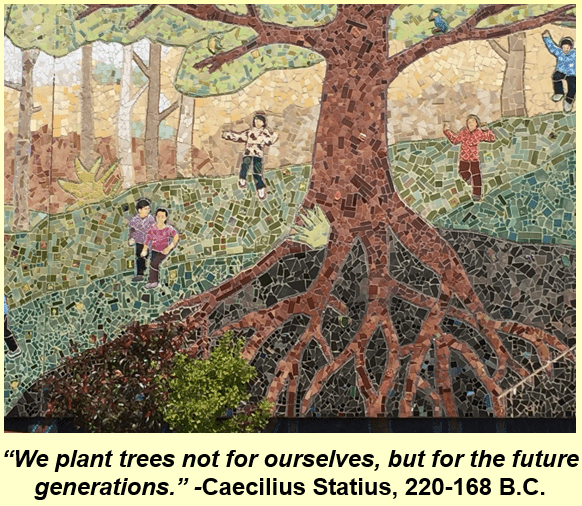
We plant trees not for ourselves mural

How 13 Nonprofit Donors Yields a $1 Million Philanthropic Legacy

We plant trees not for ourselves mural13 happens to be my lucky number. I want it to be lucky for you too.

Today, I’m going to reveal to you how you can make this happen.

A survey of wills reported on by the Chronicle of Philanthropy revealed the average bequest by everyday donors is $78,630. The survey is a few years old, but as a working average this will suffice. Some people will leave less; some people will leave more.

The point revealed by this survey is you only need about 13 donors (give or take a few) making a provision for your organization in their will to reap $1+ million.

If a major gift for your organization is $1000 (or even 5000 or 10,000), I imagine this sounds off the charts to you. Guess what?

Legacy giving is off the charts!

In fact, bequest marketing produces the highest ROI (return on investment) of any fundraising activity. And a highlight of the 2023 Giving USA Report is that charitable bequests, at $43 billion, were up 4.8% over the previous year and are the only source that exceeded the rate of inflation. Bequests make up a sizeable piece of the contributed income pie, representing around 8-10% of total giving over the last 40 years.

The first step to making this happen for your organization is to encourage bequests.

Actively.

Promote Charitable Bequests, or Else

If you don’t actively encourage charitable bequests, people are unlikely to make them.

Why? There are three primary reasons:

woman holding man's hand for safety

4 Nonprofit Strategies to Build Donor Trust & Lasting Relationships

woman holding man's hand for safety

Trust is Built By What You Do


In my last article, I wrote about why establishing and building trust should be part of your nonprofit and personal mission.

Because trust is the foundation of all lasting relationships.

If you don’t build trust, or if you somehow manage to destroy it, you’re going to lose your donor.

It’s an uphill battle, requiring a proactive approach.

Sadly, most nonprofits do a profoundly poor job of this.  By now you’re likely familiar with the stats on donor retention from the Fundraising Effectiveness Project.  The most recent report revealed only 13.8% of first-time donors renewed. Only half of all donors renew, which is still an appallingly low rate — but certainly speaks to the importance of securing a second gift..

If you want to improve on these retention rates (and you definitely can!), I’m going to suggest you develop a plan to build trust.

Trust is built not simply by what you say, but by what you do.  Not just once, but consistently over time.

Thank you note writing

Don’t Blow Your Post-Holiday Opportunity to Thank Your Nonprofit Supporters

Thank you note writingFor good things once a year is not enough. Why do so many of us only eat turkey once a year?  Or pumpkin pie? I’ve no idea! It’s surely not rational. These are special foods we value and take great delight in. Yet we get into a bad habit of thinking on auto pilot. If it’s not Thanksgiving, the idea of roasting a turkey or making cranberry sauce doesn’t even enter most or our heads. And egg nog, hot mulled cider, panettone and stollen are mostly Christmas things. And then there are the once-a-year only potato latkes. Why are we missing out on an opportunity for greater joy and satisfaction?

When things are good, they bear repeating.

And this is most certainly the case with expressing gratitude to your valued supporters!

It’s not rational to thank your donors only annually.  They keep you going all year long. They deserve your gratitude all year long as well.

What better time to thank supporters than right now, and all through the coming weeks, after a holiday season filled with gratitude?

The much-anticipated “holiday season” is pretty much over. There’s a natural let-down for many.  Wouldn’t it be lovely for your donors and volunteers to get a call from their favorite charity? A call that simply expresses gratitude? If you reach your donor, the goal is to have a quick conversation. Most important: stick with pure gratitude as your focus. Your aim is to make your donor feel connected to your cause, and really good about their support. If no one picks up the phone, don’t waste the call. Leave an upbeat message.
            “Joe, hello! I just called because, in thinking over the past few days about all for which I’m grateful, I realized I’m grateful for you and all you do to make our community a more caring place. I just wanted you to know how much your support is appreciated. Thanks so much, and may the new year bring many blessings.”
My hunch is there’s nothing better you could do with your time today. Or early next week if you’re taking some personal (or shopping the sales?) time today.

All the “strategies” in the world can’t substitute for a genuine, personal connection that comes from the heart.

Don’t let weeks and months go by. Connect!  Express your thanks!  Don’t wait until you’ve got a perfectly crafted letter, email or insert piece. That’s called procrastination, or “letting perfect be the enemy of the good.” Sometimes, timing is everything.

December

Last Minute Strategic Year-End Email Appeal Tips

DecemberStudies show one-fourth of all charitable giving happens in December. For some organizations (maybe yours?), it’s as much as one-third. Year-end fundraising is not chopped chicken liver!

While you absolutely should be using multiple fundraising channels to get best results, right now whatever you’ve got planned for offline is pretty much cooked. So your best bet for boosting year-end results is digital.

What do you have planned online between now and December 31st?

The 2024 M+R Benchmarks Study found nonprofits raise anywhere from 17% to 34% of their online revenue in December, depending on their cause. For well over a decade, the last week of the year – and particularly the last day of the year– have been huge for online fundraising.

To boost your year-end fundraising success, you need to craft an email offer your donor can’t refuse.

4 Top Strategies to Clearly Convey Your Offer 

If you’ve not yet planned your campaign, start here — and now. If you’re ready to go, take a moment to check your plan against these tips. In a nutshell, you need three things for any effective fundraising offer:

  1. Specific problem you’re addressing — made real and relevant to the prospective donor.
  2. Specific solution you’re proposing to address the problem – with your donor’s help.
  3. Specific ask showing how the donor can help– the distinct purpose and amount of the gift you’re requesting, tied to what it will accomplish.

It’s really that simple, but let’s get a little more into the weeds so you’ve a better idea how to execute these three offer components.

1. Describe the problem.

Halloween skeleton

8 BOO BOO’s! Are You SCARING Nonprofit Donors Away?

Halloween skeleton

Is this how you’re making your donor feel?!?!


BOO!

Halloween is creeping up on us, so I’ve got some really scary stuff for you!

Don’t get too spooked. There are also a few treats.

In fact, you’ll get eight delicious goodies — in the form of “to-do’s.”

But first… the bad news.

No bones about it, you’re frightening folks away if you’re committing any of these 8 boo-boo’s!

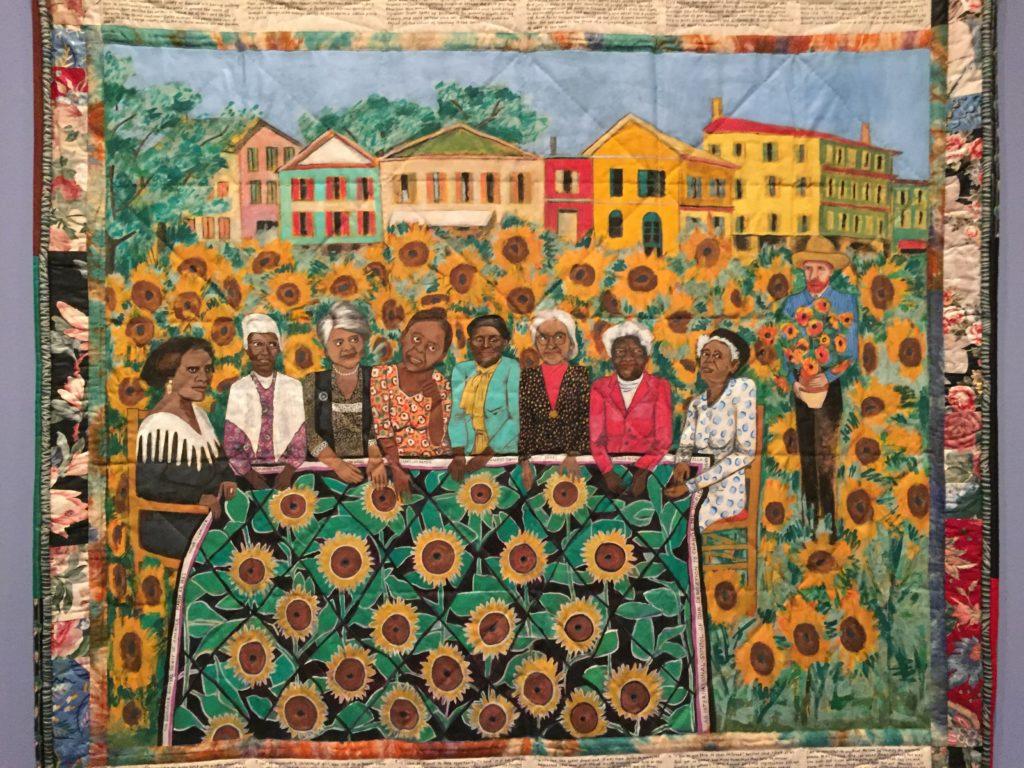
"Story Quilt" by Faith Ringold

How to Project Manage Your Nonprofit Story

"Story Quilt" by Faith RingoldYour nonprofit’s story is the whole ball of wax.


Without it, you’ve got nothing.

So let’s really talk about this for a minute.

A story is not “Give us money because we’re good guys and do good work.”

Nor are “Sustain humanitarian aid,” “Support the arts,” or “Save our rivers” stories.

Sure, there may be some implicit narratives hiding within these phrases, but they’re really tag lines or calls to action. Useful, sure. But not until you’ve laid the groundwork of telling a compelling story.

You never start a story with “And they lived happily ever after.”

Similarly, you should never start a fundraising appeal with “We saved the whales.” Where’s the emotion and drama here?

You know donors are moved to give through emotion, right?

The best way to get inside a donor’s head and heart is by telling a dramatic, emotional story. Something that taps into their core and arouses their curiosity, or some deeper feeling like sadness, fear or anger.

You see, human brains are wired for story.

Happy donors

5 Strategies to Get and Keep More Donors for Your Nonprofit

Happy donorsPeople are unpredictable sometimes. They’re also predictable.

If you see someone yawn, you’re likely to yawn too.

If I tell you seats are limited, you’re likely to purchase a ticket now rather than later.

What if you knew getting people to donate to your nonprofit could be a predictable consequence of something you did?

It turns out you can encourage people to act in desirable ways, simply by applying a few lessons learned from neuroscience, psychology and behavioral economics. The truth is scientists have learned quite a lot over the past few decades. It’s up to us to put that learning to good use!

Alas, as Daniel Pink, author of To Sell Is Human, has noted: “There’s a gap between what science knows and what business does.” This applies to social sector businesses too!

That’s right. Pink explains the most successful for-profit businesses use what science knows to “convert leads to customers.”  The secret to more sales is knowing what the customer wants. Your non-profit might convert prospects into donors, and donors into repeat donors, using the very same principle.

The secret to closing more gifts is knowing what the donor wants.

Today I’d like to consider five specific strategies that will help you ethically take advantage of some of the psychology underlying human behavior. Once you understand these principles, you can begin to strategically apply them to your integrated development (marketing and fundraising) strategy. If you’re nervous about this, you can test what you did before against a new strategy informed by science. Break your mailing list randomly in half, send an “A” and a “B” version of your appeal, and see which performs best.

Ready for 5 science-informed strategies?

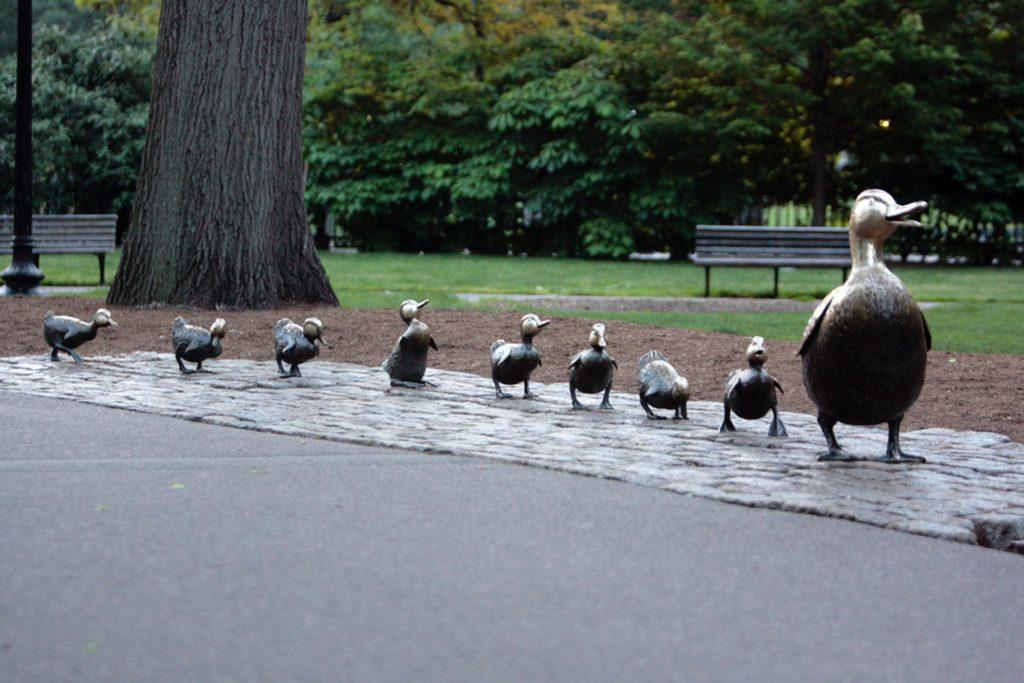
Ducks in a row

Top 5 Strategies to Prepare for Fall Fundraising NOW

Ducks in a rowYou’ve got one month before fall fundraising season begins in earnest.


What will you do with it?

I’VE GOT 10 TOP STRATEGIES TO HELP YOU GET ALL YOUR DUCKS IN A ROW!

We’ll start with the first five today.

  1. Clean up Data
  2. Purge Mailing Lists
  3. Review Staff, Vendors and Freelancers
  4. Set Priority Objectives Based on Last Year’s Results
  5. Solidify a Multi-Channel Marketing Campaign

Next week we’ll look at:

  1. Send Impact Reports to Set the Stage
  2. Stock Up on Compelling, Relevant Stories and Photos
  3. Connect with Major and Mid-Level Donors
  4. Prioritize Contacts with Mid-Level and Other Promising Supporters
  5. Plan Ahead to Welcome Donors to The Flock

Ready?

4th-of-july-dog-overloaded-257x300.jpg

Declare Your Independence Day – Information Overload Be Gone!

4th of july patriotic dog

Feeling a bit overloaded?

It’s the new plague. And a highly contagious epidemic, from which no one is immune.

Are you showing any symptoms?

I feel like:

  • I’m working all the time, but not getting that much accomplished.
  • I’m working on 10 projects at once, but none get finished.
  • My ‘to-do’ list never gets completed.
  • I’m in meetings all day and don’t have time to work.
  • I bring my laptop to meetings and pretend to take notes while surfing the web.
  • I’m answering email all day and don’t have time to work.
  • I answer email during conference calls and in meetings.
  • I have less and less time to plan, not to mention free time.
  • I have less and less time to learn, not to mention creative time.
  • I can never get to things quickly enough.
  • I sit down at my computer and end up doing something different than I planned.
  • I am eating lunch at my desk, mired in my virtual inbox.
  • I make calls while driving, and even send the occasional text, even though I know I shouldn’t.

Informationoverloaditis.

If you checked off three or more, you’ve got the disease. 8 or more and we need to rush you to an unplugged vacation. All of the above and you need a sabbatical!

Cookie Monster when his name is misspelled

Donor’s Lament: You Didn’t Thank Me Properly

Cookie Monster when his name is misspelled

Everything I learned about saying “thank you” I learned from:

According to Burk’s research from Donor-Centered Fundraising, more than 80% of thank you letters start with “Thank you for your generous gift of…” or “On behalf of the Board of Directors, thank you for your generous gift of…”

Y  A  W  N

  • Want to stand out?
  • Want your donor to actually read your letter?
  • Want your donor to feel good about the decision they made to invest in you?
  • Want your donor to feel warm and fuzzy inside?
  • Want your donor to say “Aw, that’s SO nice!”
  • Want your donor to feel the opposite of bored?

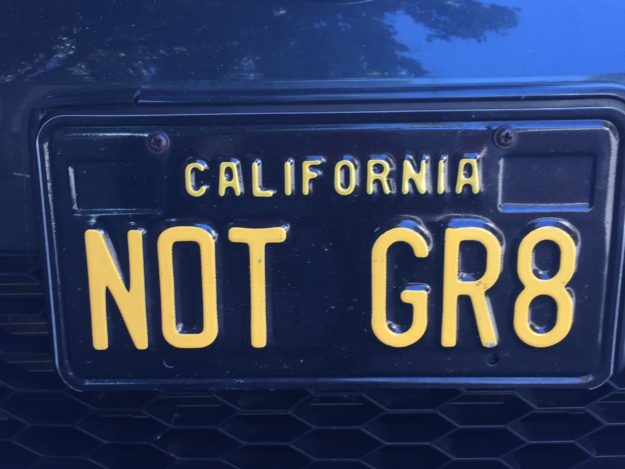
License Plate: NOT GR8

5 Cardinal Sins for Nonprofit Fundraising Renewal Appeals

License Plate: NOT GR8

In my last article I talked about the importance of making a good first impression with potential donors.

It’s extremely important to have a strategy in place, just as if you were going on a first date. Those who plan ahead do well. Those who don’t? Not so much.

Both dating, and donor wooing, are a delicate dance.

But, let’s say you did a good job. Your donor prospect made a gift!

Now what?

If you like them (of course you do!), and want a second date (of course!), you’ve got to make a good second impression. And third, fourth and fifth impression. The value of a first-time donor (which often costs as much as $1.25 to generate $1.00) is not realized in that initial gift. Sustainable fundraising is all about donor lifetime value.

So, after the first gift, you definitely want a plan in place to thank and cultivate this donor throughout the year. Some communications will have an ask included, but most will be designed to build your donor’s interest, engagement and loyalty. Once the relationship is sufficiently built, it’s time to seek that second gift.

Let’s talk about the renewal appeal, and why so many of them are just gosh-darn awful.

Why Do Fundraisers Who Should Know Better Keep Committing These Sins?

Maybe it’s because of the “monkey see, monkey do” nature of human beings. We see someone else do something and assume it’s good practice. Especially when they’re a household name, just bigger than us, or someone we, another staff member or board representative hold in high regard.