4 Keys to Raise Money in Today’s Attention-Sucking Nonprofit Jungle

Photo of 4 keys

Wondering where fundraising is heading in our highly networked, overly saturated, noisy-as-all-get-out post-digital revolution world? A world that’s really a jungle, with so much competition for attention — for-profits, other nonprofits, socially conscious businesses, political campaigns, friends, and family?

Your mantra can no longer simply be about “creating awareness.”

Alas, attention is increasingly ephemeral.

The new nonprofit currency is not creating attention. It’s building loyalty.

You simply can’t afford to keep losing 8 out of 10 new donors. Which means it’s time to reframe how you do fundraising. It can’t be primarily about going after money. It has to be about giving, and receiving, love. If you do it the right way, money will follow as a natural outgrowth. [I’m going to talk about this more in an article focusing on “connection” next week.]

Today, I want to explore 4 keys to raising money in our revolutionized technological zeitgeist.

Of course, sometimes it’s easier said than done.

Bad News/Good News:

The fundraising environment is altered. Mostly due to technology.

Lots and lots of technology.

AI fuels both predictive models and automation. Software enables multiple, simultaneous email campaigns. New tools allow easy sharing and engagement on social media. High quality photography and video can be made with the ease of a smart phone. Multiple new places regularly emerge to find and connect with potential constituents.  And on and on and on… If you feel you’re being hit almost daily with a firehose of new technologies, you’re not alone.

Technology has made it possible to do things never before imaginable.

But… possible and probable are not the same thing.

cat in tree

Don’t Worry, Be Happy: Useful Life Advice for Nonprofit Fundraisers

Some years ago I happened on an article in the New York Times where the author, David Pogue, asked readers for their very best ‘life advice.’  There was so much great stuff in there!  If you happen to have a NYT subscription, I’m sure you’ll enjoy reading the full article. For those who don’t (and really for everyone), I decided to share some of my favorite pieces of wisdom with you.  Particularly those that apply to your nonprofit work. And, especially, those that apply to your work/life balance.

Let’s begin!

1. Worrying about a cat stuck in a tree?

cat in treeNot every problem needs to be addressed immediately. Some will work themselves out.

You’ve never seen a cat skeleton in a tree, have you?” When Alexandra Aulisi’s cat couldn’t get down from a tree, her grandmother reassured her with those words, predicting (correctly) that the cat would come down on his own. “This advice made me realize that, sometimes, you need to shift your perception of a problem to see a solution,” Ms. Aulisi noted.

David Pogue, NYT

While it’s tempting to drop everything (e.g., whenever a new email appears in your inbox, especially if it’s someone asking for help), it’s important to assess if this situation actually requires a rapid response. If not, you have options.

ADVICE/OPTIONS:

1. Lil’ Bo Peep: “Leave it alone and it will come home.”

Ever been on vacation and noticed a flurry of emails, back and forth, forth and back, from members on your team?  Often, by the time you’ve returned, the ‘problem’ – as urgent as it may have seemed at the time based on all the email hyperbole – seems to have evaporated. I’m not suggesting you ignore legitimate, pressing problems; just use common sense and exercise judicious restraint.

2. Could someone else handle this?

I’ll never forget some excellent advice I received (actually from one of the donors I worked with during the years I was a young parent).  While I was stressing about potty training, she told me: “Have you ever seen anyone at college who still wears diapers?  If you don’t potty train your son now, never fear.  His college girlfriend will!”  It was silly, yet made a whole lot of sense. I didn’t need to oversee and micro-manage every little thing. Sometimes things happen on their own time frame. This was a reminder that patience can be a virtue.

2. Having trouble getting started?

Strategic Nonprofit Board Recruitment

Passion led us here photoWhen organizations aren’t raising as much money as they need, they’ll often tell me: “We need to recruit new board members.” This is very often true, but it’s only a piece of the puzzle as to why they’re not being more successful with fundraising.


So, if you’re about to embark on some board recruitment, I strongly encourage you to do a little soul searching first so you can embark on your quest strategically.

Not all organizations are the same. In my humble opinion, the best boards are fundraising boards. You may have a self-described “community board” you’d like to evolve to a fundraising board. Or you may be part of a bifurcated organization where there is more than one board with different purposes (e.g., governance; foundation; advocacy), so your part can perhaps afford to be less engaged with fundraising.

Most nonprofits need a board that is a fundraising engine.

For the purposes of this article, I’m going to assume you’re like most nonprofits. This may mean you believe you need to recruit ‘rich people.’ Or already experienced fundraisers. And since you don’t know any of the above, you make these common mistakes:

  1. You keep putting board recruitment and development on the back burner.
  2. You keep recruiting more folks exactly like the ones you already have.

Are you, inadvertently, holding yourself back?

You are if either of the two mistakes above sound like you.  Alas, this won’t help you resolve your fundraising conundrum.

So, let’s begin someplace else. Before beginning recruitment of the WHO for your board, begin by reminding yourself of the WHY.

Why Do You Need Board Members?

Certain skill sets may come to mind first. Such as “we need a lawyer.” But this is only a piece of what you’re looking for, and it’s not the most important piece. You could recruit the most famous lawyer in your community, but if they refuse to use those skills on your behalf – or if the area where you need help is not their area of expertise — this is meaningless.

Begin by answering this question:

Wanted sign

Fundraiser Job Tips: How to Hire/Get Hired + Top Interview Questions

Wanted signIn my last article I talked about how to pitch yourself for a new job. My focus was on fundraising jobs, but it’s a paradigm you can use for any time you’re trying to make a persuasive case for yourself.

Today I’d like to get to the part where you’ve transitioned from “selling” to the interviewer, and have arrived at the part where they sell to you.  In other words, it’s your turn!

It’s important to prepare for this part of the interview. And, if you happen to be wearing the interviewer hat, you can use these tips to listen for important questions that will tell you a lot about your potential hire.

The Purpose of Question Time

Definitely come prepared with what you want (and need) to know to make a wise, informed decision.  You’ll want to ask about this organization’s history, its programs, its culture (don’t overlook this one!), this position, and the person(s) for whom – and with whom — you’ll be working. Think about what success would look like for you, and probe to assure the pre-conditions to achieve that success are in place.

The interview is as much an opportunity for the candidate to get to know the hirer as it is a chance for them to get to know you. There’s little point in selling yourself for a job you ultimately don’t want and won’t enjoy. Where you’ll just be spinning your wheels. Where you won’t have a chance to grow professionally. Life is too short.

POINT OF PERSPECTIVE: I’ve interviewed a lot of candidates in my day. And, truth be told, if they don’t avail themselves of this opportunity to ask questions I really wonder about them. How can they be so lacking in curiosity? Did they not prepare for this conversation? How are they going to learn things on the job so they don’t just do things the right way, but do the right things? If it’s a front-facing fundraiser position, how are they going to be when faced with the opportunity to build a relationship with a donor?

When I’m in hiring mode, I don’t need a broadcaster as much as a relationship builder. I don’t need someone who boasts ad nauseum about themselves as much as need someone who probes for my interests, needs and challenges. So, if you’re the hirer, listen to see how many of these questions your candidates ask; be prepared to answer these questions.

Top 20 Interview Questions

Photo of a cobweb

What Does Early Spring Mean for Nonprofit Communications Strategies?

Photo of a cobwebThis week the groundhog told us it’s going to be an early spring!


Spring is always a good time for re-awakening, rebirth and just plain dusting away the cobwebs.  And what a dreary, grave, cobwebby period it’s been.

We’ve got a lot to clean up, reorganize and rethink. So much, in fact, it’s downright overwhelming. So, as I sat down to write today’s article, I thought about what you actually have within your power to do. Right now. And all throughout the coming months.

I know it’s been pretty hard to focus with everything going on in the world.

So I took a deep breath, closed my eyes, and tried to pull together the various challenges I’ve seen nonprofit leaders, fundraisers, and marketers grapple with in the past year. Actually, the past years. Through elections, pandemic, climate catastrophes, shootings, war, unprecedented demonstrations of cruelty and inhumanity, and more. It’s a LOT.

But, the show — your good work — must go on. 

In  other words, your mission must move forward. People rely on you to do the critical work of the social benefit sector.

I thought: what can people do now to set themselves up for success as we move forward into high fundraising season at the end of this coming year? It may seem early to think about this, but it’s never too soon to put your best foot forward.

I’ve ended up with four tips I hope you’ll find relevant and timely.

  1. Big Picture
  2. Your Role as Helper
  3. Practical Guidance
  4. Strategic Advice

4 Timely Nonprofit Fundraising and Communications Strategies

1. BIG PICTURE: Message Confidently During Uncertain Times

Whether it’s a marketing or fundraising communication, keep these four messaging basics in mind.

Wishing you a prosperous new year

How to Help Donors Give Astutely Before Year-End

Wishing you a prosperous new year

Do you want to risk not receiving generous gifts you could have otherwise received, just because you failed to go the extra mile to share relevant, useful and even critical information? Or because you just did the most basic things, failing to do what would have made your communications really stand out?

The Genuine Job of the Philanthropy Facilitator

Your job as a philanthropy facilitator is to do everything in your power to make giving to you as easy, joyful and rewarding as possible.

Everything.

Do you?

Doing everything means

Silhoette of person with light sabers

May the Force Be With You: Underused Year-End Fundraising Tweak

Silhoette of person with light sabersWhat if I told you there’s a teensy little digital upsell that could skyrocket your year-end fundraising results?  Would that be of interest?


Darn rootin’-tootin’!

Okay. Here’s something you still have time to do. It has to do with your website, so consider looping in whoever is responsible for that part of your year-end marketing and fundraising strategy.

First, let’s look at a typical Donation Landing Page with a call to action via some compelling text, maybe a photo, and a big, bold “Donate” button. Hopefully you’ve optimized it for mobile too.  And, no matter what device your donor uses to access the page, they’re able to complete their gift with no more than two clicks.

Check, check, check, check and check.

You’re well on the way (or not quite) to getting some nice traction for your campaign.

But… don’t stop there!

Because you can significantly boost your results if you add one simple thing.

I like to think of it as “the force.”

It’s not a light saber, but it’s similarly luminous.

It’s called a…

Heart, paper, in hands

How to Use Psychology to Pre-Suade Donors to Give

Heart, paper, in handsAre you leading with a “gift” or “favor” to positively incline your donor to say “yes?”


This time of year is what I call “presuasion time.”

Because if you’re thoughtful about it, you can presuade donors to give up to the moment you ask!

That’s what we reviewed in Part 1 of this two-part series, where I described research from Robert Cialdini, author of the seminal Influence: The Psychology of Persuasion, and the newer book, Pre-Suasion: A Revolutionary Way to Influence and Persuadeand discussed how you might apply this research to your fundraising strategies. We learned the importance of leading with a “gift” or “favor” that will incline your donor favorably in your direction. Even the smallest of favors can create significant goodwill, and there are simple ways to boost the likelihood your favor will be returned.

  1. Today we’re first going to look at a way to tweak your language to make a difference.

  2. Then we’ll explore some types of favors donors are likely to value enough to want to reciprocate.

First, a reminder: Truth be told, every time of year is presuasion time. Everything you do with supporters should be designed to prime the pump so people are pre-disposed to give to you the next time you ask. Whether that’s next week, the week thereafter, or any week of the year! Whenever you’re not asking — and you should plan to send at least three non-asking communictions for every one ask — you should be in presuasion mode.

So, let’s get a little psychologically-minded, keeping in mind one of the six core Cialdini principles of Influence and Perusasion: Reciprocity. In brief, human beings often feel obligated to return favors, even if they are unasked for.

Food bank giving

The True Meaning of Giving Tuesday

Food bank givingThis year Giving Tuesday is November 28th. So, soon.


If you’ve not done so already, now is a good time to think about whether or not you want to jump on the bandwagon and, if so, how. There is more than one way to slice this particular piece of pie. And, really, that’s what Giving Tuesday is – just one piece of your total annual fundraising strategy.

You don’t want to blow it out of proportion. But you probably don’t want to ignore it. Rather, plan ahead to put it into a context where it will complement your other year-end communications and fundraising strategies.

Let’s take a closer look.

What is Giving Tuesday?

I confess I’ve been a bit of an apologist for the “holiday.” I like to turn the tables by actually giving to donors, rather than asking them to give yet one more time during this busiest fundraising time of the year.

Plus, I often say if you want gifts, you must give them. What better time to do so than on giving Tuesday?

Of course, asking can also be a form of giving. So, I love appeals on this date that give people the option of giving money or supporting you in other ways (e.g., volunteering; in-kind donating; advocating, etc.).

It’s all philanthropy (aka “love of humanity”).

Key: Approach GT Strategy with a Giving Spirit

Texting from mobile phones

10 Reasons Your Nonprofit Needs to Be Texting

Texting from mobile phonesFrom time to time, I host guest posts from professionals with niche expertise. There are just some things others know a lot more about than do I, especially when it comes to technology. Today’s article is one of those, from someone who really understands the ins and outs of text messaging and fundraising. Here’s what he has to say.

Nonprofits today face many challenges.

You do too! You’re busy and overworked, and the prospect of adding a new channel to your plate is daunting. But what if texting is a strategy that can help your nonprofit overcome some of the problems causing you stress?

  • Are people not paying attention to your messaging? People read texts.
  • Are your email numbers declining? Text messaging stats are rising.
  • Do you need to make things simpler? Texting is as basic as it gets. 

You can future-proof your nonprofit by embracing text messaging. Everything is going mobile, and putting a strong texting strategy in place puts you at the center of the action.

Here are 10 reasons why your nonprofit should use text messaging:

1. It’s Where People Are

Watches, phones, tablets, and more—so many people have them, and not only do they have them, they take them everywhere. These little devices have invaded our lives.

  • 97% of American professionals are within 3 feet of their mobile devices 24 hours a day.
  • 89% check their phones within the first 10 minutes of waking up.
  • 75% take their devices to the bathroom, sometimes even falling asleep with them.
  • 69% have texted someone in the same room as them.
  • People look at their phone 144 times a day.
  • 35% said if they could only have one, they’d rather keep their cell phone than their car!

People are on devices, so reach them on a device. After all, a classic marketing mantra is “if you want to reach people, go where they are.” And texting is the best way to do that:

Just look at the open rates: 90-95% for texting vs. 30-35% for email.

To do: Generally, more than half of web traffic is from mobile devices. In a mobile world, you need a mobile-first strategy. To persuade yourself and your leadership you should really prioritize this, take a look at your website’s analytics and compare mobile to desktop traffic. It’s time to reach people where they’re at.

Top Secret to Completing Projects: Balance ‘Done Enough’ with ‘Overdone’

Box of fancy macaronsI’m a huge Seth Godin fan, always in awe of the plethora of wisdom he manages to pack into one pithy post. I save them up, building a collection I can draw upon for inspiration as life, personal and professional, pushes in.



Recently I looked back at What’s in the box? The point of the post is to make us question our quest for perfection and all the needless worrying we put into imagining everything that can possibly go wrong.  Godin encourages us to worry less; just open the box and see what’s in it. Good to consider. Yet this presumes there’s a filled box to be opened.

When we’re in reactive or firefighter mode, we must open the box. The contents must be dealt with, generally with some urgency. So, definitely, perfectionism gets in the way. There’s simply no time for it! But, what about when we’re in proactive mode, building our own projects?

A Greater Challenge Than Opening the Box

Filling and delivering it! This means coming up with useful, delightful, meaningful content your recipient will consider a true gift.  Once you’ve got a nicely filled box — a good gift — it’s time to deliver so the donor’s “feel good” can begin. Alas, this is where the concept of “done enough” vs. “overdone” can rear its ugly head.

Imagine This: You plan to send some cookies to your college sophomore.  You make a batch of gorgeous macarons. Then you worry they’re too fancy. The next day, before putting them in a shipping box, you decide to add some chocolate chip since they’re ‘safe’. The next day you decide, as long as you’re bothering to ship these, you’ll add some brownies and oatmeal because then there’s some to share with roommates. The next day you realize it’s almost Valentine’s Day, so they’ll probably expect some heart-shaped sugar cookies.  Now you’re getting into the “project-ness” of this endeavor, and decide you’ll make a few more kinds so it’ll be a really spectacular presentation! Great fun, yes… but, what has happened to the macarons by the end of the week?

The Old Stuff Gets Stale 

While it’s true sometimes things are not ready for prime time, the reverse is also true. 

Two business people meeting

4 Strategies to Use LinkedIn to Give Nonprofit Donors a Reason to Connect

Two business people meeting

When You Can’t Get Up Close And Personal, How Do You Build Relationships With Folks Online?


Are you Linking In?

If not, it’s time to take a new look at this social platform to appreciate it for the beneficial research and relationship-building strategy it can be for you.

I find it to be a highly under-utilized tool when it comes to building your nonprofit brand, establishing authority and credibility, researching and recruiting new volunteers, donors and employees, and building stronger relationships with your current constituents.

Today we’re going to talk about how to use LinkedIn to uncover new donor prospects and build donor relationships.

Not too much. Just four no-nonsense strategies.

To begin, let’s look at two connection models:

Three San Francisco Hearts: Butterfly Heart. SF Love. I LUV SF.

Surprisingly Simple Strategy to Magically Transform How You Work

Three San Francisco Hearts: Butterfly Heart. SF Love. I LUV SF.The single most important lesson I ever learned.


Begin with the why.

Always.

If you don’t, you’re likely to work very hard and not achieve much of value.

Why?

Because you didn’t begin your endeavor by asking yourself:

“What’s the value in this work upon which I’m about to embark?” 

“Why am I doing this?”

This may be the most powerful strategy in your entire toolbox.

So simple. So basic. So fundamental.

Yet it’s a step we tend to overlook.

Why?

The often-overlooked steps.

Humans are funny creatures.

Monkey see, monkey do.

Monkey be told what to do, monkey do.

We’re driven instinctually, by biology, to survive.

Don’t eat the berries no one else is eating. We take what appears to be the safest course.

It generally works in the short term. There must be a reason.

Sometimes, however, there is no reason.

There’s just habit.

Or the reason isn’t a good one.

Answering the why question requires two elements: knowing what and who something is for. Let’s begin with the what.

Three San Francisco Hearts: Butterflight. Waves of Love. Lady in the Dragon.

7 Top Insights Nonprofits Can Borrow from Management Guru Peter Drucker

Three San Francisco Hearts: Butterflight. Waves of Love. Lady in the Dragon.If you’ve never read management and marketing guru Peter Drucker, you must. I fell in love with him early on in my nonprofit career, and still regularly draw upon his wisdom. It hasn’t aged; he was ahead of his time, and remains a worthy sage for ours.

1. Goals

Perhaps the most important thing I learned from Drucker was you must begin with the “why” question. What is your purpose?

“It is defined by the want the customer satisfies when she buys a product or service.”

You want to think about your purpose both broadly and narrowly. But not so broadly as to only be talking about your category. The fact you’re a human services agency, school, arts organization or environmental charity does not answer the question: “What would happen if you ceased to exist?

Most founders do not wake up one day with the epiphany “I want to start a nonprofit.” They have more explicit goals related to solving specific problems. “I want to provide homeless people with access to showers.” “I want to offer equine therapy to kids with disabilities.” “I want to find a cure for this degenerative disease my kid has.” And so on.

If a customer has no soap to buy, they can’t get clean. If a homeless person has no shower or toilet available, they can’t get clean. Whether the business is for- or non-profit, the sought-after impact is cleanliness – and all the ways being clean makes people feel, think and behave. Goals that answer the “why” question are focused on impact. People don’t buy what you do; they buy why you do it.

Know your existential why — the meaningful impact you want to make — in order to build a plan to reach that goal.

TAKE-AWAY #1:

A goal worth meeting is one other people share. Find out:

Satisfaction-Cant-get-no.jpg

Why are Good Nonprofit Fundraisers Hard to Keep? RESPECT

I can't get no... satisfaction...

I can’t get no…   Oh, I can’t get no…   satisfaction…

Fundraisers report money is the number one reason they leave their jobs [See Part I of this two-part series here]. Hmmn… hmmn… hmmn…

Is it really all about the money?

While I do believe too many fundraisers are underpaid relative to their skill sets and performance, I’ve a hunch it’s not the real chief culprit for fundraiser dissatisfaction. What is?

The real reason fundraisers leave their jobs, and the sector, is very similar to why donors leave you. Today’s article will help you learn both:

  1. how to keep more fundraisers, and
  2. how to satisfy, inspire and retain more donors.

Ready?

I gave you a hint in the title. Yup. It’s what Aretha Franklin famously sang about:

R-E-S-P-E-C-T.

It’s not just respect for fundraisers as individuals that’s lacking. It’s respect for their profession. For what it takes to succeed with development in a nonprofit organization. For what it means to be a part of a team — all working together towards the same goal — and why it’s impossible to succeed without a supportive infrastructure and culture.

And, by the way, donors won’t thrive absent a supportive culture and infrastructure either. They’re looking to be a part of your community, your family, your way of life. If you won’t give them this warm, fuzzy, connected feeling — they’ll find someone else who will.

So what pre-conditions must be in place for fundraising staff, and donors, to want to stay?

Money.jpg

Why are Good Nonprofit Fundraisers Hard to Keep? MONEY


Money in hands

Money is only part of the story of why fundraisers leave


If you’re a fundraiser, does the following statement sound like you?

Show me my money!!!

According to five years of research by Penelope Burk (culminating in her book, Donor-Centered Leadership) as well as a much-talked-about study, Underdeveloped, by CompassPoint and the Evelyn and Walter Haas, Jr. Fund, half of chief development officers plan to leave their jobs in two years or less and 40% plan to leave fundraising entirely. 

The number one reason fundraisers give for leaving is to earn more money.

What’s going on, and how can you fix it?

Is it about money, or something else?

Three San Francisco Hearts: Blooming Heartree; Love of-Dahlieas; Seeds of Peace

Do You Know How to Use AI for Your Nonprofit?

Three San Francisco Hearts: Blooming Heartree; Love of-Dahlieas; Seeds of PeaceHave you been struggling with whether – and how – to incorporate generative artificial intelligence (AI; ChatGPT) into your work? Or perhaps you’ve been worrying your job will soon be obsolete?


You’re not alone.

Honestly, the whole AI thing scares the you-know-what out of me on most days.  But, let’s consider the encouraging present rather than worry so much about the possibility of a bleak future (as in destruction of humanity?!).

You can’t control everything.

You can control some things. So, I thought I’d take a quick minute to send you some tips I’ve curated from others to help stimulate your thinking and planning for ways ChatGPT (Chat Generative Pre-trained Transformer) and other AI-driven chatbots have potential to free up your time and revolutionize how you communicate with donors.

You can ignore all of this if you choose. But, it won’t make it go away. Nor will it stop your peers from figuring out how to get a leg up through use of these new tools.  Remember, at first some of us were slow to adopt use of computers, the internet and social media (who, me?).

So let’s lead from curiosity, not fear.

I begin with

Three San Francisco Hearts: Beyond the Horizon; Eons of Love; Secrets of the Heart

Evolving Top Nonprofit Storytelling Practices

Three San Francisco Hearts: Beyond the Horizon; Eons of Love; Secrets of the HeartEveryone knows storytelling = good. Humans wired for stories. We want to enter into them … become part of them… see ourselves, in some way, expressively reflected in the characters, plot and struggle. Everyone responds, all ears, to “Shall I tell you a story?”

Yet there’s been a brouhaha of late around so-called “donor-as-hero” stories. I’ve long been a proponent of encouraging donors to jump right into the narrative to give it a happy ending. Yet, today, people worry these stories reinforce “white saviorism,” especially in cases where donors are perceived to be in positions of privilege and power. In such situations the impression is donors unfairly get to feel good about helping those less fortunate. And it’s unfair because donors are part of, and contribute to, an unfair system — even if unconsciously. And this unfair system keeps people in need in their disadvantaged state.

Related to this are the ethics of making poster children of clients. Program staff may fear the commodification of stories as “sales products” for fundraising.  There’s tension between departments, fueled by misunderstanding and mistrust.

I’d like to address (1) the overarching storytelling challenge, with specific attention to both the (2) white saviorism and (3) ethics conundrums. Let’s begin with.

(1) How to Meet the Challenge of Doing Good, without Doing Harm?

Three San Francisco Hearts: What-We-Do-for-Love; Tales-of-the-City; ColorFall-of-Hope

4 Types of ‘PERSONAL’ Your Nonprofit Must Adopt Today

Three San Francisco Hearts: What-We-Do-for-Love; Tales-of-the-City; ColorFall-of-HopeEarly in my career I received a piece of fundraising advice that has stuck with me to this day:

People are all people.

And what do you do with people if you want to build a relationship?

You get PERSONAL!

In fact, if I had to tell you how to win over donors with just one word, “personal” is the word I’d choose.

This One Word, ‘Personal,’ Should Become Your Mantra

Let it underscore everything you think about and do.

Your annual appeal writing. Your special events. Your newsletters. Your blog posts. Your proposals. Your reports. Your social media. Your donor cultivation.

If you take just this one word to heart — PERSONAL — you’ll be leaps and bounds ahead of the competition.

  • This one word that can set you apart.
  • This one word can help you build relationships like nothing else.
  • This one word can sustain you, through thick and thin.

Also Make ‘Personal’ Your Spiritual Discipline

Though we we give lip service to the importance of practicing empathy and donor-centricity, truly valuable tools in building donor relationships, these terms are subsumed by the umbrella of the ‘person’ to whom they apply. Start there.

Visualize your person, and before engaging in any strategy or tactic, ask yourself:

Is there a more personal way to deliver this message?

Begin to build a PERSONAL PERSPECTIVE into your planning.

Make sense?

GETTING PERSONAL has always mattered.

Today, in a still-disrupted, socially distanced, increasingly virtual environment, with striving for greater diversity, equity and inclusion at the forefront, how you get personal and how you define people are more important than ever.

Today I’d like to flesh out the multiple meanings of this word, and discuss how getting personal can help you achieve your nonprofit fundraising and marketing goals.

How Community Based Fundraising is a Branding Opportunity

Three San Francisco Hearts: Wash-Your-Hands; San Franswissco; ReleaseYou are known by the company you keep.

No nonprofit stands alone.

It may be born alone, or die alone, but it stands together.

That’s because it’s not about “I,” but about “we” and “us.”

Your nonprofit not only fulfills a demonstrated need, but it addresses problems other folks agree need addressing. All of you are “in” on addressing the problem and making the community and world a better place.

The company you keep should reflect your community.

Community based.  Significance-based. Story-based.

Friendships. Deep connections. Relationship building.

This all creates the nonprofit brand.

Put another way, as my friends at The Ross Collective say: “People who are closest to the problems are weighing in on the solutions.”

Branding is Vital in Today’s Rapidly Changing Environment

Three-San-Francisco-Hearts-Heart-of-Gold-Birds-of-the-Americas-Keeping-Balance. Benefit for S.F. General Foundation

Why Do People Make Philanthropic Legacy Gifts?

Three-San-Francisco-Hearts-Heart-of-Gold-Birds-of-the-Americas-Keeping-Balance. Benefit for S.F. General FoundationThere’s a lot of potential legacy giving out there in the universe. Per Giving USA 2022, giving by bequest was an estimated $46 billion, (an increase of $5 billion from just two years previous). What are you doing to assure some of it will flow to your cause?

First, Identify Your Audience for Legacy Gifts

I cover this subject in depth in Where Are Our Nonprofit’s Legacy Donors?  Contrary to the way most nonprofits behave, legacy gifts don’t simply fall from the sky. They’re not delivered by storks carrying baskets filled with wills, trusts and beneficiary designations. You need to do something proactive.

You can’t simply rest on your reputation, however solid it may be. You could be raising tons and tons of money annually, and it won’t necessarily translate to bequests. It’s not because your donors aren’t the will-writing kind. That may be true for some of them, but there are other simple ways to leave a legacy accessible to all. Donor willingness is not the problem.

You are!

Key: Your Willingness to Prioritize Building a Legacy Giving Program 

No charity succeeds simply waiting by the phone for folks to call. You’ll receive a bequest or two, perhaps. But nowhere near what you could receive if you took the bull by the horns and created a program that speaks to why people make legacy gifts.

There are two main reasons: (1) they’re asked, and (2) it feels meaningful to do so. So, given this, what do you incorporate into your program? What if I told you there’s a way to take charge of your own destiny, as you simultaneously help donors take charge of theirs?

STEP #1: Figure out a strategy to get folks thinking of you as a recipient of their philanthropic largess after death. There are elements to include in a full-fledged legacy giving program, and I’ve written about that plenty (e.g., see here and here).

STEP # 2: Help donors connect their giving to their personal identity and meaning. People may believe you’re awesome. But when it comes to distributing the hard-earned income accrued over a lifetime, they just don’t think of you that way. As an extension of their family, deepest values and essential identity. This is where many nonprofits fall down on the job, and it’s what I want to discuss today.

Three San Francisco Hearts: Rainbow, Love, Resilience. Benefit for S.F. General Foundation.

Top Strategies for Making Friends with Nonprofit Donors

Three San Francisco Hearts: Rainbow, Love, Resilience. Benefit for S.F. General Foundation.Today a friend, who serves on the board of a struggling local arts organization, asked me what they can do to increase their fundraising. I asked her a few questions; then answered simply: “Have more conversations with people; make more friends.”


You see, they have people who know about them but they’re just not giving.

They have donors, but they’re not giving enough.

Why? Because they haven’t been treated like friends and family. They don’t feel connected.

What’s the best advice to build stronger connections with likely supporters?

1. People Give to People

Remember this basic truth. Humans are a social species.

People also buy from people.

So if you consider fundraising “making a sale” (which I do, because it’s part of being human to be constantly trying to persuade others; read Daniel Pink’s To Sell is Human), you must show up as authentically human.

And how do you do this?

Head and Heart

Easiest 7 Strategies to Get Inside Your Donor’s Head and Heart

Head and HeartHere is some wisdom gleaned from many decades of personal nonprofit work.


It derives from both my stints as an in-the-trenches development professional (five different organizations, wearing many hats, over a 30-year career), and my past decade as a coach/consultant for nonprofits of all sizes and shapes.

I will also be sharing quotes from donors Penelope Burk surveyed (also here), as these authentic testimonials provide great insight into how donors think and feel.

Finally, we’ll conclude with seven relatively easy things you can do to connect more meaningfully with your supporters so they’ll stick with you through thick and thin!

Person holding AI post-it note

Should Your Nonprofit Jump on the Artificial Intelligence Bandwagon?

Person holding AI post-it noteI confess I know virtually zip about artificial intelligence.

But I’ve been learning. Fast.

Because it’s hard these days to travel anywhere in the world, including the social benefit sector, without hearing enticing things about it.

  • How it can do all sorts of things faster and better than humans.
  • How it can create cost savings.
  • How it enables greater personalization.
  • How it leverages effective use of data for marketing and fundraising purposes.
  • How it tracks engagement and predicts future behaviors.
  • How it creates efficiencies for program purposes.

At first blush this sounds good. But… the devil is in the details, right?

Which is why people are equally thrilled or unnerved at the prospect.

I wondered if using it could create unintended consequences. New tools used as blunt instruments could cause unintentional harm. So, I thought I’d do a little research to know whether I should advise fundraisers to jump on the AI bandwagon.

Transform Annual Reports into Gratitude Reports for the Best ROI

Grateful signAnnual reports don’t have to be dry as dust. In fact, the most effective ones are not financial reports; they’re a story with the donor at the center. And they inspire action.


When you consider all the blood, sweat, tears and money that go into them, you want to assure they:

  • Resonate with people emotionally.
  • Paint a picture people want to jump into.
  • Showcase the value of philanthropy and what it does to create change.
  • Shine a light on how much the donor is needed.
  • Include specific areas where donors can help.

Towards getting the biggest bang for your annual report buck, consider renaming them (or at least thinking about them) as Gratitude Reports. Make them all about your donors, how grateful you are to them for making your work possible, and how appreciative you are for all the accomplishments they enabled.

Rather than “2023 Annual Report,” consider a more donor-centered title like “Generosity Report,” “A Gratitude Report,” “The Year of the Donor,” “Impact Report.” or “You Make it Possible.” I’ve seen all of these; feel free to get creative and let your title guide your content!

Top 5 Gratitude Report Strategies

Food bank donations truck unloads

5 Ways Effective Annual Reporting Drives Donations

Food bank donations truck unloadsFor many nonprofits, the yearly annual report is often just another task on a very long to-do list. Most charities are juggling a lot—development, program maintenance, fundraising, and more—and the annual report can feel like yet another mandatory routine project. One that often gets handled at the last minute without much intentional care and effort.



Even though annual reports are an industry standard, most nonprofits don’t realize how fruitful an effective annual report can be. An annual report that prioritizes storytelling, transparency, interactivity, and more can actually bolster donation solicitation efforts and become a lucrative fundraising tool.

Before we jump into the nitty gritty of strategic annual reporting, let’s cover the basics.

What is an annual report?

Think of an annual report as a “year in review”—like a yearbook of sorts, but for donors, supporters, and partners to look at the highlights of any given year at your organization. Of course, a lot can happen in a year (nonprofits know that best), but with an annual report, you can summarize all the year’s milestones including your impact, accomplishments, new developments, and more.

Annual reports can be created and presented in a variety of ways—both digitally and in print. Depending on the needs, audience, or even constraints of the individual nonprofit, you might choose to create a printed booklet or pamphlet (which could then be mailed to supporters and donors or handed out at events). Or, in line with more frequent developments in the space, you could turn to digital software tools to create an annual report that intrigues readers with more vibrant visual elements like photos, videos, and clickable links.

What does an annual report include?

Every nonprofit’s annual report is different, depending on its mission, values, impact, audience, and more. However, most organizations include a few standard elements:

  • Stated mission and values
  • Accurate financial data
  • Examples of impact
  • Major accomplishments
  • Program and initiative assessments
  • Event highlights and recaps
  • Donor and board member lists
  • Contact information

Though every nonprofit is required to submit a Form 990, most organizations take their reporting a step further and create a yearly review that includes more audience-centric material (like the topics listed above).

Now that we’ve covered the basics, let’s dig into the best part of annual reporting—the ability to create the ultimate fundraising tool.

5 Ways Effective Annual Reporting Drives Donations

Rocket launch, NASA

Do You Have the Write Stuff? Top 5 Nonprofit Attention-Grabbers.

Rocket launch, NASA

Take your writing into the stratosphere!


Want your writing to take off more this year?

Ann Wylie, editor, author, interviewer, teacher and more, is one of the folks I look to for writing tips. And recently she offered 8 tips I believe all nonprofits should take to heart. At least if you want to be persuasive and drive people to take the actions you desire.

You DO, right?

Okay, good.

Allow me to share my favorite of Ann’s tips, together with my own thoughts on how they pertain – in spades – to nonprofits.

Some of these I write about a lot. They’re that important and, IMHO, rather obvious.

  1. Stop writing about “us and our stuff.”
  2. Hit return more often.
  3. Don’t stop at the subject line.

Still, it pays to keep these tips top of mind. Because sometimes the obvious stuff can be the easiest to miss, unless we focus our attention (a bit like remembering to smell the coffee, thereby more fully enjoying the experience).

Other tips I’ve thought about less, though I realize I do employ them a lot.

  1. Make it a metaphor.
  2. Steal a tip from the New York Times.

I share them with you to bring them into your conscious writing toolbox.

Top 5 Nonprofit Writing Tips

Whiteboard planning session

Nonprofit Strategy: Three Things to Cleverly Finagle

Whiteboard planning sessionOkay, I recently let folks know I’d “finagled” a discount for them. After one reader told me the word “finagle” means “to obtain something by devious or dishonest means,” I sent an apologetic “Ruh Roh” email. I received a lot of forgiving feedback. Thank you! Many of you kindly supported my initial use of the word “finagle.”  Apparently, there is more than one definition.


Susan sent me this:

finagle (third-person singular simple present finaglespresent participle finaglingsimple past and past participle finagled)

    1. (transitive) To obtain, arrange, or achieve by indirect, complicated and/or intensive efforts.

finagle a day off work

    1. (transitive) To obtain, arrange, or achieve by deceitful methods, by trickery.

finagled his way out of a ticket by pretending to be on the way to a funeral, distraught

I think the word has come to mean “using super-human negotiating skill to obtain a superior result

Terry sent me this:

I thought you meant “obtain (something) by indirect or involved means.” I always felt it was sort of clever or creative negotiations to get something done when it seemed like it couldn’t be done. 

Sam sent me this:

I always thought it was someone who could manipulate circumstances to achieve some goal. No adverse implications. No criminal intent. Just clever in being able to make something work that really shouldn’t have worked.

And there were more. I thank you all.

You made me think.

And not just about negotiation (which is a subject unto itself), but about being clever. And thoughtful. And about what it takes to obtain superior results.

All good outcomes require a little positive finagling to get there.

Lots of things can be good and bad at the same time.

For example,

Wishing you a prosperous new year

How to Help Donors Give Astutely Before Year-End

Wishing you a prosperous new year

Do you want to risk not receiving generous gifts you could have otherwise received, just because you failed to go the extra mile to share relevant, useful and even critical information? Or because you just did the most basic things, failing to do what would have made your communications really stand out?

The Genuine Job of the Philanthropy Facilitator

Your job as a philanthropy facilitator is to do everything in your power to make giving to you as easy, joyful and rewarding as possible.

Everything.

Do you?

Doing everything means

Man running with money

Giving Tuesday: Don’t Take the Money and Run

Man running with money

The absolute worst thing you can do the day after Giving Tuesday is nothing.

As tempting as it is to let out a sigh of relief that it’s over, resist that temptation.

It’s not time to relax yet.

Nothing comes of nothing.

And a huge part of your goal with Giving Tuesday should be to strengthen your bonds with donors.

That’s the real something you’re after.

It’s not just about the money you raise today.

Your goal with any fundraising strategy is to retain and, ultimately, upgrade these transactional donors. The name of the game in the business of sustainable fundraising is lifetime donor value. [Here’s a great book on the topic: Building Donor Loyalty: The Fundraiser’s Guide to Increasing Lifetime Value.]

Run towards, not away.

Treat Giving Tuesday as a Special Event

Like it or not, Giving Tuesday is a ‘special event.’ With all the pre-planning and post event strategies events embrace. And I don’t really like it, which is why I recommend #GratitudeTuesday as an alternative.If you’re on board with a traditional #GT strategy however, you’ll likely put a fair amount of planning, resources and time into this event. This involves the attention of more than one staffer and/or volunteer. And it sucks time away from almost everything else in the week(s) leading up to it.

It can be a real drain.

Your job is to put a stopper in that drain so all your hard work doesn’t simply swirl down the drain and disappear. Would you work super hard to create a delicious soup you simmer over the stove for hours, maybe even days, and then take one little taste before you pour it out and start all over again with a new one? Endless work. And no one really gets to enjoy the meal.

Food bank giving

The True Meaning of Giving Tuesday

Food bank givingThis year Giving Tuesday is November 29th. So, soon.

Now is a good time to think about whether or not you want to jump on the bandwagon and, if so, how. There is more than one way to slice this particular piece of pie. And, really, that’s what Giving Tuesday is – just one piece of your total annual fundraising strategy.

You don’t want to blow it out of proportion. But you probably don’t want to ignore it. Rather, plan ahead to put it into a context where it will complement your other year-end communications and fundraising strategies.

Let’s take a closer look.

What is Giving Tuesday?

I confess I’ve been a bit of an apologist for the “holiday.” I like to turn the tables by actually giving to donors, rather than asking them to give yet one more time during this busiest fundraising time of the year.

Plus, I often say if you want gifts, you must give them. What better time to do so than on giving Tuesday?

Of course, asking can also be a form of giving. So, I love appeals on this date that give people the option of giving money or supporting you in other ways.

It’s all philanthropy (aka “love of humanity”).

Key: Approach GT Strategy with a Giving Spirit

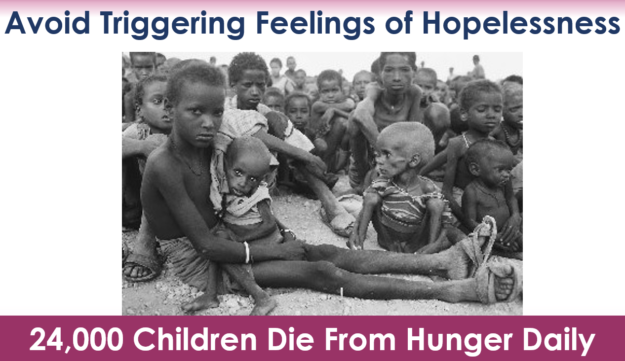
24,000 Children Die from Hunger Daily

Scope: The Key to Donor Generosity?

There’s a powerful psychological principle known as the “identifiable victim effect.”

It has to do with how you describe the scope of the problem you’re asking donors to help address. And what they will do as a result of how they perceive this scope.

  • Is it a scope they can visualize and relate to?
  • Or is the number so large it’s difficult for them to wrap their brains around it?

There’s another related psychological principle known as “scope insensitivity.”

It applies when a number is too large for people to really comprehend its meaning. If you tell me something costs $1 billion, I really have little idea how this might differ from $10 million. Both numbers are equally overwhelming.  I can’t picture how high a pile of either would be in dollar bills or even $100 bills. I have no sensitivity as to the scope because I simple can’t sense it.

Fundraisers absolutely need to know about, and apply, these principles.

PHoto telling a story

Nonprofit Fundraising Truth: Stories are Persuasive, Data is Just Proof

PHoto telling a storyDoes proving your point persuade your nonprofit donor?

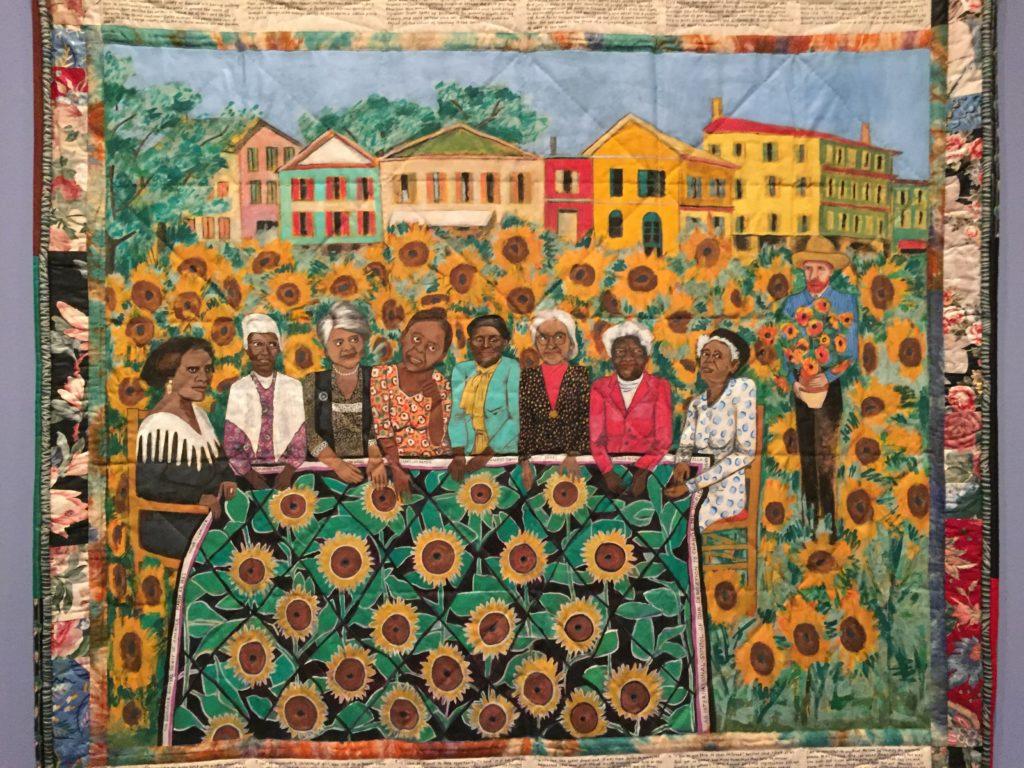
It turns out not so much.

At least, not unless your donor is already pretty much won over.

Proof, absent persuasion, won’t get you far.

In my last article, “How to Project Manage Your Nonprofit Story,” I delved into the concept of story vs. data in creating compelling nonprofit marketing and fundraising copy. Stories almost always win out, because human beings are wired for stories. To want to enter into them. To want to become a part of them. To want to see ourselves, in some way, expressively reflected in the characters, plot and struggle.

In this way we are emotionally moved. We shed a tear… get a lump in our throats… find ourselves chuckling, smiling or even beaming with a flicker, or a flame, of recognition, appreciation or gratitude. We are taken out of our everyday lives, and moved someplace else where we’re offered a new perspective. From this perspective, we can choose to act. To become part of the story, in a positive way. To make a difference. To bring joy to sadness… hope to despair… healing to hurt. To bring the happy ending we wish to see.

Today I want to delve a bit deeper into why stories beat data because, when I review nonprofit appeals, the lion’s share do a poor job of making the story the star. Sure, you may be raising money with your appeal. But I’ll bet dollars to donuts you could raise a lot more by channeling the persuasive power of a compelling narrative.

Stories are persuasive, having the power to change audience beliefs and actions.

If you’re familiar with Robert Cialdini, you’ll know about the six key principles of influence and persuasion that help people to act in the face of uncertainty. And we’re all in that state of uncertainty when we receive a fundraising appeal, right? If you look closely, you’ll see these principles are story-based:

"Story Quilt" by Faith Ringold

How to Project Manage Your Nonprofit Story

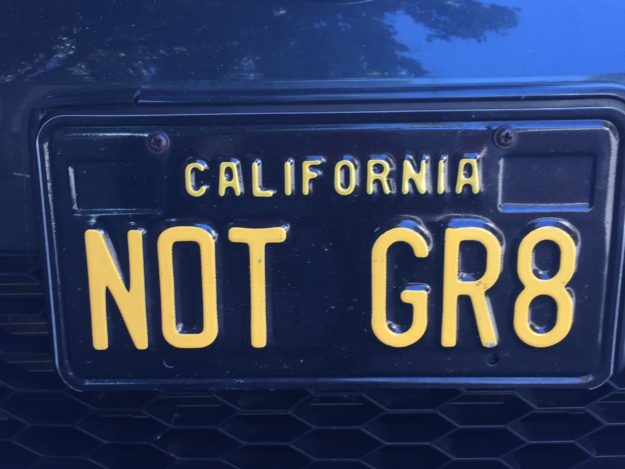
"Story Quilt" by Faith RingoldYour nonprofit’s story is the whole ball of wax.

Without it, you’ve got nothing.

So let’s really talk about this for a minute.

A story is not “Give us money because we’re good guys and do good work.”

Nor are “Sustain humanitarian aid,” “Support the arts,” or “Save our rivers” stories.

Sure, there may be some implicit narratives hiding within these phrases, but they’re really tag lines or calls to action. Useful, sure. But not until you’ve laid the groundwork of telling a compelling story.

You never start a story with “And they lived happily ever after.”

Similarly, you should never start a fundraising appeal with “We saved the whales.” Where’s the emotion and drama here?

You know donors are moved to give through emotion, right?

The best way to get inside a donor’s head and heart is by telling a dramatic, emotional story. Something that taps into their core and arouses their curiosity, or some deeper feeling like sadness, fear or anger.

You see, human brains are wired for story.

Master chef creation

Master Chef vs. Line Cook: How Do You Prepare Your Nonprofit Fundraising Plan?


I learned something many decades ago that I’ve never forgotten.

When I learned this, it made me very happy.

You see, I was transitioning from an unhappy, short-lived career in law and wasn’t really sure about my next chapter.  Nonprofit work intrigued me, but… was it really a discipline or just something folks “winged?”  How would I know I could be successful?

There weren’t a lot of role models around at the time, and I really didn’t know any other fundraisers.  And there certainly were no articles to “google” online!

So, I enrolled in a week-long course offered by The Fundraising School, then led by founder Hank Rosso (who I call the “Daddy of Fundraising”), which is now part of the Lilly Family School of Philanthropy at Indiana University.

What a revelation! My eyes were opened to the very nature of fundraising. And the essential pre-conditions for fundraising success.

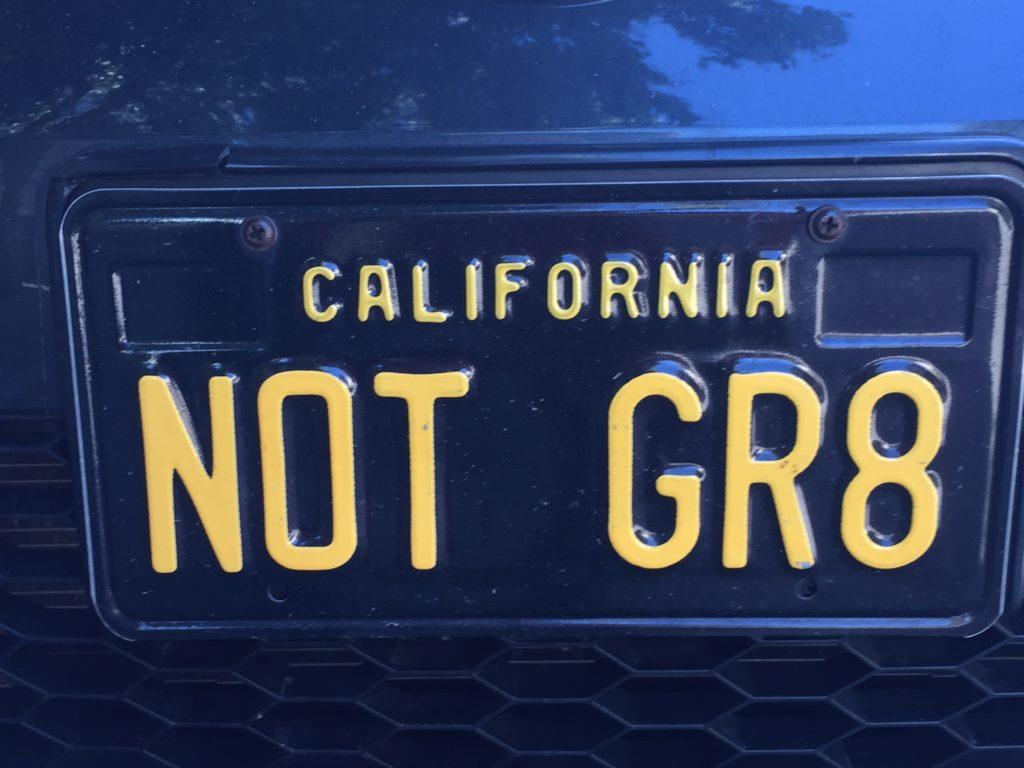
License Plate: NOT GR8

Why are You Cutting Down Trees and Asking Me to Pay For It? 5 Cardinal Sins for Fundraising Renewal Appeals (aka, making a poor 2nd impression)

License Plate: NOT GR8I’ve taken to including a series of “DO’s” and “DON’Ts” for all sorts of fundraising and nonprofit marketing messages over the past several years.  My purpose is not to shame anyone, but simply to provide educational moments offering example-based food for thought as you craft your own appeals, thank you’s, reports and more.


Here’s an old, brief post of mine written before I started the “Do’s and Don’ts” feature. I happened upon it while searching for something else, and it gave me pause. It’s simple, to-the-point and, alas, still relevant.  Because I see these kinds of mistakes still being made. All. The. Time.

So, I thought I’d update a bit and re-share.

Why Do Fundraisers Who Should Know Better Keep Committing These Sins?

Maybe it’s because of the “monkey see, monkey do” nature of human beings. We see someone else do something and assume it’s good practice. Especially when they’re bigger than us and/or well regarded.

This ‘oldie but goodie’ I’m about to share followed on another post about the importance of making a good first impression with potential donors. With a renewal appeal, if you want to keep these folks, it’s equally important to make a good second impression.

ducks in a row, swimming

5 More Top Strategies to Prepare for Fall Fundraising

ducks in a row, swimmingIn Part 1 of this two-part series of “Top 10 Strategies to Prepare for Fall Fundraising” we covered.

  1. Clean up Data
  2. Purge Mailing Lists
  3. Review Staff, Vendors and Freelancers
  4. Set Priority Objectives Based on Last Year’s Results
  5. Solidify a Multi-Channel Marketing Campaign

Today we’ll look at:

  1. Send Impact Reports to Set the Stage
  2. Stock Up on Compelling, Relevant Stories and Photos
  3. Connect with Major and Mid-Level Donors
  4. Prioritize Contacts with Mid-Level and Other Promising Supporters
  5. Plan Ahead to Welcome Donors to The Flock

Ready to get all your ducks in a row?

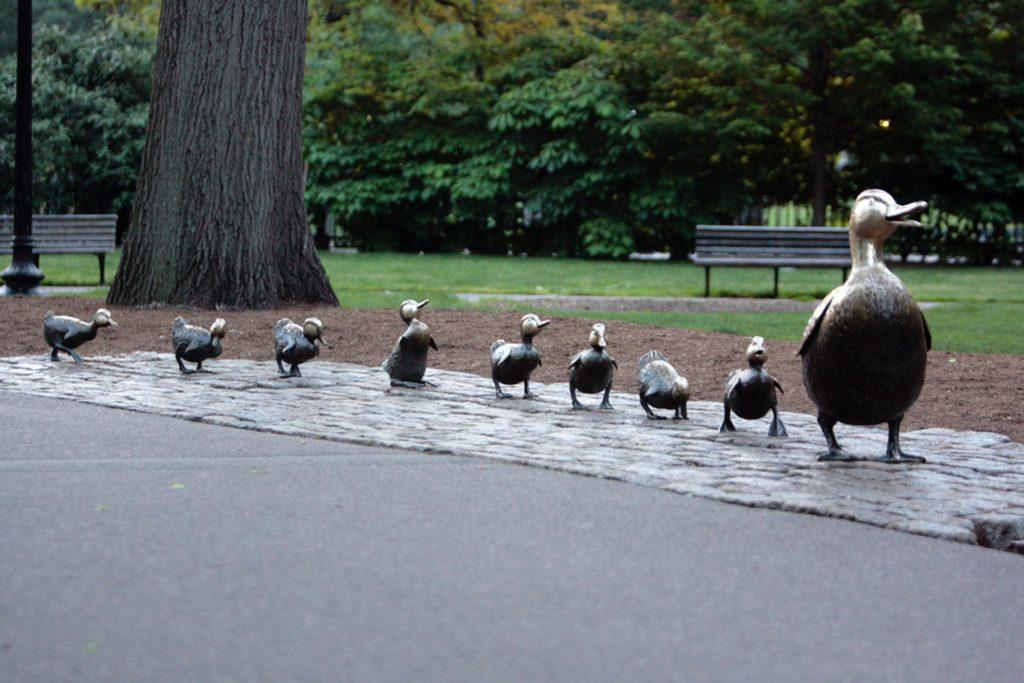
Ducks in a row

Top 5 Strategies to Prepare for Fall Fundraising NOW

Ducks in a rowYou’ve got one month before fall fundraising season begins in earnest.

What will you do with it?

I’VE GOT 10 TOP STRATEGIES TO HELP YOU GET ALL YOUR DUCKS IN A ROW!

We’ll start with the first five today.

  1. Clean up Data
  2. Purge Mailing Lists
  3. Review Staff, Vendors and Freelancers
  4. Set Priority Objectives Based on Last Year’s Results
  5. Solidify a Multi-Channel Marketing Campaign

Next week we’ll look at:

  1. Send Impact Reports to Set the Stage
  2. Stock Up on Compelling, Relevant Stories and Photos
  3. Connect with Major and Mid-Level Donors
  4. Prioritize Contacts with Mid-Level and Other Promising Supporters
  5. Plan Ahead to Welcome Donors to The Flock

Ready?

What Monkeys Can Teach Your Nonprofit

Monkey looking at youBabies can teach you the same thing.

If one baby does something, the others will want to ape them.

“Monkey see, monkey do.”

This is actually a psychological principle of influence and persuasion known as “social proof.”

It’s best explored in the 1984 groundbreaking book, Influence: The Psychology of Persuasion, by Robert Cialdini. He outlines six principles of influence affecting human behaviors. They’re all well documented, and can be incredibly useful to fundraisers.

One of the most useful principles is the one we also know today as the “Yelp effect.” It’s a type of positive (or negative) word of mouth that can make or break your business. I know how often I’ve abandoned my cart after reading a negative review. You?

Word of mouth is perhaps the most powerful form of social media you can find, so it pays to leverage it to your advantage.

Even someone inclined to support your cause may not give unless you push the right buttons. Of all the ways to do that, social proof is among the easiest and most successful.

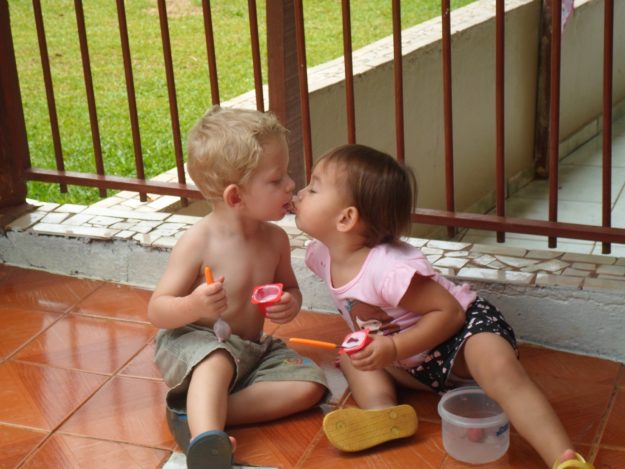
Just as there's a first kiss, there's a first time for everything for your nonprofit.

How to Persuade New Donors to Join Your Nonprofit Mission

Children holding hands

There’s a first time for everything, if you will it


What makes us think a perfect stranger, who’s never given to our organization before, will choose to do so?  It’s highly counter intuitive.

People are most likely to continue doing what they’ve done before.
Commitment and consistency is one of Robert Cialdini’s six principles of influence, and it’s useful in nonprofit marketing and fundraising. But only if you’ve got existing donors.
We talk a lot in fundraising professional circles about the folly of concentrating too many resources on donor acquisition and too little on donor retention. And for good reason. It’s significantly easier and more cost-effective to keep a current donor than to recruit a new one. Why?
It’s appreciably more difficult to get people to reach a new decision than to repeat an old one.
In fact, whenever I coach volunteers to do fundraising, I always suggest they remind current donors how many years they’ve already been giving to the organization.  This acts as a decision-making shortcut for these folks. Aha! They already decided this was a good idea.  No need to sweat it out again.  Done!
But… what if you’re a start-up organization that doesn’t have many donors?
What if your only choice is to go after first-time donors? How do you make a ‘sale’ if people are making a decision from scratch, with no previous history with you or knowledge about your vision, mission and values?

Are Monthly Donors Good Legacy Giving Prospects

Old photosYou bet!

Yet they’re generally undervalued in this regard.

And it’s not just monthly donors who are undervalued.

It’s legacy giving in general.

How robust is your legacy giving program?

Legacy giving is largely misunderstood in the nonprofit world.  Too many organizations think it’s not for them. Why?

Do any of these statements sound like something you’ve felt or heard from others within your organization?

  • Legacy giving is complicated and overwhelming.
  • Legacy giving requires significant legal and financial expertise.
  • Legacy giving requires offering “vehicles” we’re not equipped to offer.

These are myths.

Really, all you need is expertise about your mission and the values your organization enacts.

You are a philanthropy facilitator, not an attorney or financial advisor.

As a philanthropy facilitator, it’s part of your job to help loyal supporters make their most passionate, heartfelt gifts. This enables them to enact their values, and to achieve a bit of immortality.

Here’s What’s True

Hands, Heart, Silhouette, Setting Sun

How to Find Your Nonprofit’s Highest Likelihood Major Donors

Hands, Heart, Silhouette, Setting SunIn 5 Indicators for Identifying the Best Potential Donors, a guest post on the Bloomerang blog from Ryan Woroniecki of Donor Search, the key indicators someone might be inclined to support you with a major philanthropic gift are laid out.  These indicators are, in order:

  1. Previous giving to your nonprofit
  2. Giving to other nonprofits
  3. Participation as a foundation trustee
  4. Giving to federal election campaigns
  5. Real estate ownership

One thing is indubitably true: the more you know about people the better you’ll be able to assess, and work with, their likelihood to invest with you philanthropically.

Another thing is also true: not all these indicators are created equal. They’re listed in order of importance above but, for my money, numero uno is far and away the most significant.

We hold these truths to be self-evident

The people most likely to become major donors to your organization are already known to you. You don’t have to do research to find them, or find friends to introduce you or gate-keepers to let you in. You only have to do one simple thing.