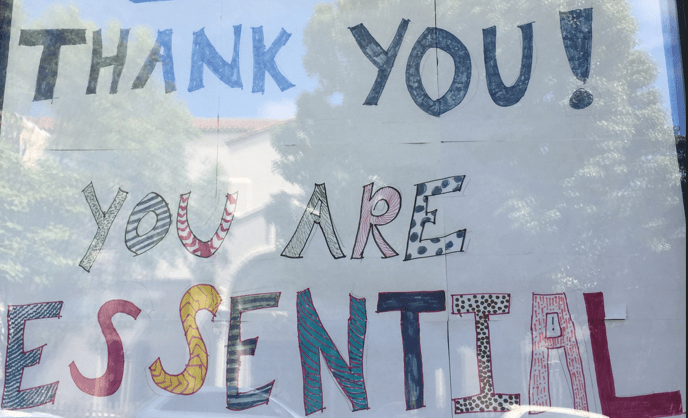
 Let’s begin with a question: What do you spend more time on? Asking or thanking?
You’ve probably just completed a quarter hyper-focused on asking. I’ll bet you devoted a lot of time to this endeavor.
Now… you should be devoting at least as much time to thanking the donors who responded to your appeals, with the goal of retaining and upgrading them over time.
This is especially true with first-time donors, who cost you much more to acquire than you receive (on average, you spend $1.25 to raise $1.00). The only reason to acquire these supporters is to sustain them over timeso their lifetime value to you merits your investment in them.
Alas, the lion’s share of nonprofits spend a lot more time asking than thanking and reporting back on impact.
Thank you’s are often left to the last minute. They may be delegated to a lower-level support person. They’re treated as a realtively unimportant affterthought. And they’re often carelessly written, coming across as little more than a transactional receipt or a pre-printed Hallmark card with nothing more than a signature (often, also, laser printed).
It’s a BIG mistake.
The number one reason donors don’t give again is they aren’t properly thanked!
You may think you have a proper thank you letter template. But, if your thank you looks like this, it’s not helping you bond with your supporters.
TYPICAL THANK YOU LETTER TEMPLATE
Dear [donor name],
Thank you for your generous donation of $[donation amount] to [nonprofit name].
Your donation is making a difference. Because of your $[amount] donation, we are able to [impact of donation].
[this paragraph usually gives a general description of what the organization does]
Thank you again for your contribution! [nonprofit name] relies on the gifts of donors like you to make a difference.
Sincerely,
[name and title]
Look familiar?
Wah, wah, wah (sad trombone).
Most thank you letters are simply boring.
This could come from almost any nonprofit. It’s generic, not specific.It looks like a form letter.
You can do a lot better, and it’s not hard.
To Retain Donors, Stand Out from the ‘Get Go’
Believe me, most donors aren’t sticking around. Your own retention rates may be better or worse than average (do you know them?), but generally only 19% of new donors give again. For ongoing donors, it’s just 43%.
The time to nip this in the bud is now.
Did you know a study from Charity Dynamics and NTEN found 21% of donors say they were never thanked at all? My hunch is some of these supporters did receive something from you, but it was so perfunctory they didn’t really take notice.
- Maybe you just sent a form receipt.
- Maybe you took them to a thank you landing page; then called it a day.
- Maybe you sent a brief, formal email that confirmed the gift, but didn’t make them feel particularly special.
- Maybe you sent a letter, but talked more about the ongoing need than the impact of their gift (i.e., it sounded like another fundraising appeal).
If you don’t have a killer thank you letter prepared to send to the folks you hope will be giving to you again between today and next year, now is the time to right this wrong.
If you thank well you’ll see retention rates increase significantly.
In fact, research from Penelope Burk, author of Donor-Centered Fundraising, found 70% of donors reported they would increase their giving if they received what they needed from you.
Brilliant, warm, authentic, personal communication stands out and leads to renewals. And this is a much less expensive strategy than new donor acquisition which, again, costs from $1 to $1.25 to raise a dollar. Whereas renewing a donor costs only 20 cents on the dollar — if you prioritize this as a strategy.
By now you may be thinking: Sounds good, but how do we stand out? There must be some specific strategies that incline donors towards giving again, but what are they?
Today I share my top secrets with you. They’re simple and foolproof.
Ready?


 Giving is an emotional experience. It deserves an emotional response.







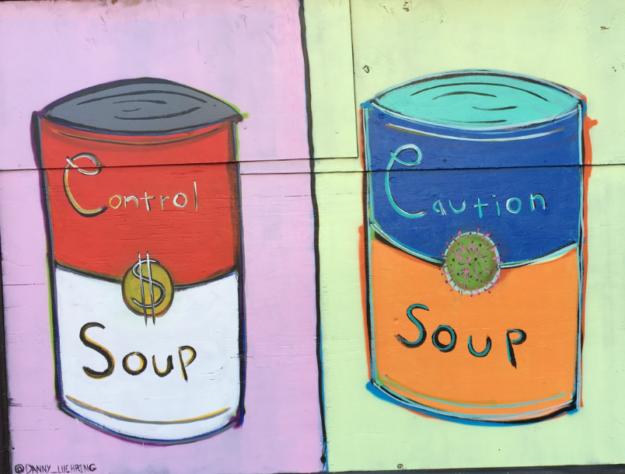
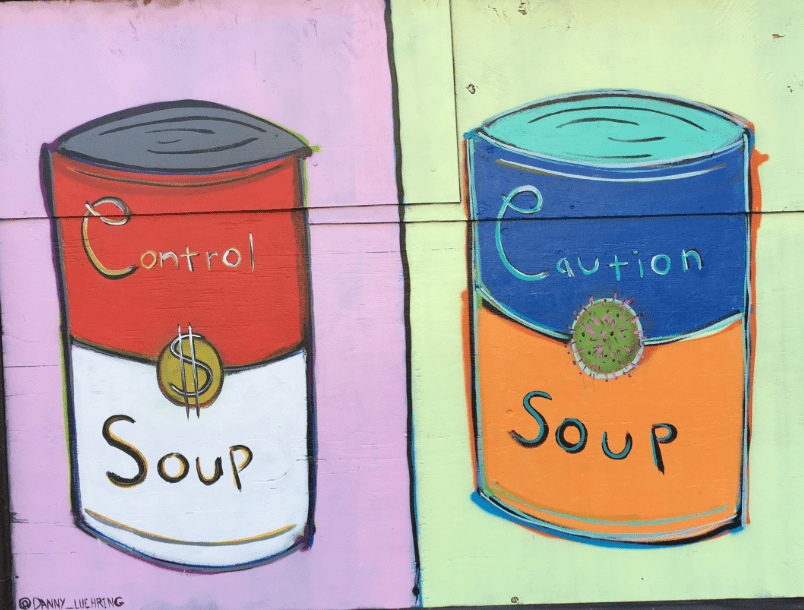 Ever have a well-meaning, yet perhaps overly controlling or risk-aversive, boss say to you:
 You must invite your donor into the story.

 Did you have a New Year’s resolution to look for a new development position? Or maybe to transition to work in the social benefit sector?


 Trust defines the credibility and legitimacy not only of your organization, but of the entire social benefit sector. Yet too few organizations make the effort to operationalize this construct into their fundraising and marketing planning.


 Are you leading with a “gift” or “favor” to positively incline your donor to say “yes?”




 Have you ever received confoundingly terrible customer service? Maybe at a restaurant, hotel, fast food restaurant or retail outlet? It happens all the time and, likely, you’ve thought to yourself: “Why on earth are they treating me like this? It’s so stupid! Don’t they realize I’ll never come here again?”
 Want your donors to sustain you? Then you can’t consume them in five minutes.
 Today a friend, who serves on the board of a struggling local arts organization, asked me what they can do to increase their fundraising. I asked her a few questions; then answered simply: “Have more conversations with people; make more friends.”
 Here is some wisdom gleaned from many decades of personal nonprofit work.
 Did you ever wonder if there is a foolproof way to communicate with donors?




 I never begin writing a fundraising appeal without beginning with a template and checklist. It’s always good to remind yourself of the fundamentals.



 What I have for you is something you can do this week (or you can pick another week on your calendar that isn’t already overfilled with appointments, assignments, meetings and what-not). It’s really simple and really powerful. There’s one catch: you have to put aside 45 minutes/day for five days. If you’re resistant to change, read no further. This post isn’t for you. If, however, you have a hunch you might be able to move from good to great, then… read on (oh, and there’s a little bonus ‘gift’ at the end).
 If you’re constantly encountering people on your staff or board who want to curtail your fundraising efforts, you’re not alone.



 For this year’s appeal, are you shooting from the hip?
 People are unpredictable sometimes. They’re also predictable.
 What do you spend more time on? Asking or thanking?
 I know you’re working on calendar year-end fundraising right now.
 The modern model is more like a vortex — an energized circle where everyone is equal. People move in and out as needed, and your job is to keep the energy flowing.
 How often have you heard someone say “I hate fundraising; I’ll do anything else,” or something along those lines?
 What do you most need to sustain your nonprofit through thick and thin?