1 Big Donor Retention Secret: Giving is Not Always its Own Reward
Donor needs vary and evolve, depending on where they are in their own life cycle and their life cycle with your nonprofit. Do you ever wonder how you might help them meet their needs? How you might reward them for giving? You should — if you want to keep them as donors.
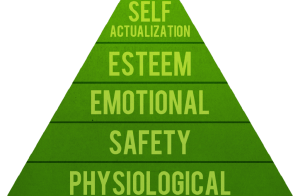
You may be familiar with Maslow’s “Theory of Human Motivation” where he breaks needs for human development and contentment down into steps that form a pyramid. Maslow suggests the basic human needs such as food, shelter, and sleep are required before you can pursue higher needs such as security, love and belonging, esteem and the need for self-actualization.
Sadly, just giving to charity doesn’t necessarily meet these higher-level needs. Donors may give out of guilt, fear, peer pressure (which doesn’t feel so good). Some give to be praised (meets esteem need, but only if you praise them). Some give to be accepted by peers (meets love & belonging need, but only if you offer opportunities to connect and feel loved)… and so forth. You see, giving is not always it’s own reward.
To create life-long donors imposes on your charity the obligation to do something proactive to fulfill your donor’s highest level needs.
Donors, like all human beings, are on a continual quest for meaning. It’s the existential search to be all that one can be. To feel self-actualized.
In non-psychological or theoretical terms, at the self-actualization pinnacle donors just feel darn good. They carry around a warm glow, representing the realization of their potential and inner peace.
This feeling is very powerful – and we human beings naturally seek it out. It’s one of reasons why even very poor give outsized proportions of their income to charity.
Another way to describe this is the search for meaning in life. For most people, meaning is deeply intertwined with community connections. Victor Frankl in his famous chronicle on the search for meaning wrote: love is the ultimate and the highest goal to which man can aspire. Humans want to feel a sense of connection and a sense of purpose to life. Giving (time, money, and energy) is a central way that we strive to find meaning.

 This year Giving Tuesday is December 2nd. So, soon.





 I find a widespread misunderstanding about the notion of what constitutes being donor-centered. It derives from two misconceptions:
 Twice at the end of last calendar year I was asked for a major gift.



 Times are tough. It’s easy to get demoralized. Especially if you work for a business, nonprofit or otherwise, that doesn’t feel ‘essential’ in today’s environment.















 Not as much as you might think.
 Let’s pretend you and your donor are not connecting meaningfully right now. You’re not sure why. Could it be they feel financially insecure… they’re worried for their kids… they’ve been let down by politicians… they’re just feeling cynical and/or hopeless? For whatever reason, things aren’t singing between you and them. They haven’t renewed. They haven’t upgraded. They haven’t responded to any of your outreach. They seem to have other priorities.





 Does your nonprofit promote stock gifts? You should!